
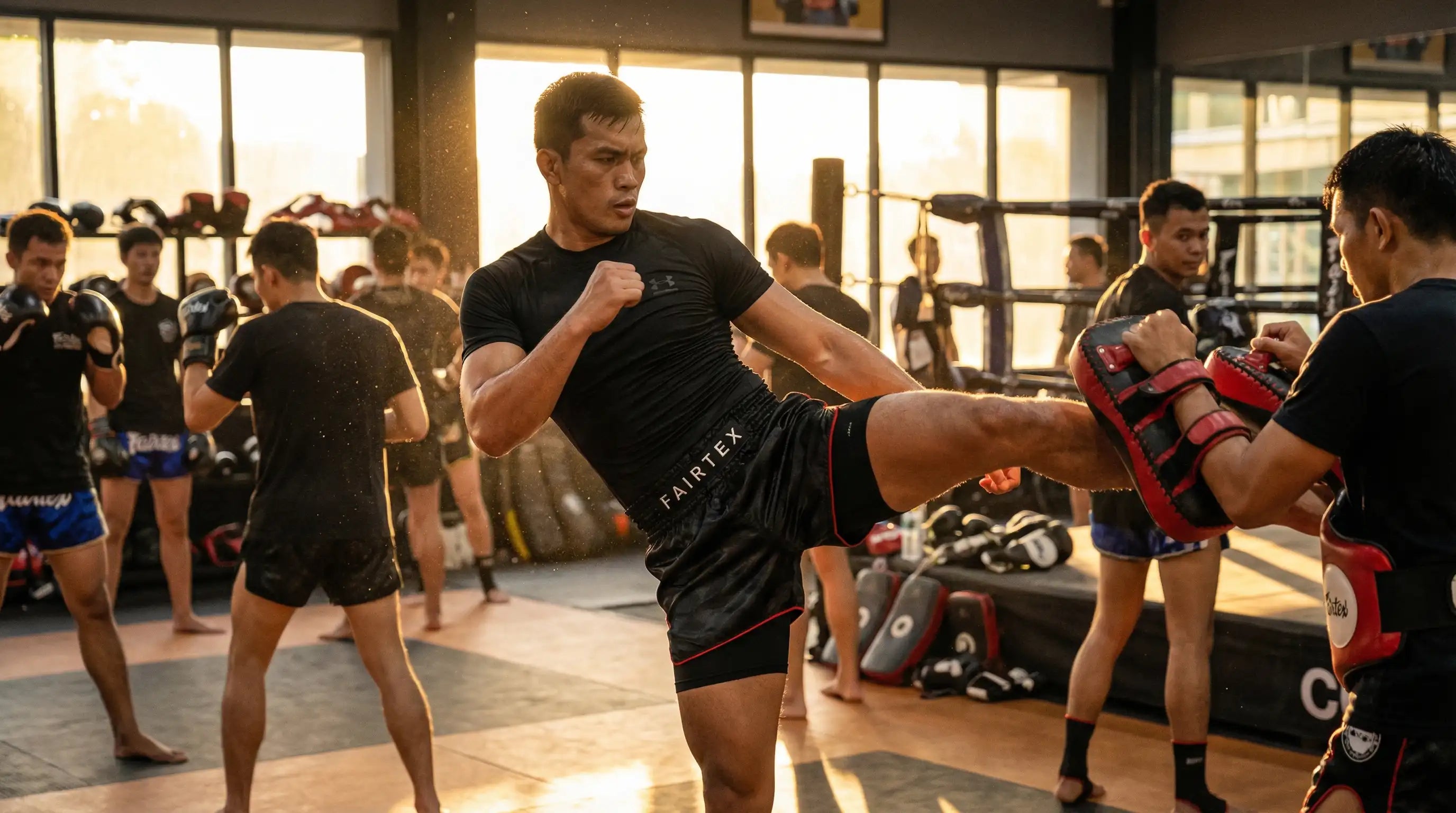
What to Wear to Muay Thai Class (Beginner Clothing Guide)
Your first Muay Thai class usually hits the same way: you walk in confident, then you see the bags swinging, hear pads cracking, and realize you have no idea what “normal” looks like. People are barefoot. Everyone is sweating. Someone is clinching in the corner and it looks like a wrestling match with knees. You start wondering if your shirt is going to get yanked over your head, if your shorts will split on the first teep, and if you are about to be the only person in the room wearing the wrong thing.
Here’s the thing: what to wear to Muay Thai class is not about looking the part. It is about moving freely, protecting your skin, keeping training partners safe, and showing basic gym respect. If you get your Muay Thai attire right, you can focus on stance, breathing, and listening to your coach, not tugging at your waistband between rounds. If you are starting from zero, begin with quality Muay Thai shorts and build from there.

The non negotiables for a Muay Thai outfit
When coaches say “dress to train,” they mean your clothing should disappear in the round. No distraction. No grabbing. No slipping. No extra risk for you or your partner.
From years of gym experience, the best Muay Thai training clothes share three traits: they do not restrict hip movement, they handle sweat, and they stay put when you clinch. You will kick, knee, check kicks, sprawl sometimes, and rotate your hips hard. Anything that binds at the groin, rides up, or holds moisture becomes a problem fast.
Your baseline checklist
If you want a simple baseline for what to wear for Muay Thai in a standard class (warm up, technique, pads, bagwork, maybe light partner drills), aim for:
- Muay Thai shorts or flexible athletic shorts with a wide leg opening
- A fitted training tee or rashguard style top
- Hand wraps and boxing gloves (if the gym does not provide loaners)
- Mouthguard if there is any sparring or partner work with contact
- Optional but smart: shin guards for drilling kicks
At Fairtex, every piece of equipment is handcrafted in Thailand using Grade A materials and tested by professional fighters. It is quality you can feel from the first round.
Muay Thai shorts and bottoms: your hips have to move
Your legs are your engine in Muay Thai. If your bottoms fight your hips, your kicks will feel short, your knees will feel jammed, and you will start changing your technique just to accommodate fabric.
Muay Thai shorts vs regular gym shorts
Traditional Muay Thai shorts are cut high on the thigh with a wide leg opening. That shape is not fashion. It is function. It lets you turn the hip over for round kicks, lift the knee for teeps, and step deep in clinch without the hem catching.
Regular gym shorts can work if they are light, have stretch, and do not have deep side pockets. Consider this: pockets turn into finger traps in clinch and partner drills. If you wear basketball shorts, you will feel the difference when you start checking kicks or trying to knee.
If you want a starting point, browse Muay Thai shorts built for kicking range and clinch movement. For a deeper breakdown on cuts and what fighters prefer, see our guide to the best Muay Thai shorts.
Muay Thai outfit female: what matters and what does not
Most women’s Muay Thai attire questions come down to security and coverage, especially once clinch starts. The reality is that clinch is messy and close, and your clothing needs to stay locked in place when someone is hand fighting for head position.
A good “Muay Thai outfit female” setup is usually: supportive sports bra, fitted top that will not ride up, and shorts that do not shift when you pivot or knee. If you prefer more coverage, tight compression shorts under Muay Thai shorts are common, and nobody in a serious gym thinks twice about it.
What most fighters overlook is waistband quality. A strong waistband stops you from constantly adjusting after checks, pivots, and knees. That is one of those small confidence boosters that adds up over a hard month of training.
Leggings and compression: when they help
Leggings can work for warm ups, bagwork, and technique if they are durable and not slippery. They are also useful if you get mat burn easily or train in a colder gym.
Now, when it comes to partner drills, leggings can make it harder to feel checks and contact, and they can get torn if your partner’s toenails are sharp. If you wear them, keep them tight, avoid zippers, and accept that Muay Thai is not gentle on fabric.
Tops and support: staying secure in clinch
Your top should allow full shoulder movement for punching, framing, and pummeling inside. It also needs to survive grips, sweat, and the occasional accidental tug.
Best tops for Muay Thai class
Fitted T shirts work. Rashguards work even better. Loose cotton tees get heavy fast, and once they are soaked they cling, twist, and distract you when you breathe hard.
For pad rounds, you want your shoulders free and your torso covered enough that you are not thinking about it. If you are doing clinch, a tighter top helps your partner get a clean grip on your neck and arms without accidentally grabbing a handful of shirt.
Sports bras and chest protection
Choose support for impact, not just jogging. You will be bouncing, turning, and sometimes taking body kicks in drills. A secure sports bra reduces discomfort and helps you keep posture when you are tired.
For men, avoid shirts with thick seams under the armpit. Those seams can rub when you throw long combinations or pummel in clinch. A smooth compression style top is simple and effective.
Hands, feet, and protection gear for class
Clothing gets you moving, but your hands and shins take the real wear. If you want to train consistently, protection is part of your Muay Thai uniform.
Hand wraps: your wrists, knuckles, and long term training
Wraps are not optional if you care about longevity. They keep your wrist stacked, your knuckles aligned, and your hand tight inside the glove when you hit pads and bags.
Use quality hand wraps and learn a wrap style that supports your wrist without cutting off circulation. If you want specifics on wrap length, material, and why certain wraps last longer, check our boxing hand wraps guide.
Gloves: pick the right tool for the class
For most beginners, 14 oz or 16 oz gloves are the safe default for class because you are doing a mix of bagwork and partner drills. Lighter gloves can feel fast, but they also concentrate force and can be rough on partners if you start sparring.
This is why Fairtex developed the three-layer foam system. You get superior shock absorption that protects your hands round after round, built on over 50 years of Thai craftsmanship. If you are choosing between models like BGV1, BGV14, BGV19, BGV9, or BGV16, start by matching the glove to your main use: heavy bag, pads, or all purpose training.
For a full breakdown, read our best Muay Thai gloves guide. You can also browse the full Muay Thai gloves collection and compare shapes and materials.
Shin guards: when you need them
If your class includes kick drilling on a partner, shin guards are a smart move. You will kick more confidently, your partner will trust you faster, and you will avoid that early beginner habit of pulling kicks so much that you never learn proper balance.
Look for full shin and instep coverage, secure straps, and padding that does not twist. Models like Fairtex SP5 and SP8 are built for repeated contact and movement. Explore the shin guards collection, and if you want help comparing types, our Muay Thai shin guards guide lays it out clearly.
Mouthguard and optional protection
If there is any sparring, even “light,” wear a mouthguard. It protects your teeth, but it also protects your jaw. When your jaw is supported, you reduce the chance of getting rattled by a clean punch.
Elbow pads and headgear depend on the gym culture. In Muay Thai, elbows are often controlled in sparring, but accidents happen. If your gym uses protective gear for technical sparring days, follow the room. Fairtex equipment is used by world champions at the Fairtex Training Center in Pattaya and trusted by ONE Championship athletes competing on the global stage, and the same logic applies to your gym: protect your training partners and you will get better rounds.

What not to wear to Muay Thai
Most clothing problems in class come from comfort choices that turn into safety issues. You can avoid all of them with a little awareness.
Avoid these common mistakes
- Jewelry: rings, necklaces, and bracelets scratch partners and get caught during clinch.
- Clothes with zippers or hard plastic: they can cut skin during partner drills.
- Baggy shorts with deep pockets: fingers can catch, and the fabric can block your knee lift.
- Thick hoodies in class: overheating kills your output and can make you dizzy.
- Shoes on the mat: many gyms treat the training floor as a clean space. Respect it.
Consider this: your training partners are trusting you with their health. Dressing clean and safe is part of being a good teammate.
Packing and hygiene: the gear that keeps you welcome
You can tell who is going to last in Muay Thai by how they handle the unglamorous stuff. Hygiene is one of those quiet habits that earns respect fast.
What to bring in your gym bag
If you are building a simple routine, pack:
- Extra shirt and socks for after class
- Small towel
- Deodorant and basic toiletries
- Flip flops for the bathroom
- Plastic bag for sweaty clothes
- Water and electrolytes if you sweat heavily
Let your gloves and shin guards dry fully after every session. Do not leave them sealed in a hot trunk. Your gear will last longer, and your partners will appreciate it when you clinch.
If you are looking for a simple way to get set up, a curated Muay Thai starter pack can cover the essentials so you are not mixing random gear that fits differently every session.
What to wear based on the type of class (first day vs sparring)
A lot of beginners overbuy gear because they are nervous. Others underbuy because they think they are “just trying it once.” The easiest way to get it right is to match what you wear to what you will actually do that day.
Your first class: keep it simple, keep it clean
For day one, most gyms run a beginner friendly format: warm up, stance, basic strikes, maybe bagwork or pads. Show up in athletic gear that fits, and bring the basics if the gym does not lend them out. If they do have loaner gloves, still bring your own wraps for hygiene.
- Muay Thai shorts or light training shorts with no pockets
- Fitted top that can handle sweat and movement
- Hand wraps
- Water, towel, and flip flops for off the mat
If you are unsure whether shin guards are needed, ask the front desk or coach before class. It is normal to show up without shin guards on day one if the class is bag and pad focused.
Technique and partner drilling days: add shin guards and a mouthguard
Once you start drilling kicks on a partner, shin guards are not about being soft. They are about letting you kick with correct mechanics while still controlling impact. If you hesitate because you are worried about hurting someone, you will shorten your kick, lose balance, and build bad habits.
A mouthguard also makes sense once any contact starts happening, even if it is “just touch.” All it takes is one accidental clash when you are learning range.
Sparring days: dress and gear like you plan to train again tomorrow
If your gym does sparring in class, the goal is not to prove toughness. The goal is rounds, timing, and learning. Wear gear that keeps you and your partner safe, and choose gloves and protection that match the room’s expectations.
- 16 oz gloves are common for sparring, especially for beginners
- Mouthguard is mandatory in any responsible sparring environment
- Shin guards are usually required for kick sparring
- Groin protection is a smart add for men, and some women prefer it too
If you are not sure what contact level the gym allows, ask. A good gym will tell you directly. Showing that you care about training partners is a fast way to earn trust.
Fit and safety details most beginners miss
Most “wrong outfit” moments in Muay Thai are not about style. They are about small construction details that become a problem once you start sweating and clinching.
Waistbands, drawstrings, and the reality of clinch
If your shorts rely on a thin drawstring and a soft waistband, clinch will expose it. You will pivot, someone will frame, you will knee, and suddenly you are adjusting your shorts between every exchange. Look for a stable waistband that holds position without needing to be cranked down tight.
Also, tie your drawstring flat and secure. A loose knot turns into a distraction fast when your hands are wrapped and gloved.
Seams, friction, and why smooth matters
Rashguards and fitted tops are not just about looking “technical.” They reduce friction. Under the arms, across the ribs, and around the neckline, rough seams can cut you up over a week of training. If you have ever left class with red underarms from a cheap shirt, you already understand why fighters pay attention to this.
Toenails and skin safety
This is not glamorous, but it is real gym respect. Trim your toenails. Muay Thai is barefoot, and partner drilling involves checks, footwork, and clinch pummeling where feet get close. Long toenails tear leggings, scratch shins, and ruin rounds.
Hair control and contact safety
If you have long hair, tie it up securely. Loose hair gets pulled in clinch, blocks your vision, and becomes a hygiene issue when it is soaked. Use a band that stays put when you move. If it falls out every round, it is the wrong one for training.

Gear care between rounds: wraps, gloves, and drying habits
Gear lasts longer when you treat it like training equipment, not like something you throw in a bag and forget. The small habits matter.
Wrap care: do not let wraps become a bacteria factory
After class, unwrap your hands fully and hang your wraps to dry. Do not leave them rolled up wet. Once they dry, roll them back up so they are ready for the next session. If you train often, having a second set of wraps is not a luxury. It is a practical move so you are not wrapping with damp fabric.
Glove care: air and time do the heavy lifting
Wipe the inside of your gloves if they are soaked, then open them up and let them breathe. The fastest way to shorten glove life is to trap sweat inside foam by leaving gloves closed in a dark bag. If your gloves smell, it is not a mystery. Moisture is living in there.
If you train hard and sweat heavy, glove deodorizers can help, but they are not a replacement for drying. Dry first, deodorize second.
Shin guard care: straps and lining need attention too
Shin guards take sweat, impact, and friction. Undo the straps fully when you dry them so the lining can air out. If you always toss them in your bag still strapped, the inside stays damp and starts to break down. Over time, that affects comfort and how stable they feel when you check kicks.
Frequently Asked Questions
What should I wear to my first Muay Thai class?
Wear light athletic shorts or Muay Thai shorts, plus a fitted T shirt or rashguard style top. Train barefoot unless your gym says otherwise. Bring hand wraps, gloves, and water. If the class includes partner kick drills, shin guards are a smart add. Keep jewelry off and avoid anything with zippers or hard parts that can scratch a partner.
Do I need a Muay Thai uniform?
Most gyms do not require a formal Muay Thai uniform. What matters is that your Muay Thai attire is safe, clean, and functional. Traditional shorts are common because they allow full hip rotation and high knee lifts. Some gyms have branded shirts for team culture, but you can usually start with basic training clothes and add specific pieces as you commit.
Can I wear leggings to Muay Thai class?
Yes, especially for technique, bagwork, and warm ups, as long as they are tight, durable, and do not have zippers. For partner drills, leggings can tear from friction and toenails, and they can reduce the “feel” of checking kicks. If you like the coverage, wear compression shorts or leggings under Muay Thai shorts so you still get the right freedom of movement.
What shoes do you wear for Muay Thai?
In most Muay Thai gyms, you train barefoot. That helps you pivot, grip the floor, and learn balance for kicks, knees, and teeps. Some gyms allow wrestling shoes or boxing shoes for specific classes, but it is less common for traditional Muay Thai. Bring flip flops or slides for walking off the mats and for the bathroom to keep training areas clean.
What gloves should I bring to class?
For general class training, 14 oz or 16 oz gloves are the most common because they protect your hands on pads and bags and are safer if you do any partner work. Fairtex gloves are known for a tight fit design that helps control and wrist alignment when you are learning proper punching mechanics. For model comparisons, see our guide to choosing Fairtex boxing gloves.
Do beginners need shin guards for Muay Thai?
If you are only hitting bags and pads, you can start without shin guards. Once you begin drilling kicks on a partner, shin guards make training safer and reduce the fear of making contact. They also let you kick with better mechanics instead of pulling everything. For a deeper breakdown of types and coverage, read our shin guards guide.
What should women wear to Muay Thai class?
A solid Muay Thai outfit for women is a supportive sports bra, a fitted top that will not ride up in clinch, and Muay Thai shorts or athletic shorts with a stable waistband. If you want more coverage, wear compression shorts under your Muay Thai shorts. Focus on security and movement, not fashion. If your gear stays in place during knees and clinch pummeling, you chose right.
How do I keep my Muay Thai clothes from smelling?
Wash training clothes the same day if possible and do not leave them balled up in your bag. Hang dry your wraps, and fully air out gloves and shin guards after every session. If you sweat heavily, bring a second shirt and change after class. Good hygiene keeps your skin healthy, reduces infections like ringworm, and makes you a better training partner.
Do I need a cup (groin protector) for Muay Thai class?
For most beginner technique classes, it is optional. Once you start partner drills with teeps, knees, or sparring, groin protection becomes a smart choice because accidents happen even with good control. If your gym has a rule, follow it. If not, wear one if it helps you relax and train without worrying about one bad rep.
Should I buy my own gloves right away or use gym loaners?
If the gym has loaners, you can use them for your first session, but bring your own hand wraps for hygiene. If you plan to train consistently, buying your own gloves early is worth it because fit, padding feel, and wrist support affect your learning. Gloves that fit your hands well make it easier to build good punching mechanics and keep your wrists aligned.
Can I wear a regular cotton T shirt to Muay Thai?
You can, but it tends to get heavy and clingy once it is soaked, and that becomes a distraction when you are breathing hard. If you notice your shirt twisting, riding up, or rubbing under the arms, switch to a fitted training top or rashguard style shirt. In clinch, tighter is usually better for safety and fewer accidental grabs.
Key Takeaways
- What to wear to Muay Thai class should prioritize movement, safety, and staying secure in clinch.
- Muay Thai shorts with a wide leg opening make kicks, knees, and checks feel natural.
- Wrap your hands and use appropriately sized gloves to protect wrists and knuckles.
- Add shin guards when partner kick drilling starts so you can train with confidence and control.
- Clean gear and good hygiene are part of gym respect and long term consistency.
Conclusion
The right Muay Thai clothing is simple: it lets you move, it stays put when the rounds get messy, and it keeps your partners safe. Start with shorts that open your hips, a fitted top that will not distract you in clinch, and the basics for protection, especially wraps and gloves. As you progress, you will notice that good gear changes how you train. You kick without hesitation, you punch with better structure, and you show up feeling prepared instead of unsure.
Explore Fairtex’s complete collection of Muay Thai equipment, handcrafted in Thailand for fighters who demand professional quality.
Last updated: February 2026