
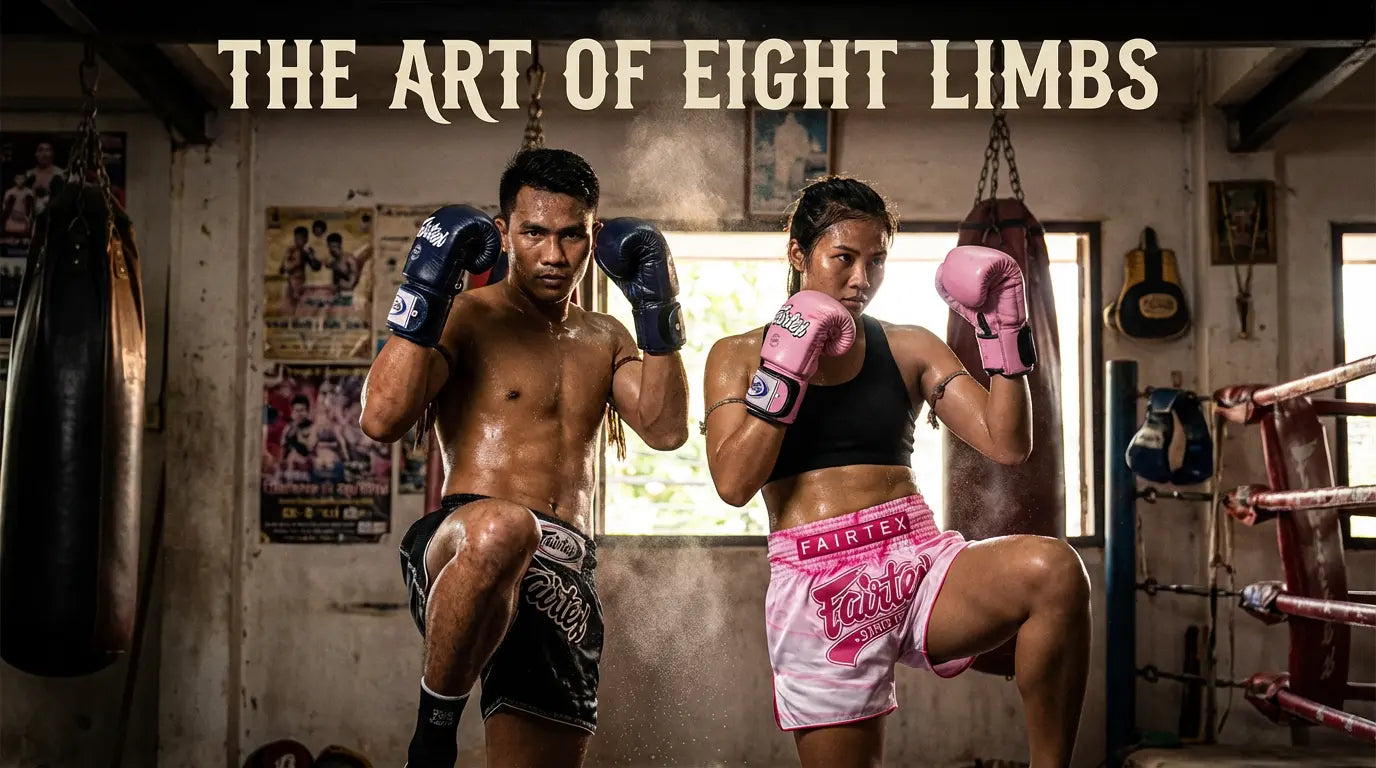
The Art of Eight Limbs: Train Like a Complete Fighter
Your first pad round felt smooth—jab, cross, low kick. Then your coach stepped in close, smothered your hands, and suddenly your weapons vanished. He bumped your chest, tied up your neck, and sliced an elbow through the guard like it belonged there. That’s when it clicks: if you only have hands and kicks, you’re not training the art of eight limbs.
Muay Thai is called the art of eight limbs because you attack with fists, elbows, knees, and shins—eight striking points used in harmony. If you’ve ever wondered “what is the art of eight limbs” or “why is Muay Thai called the art of eight limbs,” this is your blueprint. You’ll learn how to blend weapons, build real ring craft, and train smarter so your power shows up under pressure. Whether you type “muy thai” by accident or you’ve already fought under lights, you’ll find a practical path here.
Table of Contents
Fundamentals of the Art of Eight Limbs

If you want your Muay Thai to feel complete, start with structure. Balance, base, rhythm, and guard let all eight weapons flow. In Thai terms, your teep (push kick), chok (punch), ti sok (elbow), ti khao (knee), and tae (kick) connect when your stance is stable, your weight shifts are clean, and your eyes read distance. Before power, you need posture. Before combos, you need timing. That’s the backbone of the art of eight limbs.
Base, Balance, and Recoil
Here’s the thing—if your feet are square and your head’s on the center line, you’re going to eat counters. Build a solid base: rear heel light, lead foot angled slightly out, knees soft. When you throw a tae (round kick), let the hip turn fully, then recoil fast to stance. Punch? Snap the shoulder, rotate the hip, and bring the hand back to your cheek. The recoil matters as much as the strike. A lot of newer fighters swing big but forget to reload—then the next weapon is late. When your recoil is sharp, you can chain elbows into knees, or kicks into punches, without that “stuck in mud” feeling.
Timing, Distance, and Rhythm
Mastering timing is what makes you feel like the fight slows down. Use the teep to manage range—think of it as your jab with a shin. You nudge when they step, you stomp when they rush. Inside, the chern (clinch) takes over. Vertical posture, chin tucked, hands fighting for inside control. Don’t rush the damage—break their posture first, then slice with ti khao (knees). Rhythm ties it all together: long weapons to set traps, short weapons to finish. You’ll switch pace the way Thai stadium fighters do—slow, slow, sudden sprint. That’s the art of eight limbs in the real ring.
Technical Breakdown of the Art of Eight Limbs
Think of this as your toolkit. You’ll see how each limb works alone, then how they stack. If you’ve asked “why is Muay Thai called the art of eight limbs,” it’s because each weapon has a lane—and when you connect lanes, you become hard to read and harder to stop.
Hands: Chok (Punches) With Thai Mechanics
Muay Thai hands are different from pure boxing. You keep the guard higher and elbows tighter because of kicks and elbows coming back at you. Keys: step with the jab, rotate the hip on the cross, and finish with the shoulder protecting your chin. Best entries: jab to body, cross to head, then check or teep out. Common chains: jab-cross-low kick, jab-hook-ti sok (elbow), or cross to rear knee if they shell. Rule of thumb: punch to draw the high guard, then attack the open line—ribs, legs, or elbows over the top.
Elbows: Ti Sok (Elbow Strikes)
Short, sharp, and fight-changing. The six common angles—horizontal, upward, downward, diagonal left/right, and spinning—show up after you’ve crowded your opponent with footwork or clinch ties. For a lead horizontal elbow, step slightly in, lift the rear heel to load, cut across with the shoulder leading the strike, palm down. Guard stays high. Don’t “arm” the elbow—drive from the hip and shoulder. Elbows pair beautifully: jab to blind, step in, diagonal up elbow to split the guard. Safety note: always drill elbows on pads or a heavy bag with your coach’s supervision; they’re potent and easy to misjudge at speed.
Knees: Ti Khao (Knee Strikes)
In the chern (clinch), knees end fights. For a straight knee, square the hips, pull the opponent into the strike by breaking posture at the neck or biceps tie, and lift through the hips—not the lower leg. For a switch knee, hop your stance, drive the hip through, and land back balanced to knee again or frame and exit. Aim: solar plexus, floating ribs, thigh for dead-leg setups. Knees also work at mid-range after a long guard frame: frame, step, knee, then exit on an angle. Keep your toes pointed down to protect the kneecap.
Kicks: Tae (Round Kicks) and the Teep
The tae is a hip-driven swing. Think baseball bat, not soccer kick. Pivot on the ball of the support foot, whip the hip, and strike with the shin. For low kicks, chop the outer thigh, then inside low kick as they switch stance or step. For body kicks, aim to hit with the meat of the shin and crash through, then either return to stance or spin off if you miss. The teep is your range ruler: lead teep to probe, rear teep to stop entries. Drill both like jabs—high volume, clean form.
Clinch: Position Before Punishment
Everyone loves damage, but control is king. Inside the chern, fight for inside biceps or a collar tie with head position under their chin. Pull, off-balance, and knee when they’re weightless. If they posture, switch to elbows on the break. Good clinchers wear you down with small tugs and steps. Learn to feel their weight shift and knee when their feet are square.
Footwork and Angles: Make Your Eight Limbs Appear
Angles open lines. After a body kick, step the rear foot outside their lead to set up rear elbow. After a jab-cross, slide left to line up the liver kick. If they walk you down, use the long guard and reset with a pivot and teep. Your eight limbs get sharp when your feet put you in the right place at the right time.
Training Drills & Practice Methods

You don’t build eight limbs by accident—you build them by structure. These drills help you connect weapons and make your game sustainable. Start technical, then add power. Always warm up: 5-10 minutes jump rope, mobility, light shadowboxing.
Drill 1: Shadowboxing Flow – “Long to Short” (5 x 2 minutes)
Round 1: Only long weapons—jab, cross, teep, body kick. Round 2: Add one short weapon at a time—jab, step in, horizontal elbow; teep, step, knee. Round 3: Angle changes—after every combo, pivot or step out and reset with a teep. Rounds 4-5: Add realistic defense—checks, parries, long guard. Focus on clean recoil and balance. Outcome: you’ll feel the switch from range control to close-range damage without getting tangled.
Drill 2: Pad Round – “Layer the Limbs” (4 x 3 minutes)
Round 1: Hands to kick—jab-cross, low kick; jab-hook, body kick. Round 2: Hands to elbow—jab-jab-step-in elbow; cross-lead elbow on the break. Round 3: Kick to knee—body kick, land forward, knee; check, counter knee. Round 4: Teep to angle—rear teep, pivot outside, cross-hook-low kick. Coach cue: keep guard high when entering elbows and clinch. Safety: elbow rounds should be focused and controlled—aim pad center, not pad holder’s body.
Drill 3: Clinch Circuit – “Posture and Punish” (3 rounds each, 2 minutes)
Station A: Inside biceps control, knee on command, switch sides; Station B: Collar tie snap-downs into straight knees; Station C: Pummeling to double inside, off-balance, knee; Station D: Break and elbow on mitts. Rest: 60 seconds between stations. Outcome after 4-6 weeks: improved posture control, smoother off-balancing, more confident knees in live clinch.
Drill 4: Partner Defense – “Catch, Check, Counter” (6 x 90 seconds)
Partner throws: jab, body kick, inside low kick. You respond: parry-jab, catch body kick to sweep or return, check inside low kick then teep. Rotate roles. Goal: link defense directly into counters so your eight limbs aren’t just offense—they’re a complete system.
Drill 5: Conditioning Finisher – “Shin and Gas” (3 sets)
30 seconds nonstop low kicks per leg + 30 seconds non-stop knees on the bag + 30 seconds teep volume. Rest 60-90 seconds. Keep technique crisp—hips through, guard high. This builds strike density without sloppy form. Evidence-based conditioning is backed by combat sports research and IFMA coaching curricula emphasizing sport-specific intervals.
Common Mistakes & How to Fix Them
You’ve probably felt at least one of these in sparring. The fix is rarely “go harder.” It’s alignment, timing, and decision-making. Here’s how to clean it up.
Mistake 1: Telegraphed Kicks
Problem: Big shoulder lift, slow hip turn, eyes drop before the kick. Opponents see it coming a mile away. Why it happens: focusing on power before speed and angle. Fix: start kicks from small weight shifts and feints—jab to step, then kick; or check their kick and return immediately. Keep your hands quiet and your eyes steady.
Mistake 2: Dropping Hands on Entry
Problem: You step in for elbows or knees and your chin is a magnet. Why it happens: reaching with arms instead of stepping with the body. Fix: move your feet first, keep the long guard, and let your shoulders cover your jaw. Drill pad entries with a high shell, then elbow. You’ll eat fewer counters immediately.
Mistake 3: Clinch Without Control
Problem: Grabbing neck but no posture break; knees hit arms, not ribs. Why it happens: no inside position or footwork. Fix: fight for inside biceps, head under their chin, step their foot line off-center, then pull and knee. Practice pummeling rounds every session.
Mistake 4: Ignoring the Teep
Problem: You skip the teep and fight feels chaotic. Why it happens: obsession with damage over control. Fix: build a rule—every time you reset, teep. Use it to recover stance, slow opponents, and set traps for counters. It’s the jab of Muay Thai for a reason.
Mistake 5: Overtraining Power, Undertraining Posture
Problem: Great on the bag, gassed and off-balance in sparring. Why: too many max-effort rounds, not enough technical tempo work. Fix: 70% technical volume most days, then 1-2 focused power sets. Sports science supports submaximal skill density for better retention and lower injury risk.
Scoring the Art of Eight Limbs (2025 Rules)

If you want your work to count on the scorecards, you need to know exactly what judges value. Fight the way IFMA/WMC judges score: clean effect, balance, and ring control—especially in the chern (clinch).
What Scores Clearly
Body kicks that land clean with visible effect score high. Knees that move the torso or break posture score. Elbows that cut or clearly snap the head back score. Punches score when they visibly affect balance or posture. Sweeps/dumps that put your opponent down while you stay balanced add big value.
Defense, Balance, and Return
Checks, catches, and blocks matter when they’re obvious and you remain composed. If you defend and immediately return with a scoring strike, your exchange looks dominant. Lose balance after your own attack and you bleed points.
Clinch Scoring
Inside the clinch, posture control plus effective knees wins. Turning your opponent and landing knees as they’re weightless reads strong. Passive holding stalls your own score. Elbows on the break are noticed when clean and controlled.
Common Fouls and No-Score Actions
Illegal: strikes to the back of the head, spiking throws, joint locks, or dumping by twisting the knee. Glancing kicks on the arms without effect don’t outscore a clean body kick or knee. Busy but ineffective punches won’t beat balanced kicks and knees.
Amateur vs Pro Notes
Amateur IFMA: many divisions require elbow pads and limit elbow contact; youth divisions restrict head elbows entirely. Pros and stadium rules allow full elbows and knees. Always confirm your event rules in advance.
Southpaw vs Orthodox: Open-Side Weapons
Mirror stances are where the art of eight limbs shines. You’re hunting the open side with hips and short weapons ready to punish the turn.
Rear Body Kick and Long Guard
From southpaw, show the lead hand long guard, step your rear foot outside their lead, and whip the rear body kick to the open ribs. If they start checking, feint the kick and step in with a diagonal elbow (sok) as they square.
Inside Low Kick to Elbow
Touch the inside low kick to bump their stance wide. As their hands drop, step across the center and cut a lead horizontal elbow (sok tad) or frame and switch knee (khao) if they shell.
Teep Battles and Head Position
Use the lead teep to the hip crease to freeze their lead leg. In close, get your head under their chin on the open side, then turn and knee as their feet square. If they circle out, chase the angle with a body kick or step-off cross.
Kick Catch and Safe Counters

Catching body kicks without hurting your wrist or twisting your partner’s knee takes mechanics, not muscle. Here’s the safe way to make it score-ready.
Two-Hand Secure and Dump
Meet the kick with your forearms tight, step toward the kick to absorb, then clamp above the ankle with both hands—elbows glued to ribs. Lift slightly, step outside their standing leg, and “run the pipe” so they sit down while you stay tall. Follow with a quick teep or body kick as they rise.
Catch to Cross or Return Kick
If the dump isn’t there, pin the leg with your forearm, take a small hop in, and land a short cross to the body or head. Or switch your feet and return a body kick to the open side. Keep your head off the center line to avoid elbows.
Injury Prevention for Elbows, Knees, and Shins
Longevity wins. Build simple prehab into warm-ups so you can throw hard without paying for it later.
Knee and Hip Care
- Prep (3-4x/week): 2 x 12 Copenhagen side plank each side; 2 x 15 tibialis raises; 2 x 15 calf raises (tempo 2-1-2).
- Mobility: 60s hip flexor stretch with posterior tilt; 10 controlled hip circles each direction.
- Technique cue: Toes down on khao (knees) and square hips to protect the patella.
Elbow and Shoulder Care
- Scap work: 2 x 12 band face pulls, 2 x 12 serratus wall slides.
- Control: Drill elbows on pads/bag first; in partner work, target the shoulder line, not the face.
Shin Conditioning
- Bag volume: 3-4 sets of 20-30 controlled shin kicks/leg, 2-3 days/week.
- Rule: No hard objects—let bone adapt gradually; use shin guards in sparring.
For sparring days, make sure you’re using best Muay Thai shin guards that protect the bone while still letting you move naturally.
Equipment Setup and Care for Daily Muay Thai
Right gear lets you train often and safely. Set it up once, maintain it forever.
Fast Hand-Wrap Checklist (4m–4.5m wraps)
- Anchor: Loop on thumb, 3-4 turns around wrist.
- Knuckles: 4-5 turns over knuckles, spread fingers.
- X-Pass: Figure-8 between fingers if you need separation.
- Finish: Lock wrist again; you should still flex comfortably.
Glove and Shin Guard Sizing
- Gloves: 14–16 oz for most sparring; 10–12 oz for pad/bag depending on size and coach guidance.
- Shin guards: Cover from just below knee to above ankle without gapping; straps snug but don’t cut circulation.
Maintenance
- Air-dry after every session; wipe salt with a mild, alcohol-free cleaner.
- Baking soda sachets or cedar inserts help with odor; don’t leave gear in your bag.
Serious fighters value durable, Thai-made gear tested in real camps; brands like Fairtex, crafting equipment in Thailand for decades, set the standard for daily padwork, clinch, and sparring.
If you want a complete breakdown of essentials, check out our guide to the best Muay Thai gear for all levels.
Drills to Make Judges See Your Work
Train your rounds to look dominant—balanced, effective, and obvious to score.
Pad Round: “Score Like the Stadium” (3 x 3 minutes)
- Setup: Coach calls mostly body kicks and knees; you must stay balanced and return to stance.
- Execution: 3-kick chains, land forward into khao, frame, angle out, kick again.
- Common Mistakes: Falling through the target, dropping hands on exit, rushing the clinch.
- Progression: Add catch-and-dump sequences on command without losing posture.
Sparring Game: “Open-Side War” (4 x 2 minutes)
- Setup: Mirror stances only; light-to-moderate tempo.
- Execution: Hunt rear body kick, inside low kick, step-in elbow off the feint.
- Common Mistakes: Squaring hips, staring at the open side, ignoring checks.
- Progression: Winner of each exchange must exit with a teep or pivot—no straight lines.
Frequently Asked Questions
What is the art of eight limbs?
It’s a name for Muay Thai that highlights its eight striking points: two fists, two elbows, two knees, and two shins. It’s not just the tools, though—it’s how you connect them. You control range with the teep, hurt the body and legs with kicks, cut openings with elbows, and finish exchanges with knees, often from the clinch. If you train all eight with balance, timing, and conditioning, you get a complete striking style that works in the ring and under pressure.
Why is Muay Thai called the art of eight limbs?
Because you’re trained to use eight contact points efficiently and legally under Muay Thai rules—fists, elbows, knees, and shins. Historical Thai boxing emphasized a complete striking arsenal that evolved in stadium fighting. Modern sanctioning bodies like IFMA and WMC preserve rule sets where elbows and knees are central, which is different from many kickboxing styles that limit those weapons.
Is Muay Thai one of the best martial arts for striking?
For full-contact striking, Muay Thai is consistently considered among the best martial arts because it covers long, mid, and close range with clear rules that translate to real timing. Its training is pressure-tested—padwork, bagwork, controlled sparring, and clinch. Add in conditioning and ring craft, and you get a style that holds up from amateur shows to elite stadiums.
How often should I train to get comfortable with all eight weapons?
Three to four sessions per week builds solid progress for most adults. Structure it: 1 technical day (footwork, teep, balance), 1 pad day focusing on combos, 1 clinch/elbow day, and 1 conditioning or sparring day. Keep intensity waves—two moderate sessions, one high, one light—to manage fatigue and stay healthy enough to be consistent.
How do I condition my shins safely?
Kick the heavy bag regularly with clean technique—3-4 sets of 20-30 kicks per leg, 2-3 times a week. Skip gimmicks like striking hard objects. Over weeks, micro-adaptation reduces sensitivity. Use proper shin guards in sparring. If you get a bone bruise, back off power for a week and stick to technique work. Recovery beats bravado.
What’s the best way to learn elbows without cutting my partner?
Start on pads and bag with a coach watching your lines. Use elbow paddles or curved pads. In partner drills, throw elbows to body or to the shoulder line, not the face. In sparring, use control and agree on contact. Many gyms limit live elbow sparring to advanced rounds or use elbow pads. Safety first—precision over force.
How do I stop getting stuck in the clinch?
Build two exits: frame on the collarbone and circle out, or break with a short elbow. The moment you feel inside control slipping, step off-line, frame, and pivot. Drill pummeling 3 x 2 minutes every session and add one “break-and-elbow” rep at the end of each clinch exchange during drills. Over time, you’ll feel less trapped.
I gas out after two rounds. What conditioning helps most?
Sport-specific intervals. For example: 5 x 3-minute rounds on pads or bag, 45 seconds rest, with the last 30 seconds of each round at sprint pace. Add a finisher of 3 x 1 minute knees or teep volume. Evidence from combat sports conditioning shows intervals that mirror fight demands beat generic cardio for most fighters.
What gear do I need to train safely?
Hand wraps, gloves (14-16 oz for most), shin guards, a mouthguard, and a good pair of Thai shorts for freedom of movement. Elbow pads are smart when you start drilling elbows with partners. Replace gear when padding compresses or straps wear out. Quality equipment and proper fit reduce injury risk and let you train more often.
A best boxing mouthguard is essential once you start sparring or drilling elbows and knees at higher speed.
How long until I feel fluent with all eight limbs?
With consistent training (3-4 days/week), most beginners feel coordinated with basic combos in 3-6 months. True fluency—switching range and weapons without thinking—usually takes 12-24 months of steady practice. Don’t rush it. If you respect posture, timing, and defense, you’ll build a game that lasts.
Does Muay Thai help with self-defense?
It teaches distance management with the teep, strong low-line kicks, and powerful close-range weapons like elbows and knees. That said, self-defense also involves awareness, de-escalation, and legal considerations. Train for fitness and confidence first; if you’re interested in self-defense, supplement with scenario training and learn the laws where you live.
Is “muy thai” the same as Muay Thai?
Yes—“muy thai” is just a common misspelling of Muay Thai. If you’re searching for training, gyms, or equipment, use “Muay Thai” to find accurate resources. No matter how you spell it, you’re after the same thing: a complete striking art built on eight weapons and disciplined training.
What Scores Clearly
Body kicks that land clean with visible effect score high. Knees that move the torso or break posture score. Elbows that cut or clearly snap the head back score. Punches score when they visibly affect balance or posture. Sweeps/dumps that put your opponent down while you stay balanced add big value.
Defense, Balance, and Return
Checks, catches, and blocks matter when they’re obvious and you remain composed. If you defend and immediately return with a scoring strike, your exchange looks dominant. Lose balance after your own attack and you bleed points.
Clinch Scoring
Inside the clinch, posture control plus effective knees wins. Turning your opponent and landing knees as they’re weightless reads strong. Passive holding stalls your own score. Elbows on the break are noticed when clean and controlled.
Common Fouls and No-Score Actions
Illegal: strikes to the back of the head, spiking throws, joint locks, or dumping by twisting the knee. Glancing kicks on the arms without effect don’t outscore a clean body kick or knee. Busy but ineffective punches won’t beat balanced kicks and knees.
Amateur vs Pro Notes
Amateur IFMA: many divisions require elbow pads and limit elbow contact; youth divisions restrict head elbows entirely. Pros and stadium rules allow full elbows and knees. Always confirm your event rules in advance.
Rear Body Kick and Long Guard
From southpaw, show the lead hand long guard, step your rear foot outside their lead, and whip the rear body kick to the open ribs. If they start checking, feint the kick and step in with a diagonal elbow (sok) as they square.
Inside Low Kick to Elbow
Touch the inside low kick to bump their stance wide. As their hands drop, step across the center and cut a lead horizontal elbow (sok tad) or frame and switch knee (khao) if they shell.
Teep Battles and Head Position
Use the lead teep to the hip crease to freeze their lead leg. In close, get your head under their chin on the open side, then turn and knee as their feet square. If they circle out, chase the angle with a body kick or step-off cross.
Two-Hand Secure and Dump
Meet the kick with your forearms tight, step toward the kick to absorb, then clamp above the ankle with both hands—elbows glued to ribs. Lift slightly, step outside their standing leg, and “run the pipe” so they sit down while you stay tall. Follow with a quick teep or body kick as they rise.
Catch to Cross or Return Kick
If the dump isn’t there, pin the leg with your forearm, take a small hop in, and land a short cross to the body or head. Or switch your feet and return a body kick to the open side. Keep your head off the center line to avoid elbows.
Are elbows allowed in amateur Muay Thai?
It depends on the sanctioning body and division. IFMA amateur divisions often allow elbows with pads for seniors, while novice and youth divisions restrict or prohibit head-elbow contact. Local promotions may follow WMC-style rules for pros (full elbows) but modify for amateurs. Always read the event brief: whether elbow pads are required, what targets are legal, and whether cuts end the bout. Train elbows primarily on pads and bag, then add controlled partner drills to the shoulder line. On fight camp weeks, match your training to the specific rule set you’ll compete under.
Do kicks really score higher than punches?
Clean body kicks and effective knees generally outscore single punches under IFMA/WMC-style judging because they show stronger effect on posture, balance, and fatigue. Punches still matter—if your cross snaps the head back or visibly wobbles your opponent, judges reward it. The key is effect and balance: if you kick and stumble, you lose value; if you parry, step, and land a clean cross while staying composed, you gain. Build combinations that finish with a high-value strike—body kick or knee—so exchanges read clearly in your favor.
How do I catch body kicks without hurting my wrist?
Step toward the kick and meet it with your forearms tight, not with a reaching hand. Absorb by moving your hips with the strike. Clamp above the ankle with both hands, elbows glued to your ribs, and keep your head off the center line to avoid elbows. Don’t twist your partner’s knee; step to the outside and “run the pipe” so they sit rather than spin. If the catch feels heavy, skip the dump and counter immediately with a cross or return body kick. Build reps on the bag first to iron out timing.
What’s the safest way to transition from long range to elbows?
Win the entry with structure, not bravado. Touch the guard with a jab or lead teep, step outside their lead foot, and bring your shoulder to your cheek as you enter. Use the long guard to cover, then cut a diagonal elbow as your feet land—hips first, arm last. Keep your rear hand home to catch the counter. If the elbow lane closes, clinch instead: head under their chin, inside biceps, break posture, then knee. Drill entries on pads at 60–70% speed until your feet and guard move together before adding power.
Three-Round Example: Open-Side Pressure
Build a mirror-stance game that judges can read.
Fighter Reference: Dieselnoi’s Clinch Lesson
Watch Dieselnoi Chor Thanasukarn against tall opposition—he didn’t rush damage. He won inside position first, floated opponents until their feet squared, then drove straight knees (khao trong) that folded posture. The takeaway: control before punishment. In your rounds, get your head under their chin, turn, feel the weight shift, and knee when they’re light—not when they’re braced.
Key Takeaways
- The art of eight limbs = fists, elbows, knees, shins working in harmony.
- Control range with the teep and footwork; finish damage up close with elbows and knees.
- Train structure first—balance, recoil, and posture—then layer power and pace.
- Protect your partners and yourself: drill elbows and clinch with clear rules and proper gear.
Final Thoughts
Picture this: you teep them off-balance, angle left, body kick, step in behind the glove line, and finish with a short elbow they never saw. That’s the art of eight limbs working like it should—range to angle to finish, clean and calm. If you’re chasing “best martial arts” for striking, you’re already here. Muay Thai shines because it’s honest: the ring tells you what works.
Your next step is simple. Pick two drills from this article and run them for four weeks. Keep a training log—rounds, reps, what felt better. Add one clinch circuit weekly. Protect your training partners and they’ll protect your progress. With time, the chaos slows down, your weapons show up on command, and your game starts to feel like yours.
About This Training Approach
These methods reflect traditional Thai boxing fundamentals supported by modern coaching. IFMA and WMC guidelines reinforce safe, effective technique development across all eight weapons, and current sports science favors skill-dense intervals over random fatigue. Camps with long histories—such as Fairtex, building fighters and equipment since 1971—have helped refine this blend of tradition and evidence-based training without losing the heart of Muay Thai.
If you’re exploring top equipment makers, here’s a full breakdown of the best Muay Thai brands trusted by fighters worldwide.
Last Updated: November 2025