
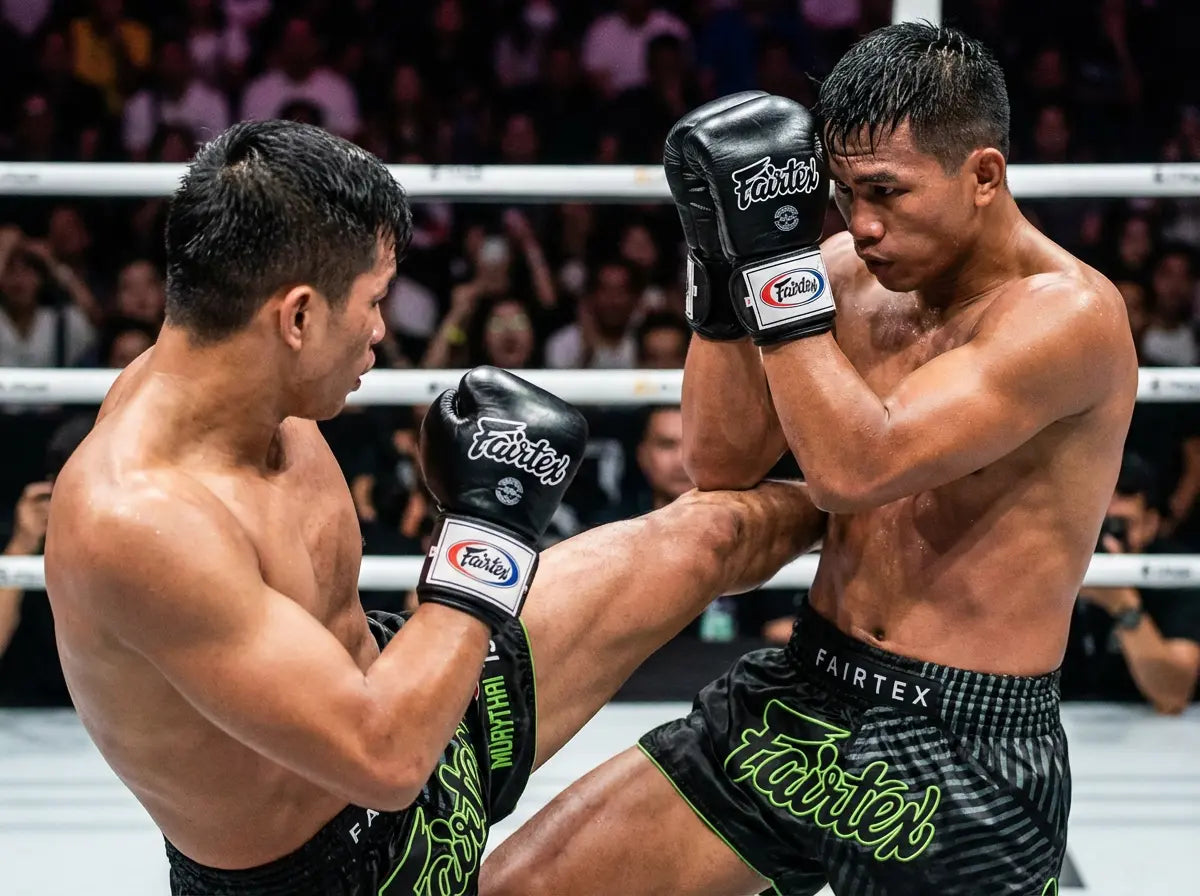
You’ve sparred plenty of Muay Thai. Then a Sanda athlete visits your gym. First exchange, they burst forward with a fast side kick—bang—your hips shoot back. Next beat: quick 1–2, they clinch your waist, and before you can lock a strong chern (clinch), you’re on the floor wondering what just happened. Sound familiar? The sanda vs muay thai conversation gets real the moment rules change and your go-to weapons get neutralized.
Flip the script. You catch their side kick, pivot, and hack the supporting leg with a heavy tae (kick). Their stance starts to crumble under low kicks, and when they rush, you post with a stiff teep (push kick) and tie up, dropping short ti sok (elbows) in a controlled clinch round. Different rule set, different outcome. You’re here to figure out what actually decides it—rules, tactics, training—and how to prepare. You’ll learn how Sanda martial arts and Muay Thai build their styles, where each shines, where each struggles, and how to cross-train smart so you’re ready for either platform. Is Sanda effective? Absolutely—understand the game, and you’ll see why.
Table of Contents
Sanda vs Muay Thai: Fundamentals & Rules
Both arts are full-contact striking systems that reward timing, balance, and pressure. The big separator? Rules shape style. Muay Thai is the “Art of Eight Limbs”—chok (punches), ti sok (elbows), ti khao (knees), and tae (shins). Sanda combines punches, kicks, and wrestling-style throws, plus ring-out scores on the lei tai platform. Different scoring priorities lead to different habits.
Rules and Scoring Shape Everything
Muay Thai (IFMA/WMC rules) emphasizes effective striking, balance, ring control, clean technique, and dominance in the clinch. Elbows and knees are core weapons, and dumps from the clinch score well but don’t overshadow clean strikes. Sanda (IWUF rules) allows and rewards takedowns, leg catches followed by throws, and pushing opponents off the platform; knees are limited and elbows are typically prohibited in amateur and most pro Sanda formats. So in Muay Thai, control the clinch and you’re rewarded. In Sanda, explosive entries, fast exits, and takedowns rack up points fast.
Stance, Footwork, and Range
Muay Thai stance is upright, balanced, and built to check kicks, launch the teep, and defend knees and elbows. Rhythm and timing win rounds. Sanda stance tends to be lighter, with a bounce that enables blitzing entries, side kicks, and quick level changes for body locks. Expect more lateral movement and sudden acceleration. If you’re a Muay Thai fighter facing Sanda, learn to shut down that side kick and manage the blitz. If you’re Sanda crossing into Thai rules, prepare your base against the low kick and clinch pressure.
Sanda vs Muay Thai: Technical Breakdown
You’ll see familiar tools—jabs, crosses, hooks, round kicks—but the setups and exits differ. In a mixed sparring room, the winning details are small: how you catch, how you frame, where your head goes during entries, how you land and reset.
Striking Priorities: Side Kick vs Teep
Both arts use linear kicks. Sanda’s bread-and-butter side kick is a piston to the midline; it scores, stops advances, and sets up takedowns. Muay Thai’s teep (push kick) works as a jab of the leg—disrupts rhythm, manages range, and kills the blitz. If you’re Thai-based, learn to angle your hips and forearms to parry or scoop the side kick, then counter with low kick or cross. If you’re Sanda-based, develop a feint-to-side-kick pattern and be ready to retract or step off line to avoid being caught and dumped.
Kicking Game: Roundhouse vs Movement
Thai round kicks carry heavy torque and body weight—great for damage and balance-breaking. Sanda round kicks land quicker with more bounce and angle changes. A Thai fighter should condition shin-on-shin checks and counters to catch movement-heavy kickers between steps. A Sanda fighter should incorporate shin conditioning and learn to hide the round kick behind hand feints, then exit on angles to avoid clinch entanglement.
Clinch vs Wrestling-Style Ties
In Muay Thai, the chern (clinch) is a full scoring phase with knees, posture control, off-balancing, and trips. Head position, collar ties, bicep ties, and frames dominate. In Sanda, prolonged clinch striking isn’t rewarded; fast body locks, hip throws, and trips are. A Thai fighter crossing over should build underhook/overhook awareness and hip positioning to deny lifts. A Sanda fighter moving into Thai rules must learn to secure posture safely and defend short ti khao (knees) and ti sok (elbows) while hand-fighting.
Takedowns, Catches, and Dumps
Sanda aggressively scores off catches—catch the kick, run the pipe, reap the base leg, or pivot to a mat return. Muay Thai allows catches and scores well on clean dumps that break balance. The mechanics overlap: timing the step, controlling the center line, and landing in stance. Priority difference: in Sanda, you’ll chain entries to end on top or force a ring-out; in Muay Thai, you’ll dump to score and reset before the ref breaks.
Punching Exchanges
Boxing transfers across both arts. The Thai style tends to sit in the pocket with high guard and counters, while Sanda often uses in-and-out entries with level-change threats. If you’re Thai, prepare for punch-to-tackle transitions. If you’re Sanda, don’t camp in the pocket where elbows and knees can appear in Thai rules. Drill exits after your 2–3 punch combination.
Training Drills & Practice Methods

Here’s how to build a game that holds up whether you’re fighting under Muay Thai or Sanda rules. Keep the pace realistic, use protective gear, and communicate with partners. Technique before power—your body will thank you.
Drill 1: Side-Kick vs Teep Intercept Ladder
Goal: Build answers to linear kicks. Round structure: 4 x 3 minutes. Partner A (Sanda emphasis) launches side kicks at 30–40% power. Partner B (Thai emphasis) cycles three responses per round: forearm parry to cross-low kick; scoop catch to dump; angle step to inside low kick. Switch roles each round. Progression: add feints, then add light hands after the kick. Safety: keep kicks controlled, and dump onto crash mats when working catches.
Drill 2: Anti-Throw Base in the Clinch
Goal: Teach Thai clinchers to deny Sanda body locks, and teach Sanda athletes to enter safely. 5 x 2-minute rounds of pummeling for underhooks with head position rules. Every 20 seconds, partner with double underhooks attempts a lift or outside trip; defender widens base, drops hips, frames, and circles out to stance. Switch initiator/defender each interval. Add light knees for Thai rounds; add mat returns for Sanda rounds with a soft landing.
Drill 3: Catch-and-Sweep Flow for Both Rulesets
Goal: Turn kicks into points. 6 x 90-second technical intervals. Partner A throws a mid or low round kick. Partner B practices three catches: same-side underhook catch with outside sweep; two-on-one catch with pivot and reap; scoop catch into run-the-pipe single. Reset quickly after each. Emphasize landing mechanics—knees bent, chin down, hands up—so you’re not vulnerable to counters on the reset.
Drill 4: Ring Control vs Platform Edge
Goal: Teach awareness of boundaries. Tape a smaller inner square to simulate a lei tai edge. 4 x 3-minute rounds. One partner pressure-fights, the other’s goal is to turn and exit without stepping off the “edge.” Switch roles every round. For Muay Thai emphasis, score mentally for clean checks, teep stops, and cornering. For Sanda emphasis, reward successful pushes or forced step-offs while staying balanced.
Drill 5: Blitz Entry Defense
Goal: Stop the Sanda-style burst. 5 x 2-minute rounds. Attacker performs three-step blitz: feint, side kick, punch entry to body lock. Defender cycles frames: long guard post, teep to hip, angle step with hook counter, sprawl-to-underhook when body lock lands. Start at 50% speed, build to 70%. Keep headgear on and agree on no elbows unless clearly controlled and with consent.
Common Mistakes & How to Fix Them
You don’t lose because your art is “worse.” You lose because habits from one ruleset leak into another fight environment. Fix the leaks, and your style shines.
Thai Fighter Mistake: Ignoring the Side Kick
Problem: Walking straight into linear kicks, assuming checks will cover it. Why it happens: Thai rhythm expects round kicks and knees more than karate-style line kicks. Fix: Drill forearm parries and angled entries. Keep your lead elbow close to your ribs, hip slightly turned out, and step outside the kick to attack the support leg. Add counter-crosses only after you manage distance.
Thai Fighter Mistake: Overcommitting in Clinch Under Sanda Rules
Problem: Reaching both hands high without hip awareness. Why: In Thai rules, that posture can dominate. In Sanda, it invites a body lock or hip toss. Fix: Build underhook literacy. Keep one underhook, one frame, hips back, and head under their chin. If they lock hands, drop your level, widen base, turn the corner.
Sanda Fighter Mistake: Standing Tall Against Low Kicks
Problem: Bouncy stance gets chopped by heavy low kicks. Why: Less emphasis on shin checks in many Sanda camps. Fix: Add Thai-style shin checks and low-kick counters. Slightly sit into your stance when you anticipate the kick, raise the checking shin with toes pulled back, and touch back down ready to exit on an angle.
Sanda Fighter Mistake: Entering the Clinch with Head Up in Thai Rules
Problem: Shooting for body ties with the head high. Why: In Sanda, elbows aren’t a threat. In Muay Thai, they are. Fix: Tuck your chin to their shoulder, hands pummel first, then step your hips in or out to avoid knees. Learn to break the collar tie before turning the corner.

Rules Nuances That Change Your Strategy Immediately
Fights swing on small clauses most people never read. If you’re crossing over, know how the ref and judges will actually score your work so you don’t waste energy in dead zones.
IFMA/WMC Muay Thai vs IWUF Sanda: Practical Differences
Muay Thai runs a 10-point must round-by-round. Visible impact, balance, and ring control drive scores. Clean ti khao (knees), ti sok (elbows), and dumps that show dominance matter. In Sanda, actions are rewarded as discrete scores—clean kicks, throws, and ring-outs accumulate fast. Elbows are out, knees are limited, and clinch resets quickly if there’s no immediate attack. Translation: in Thai rules, sustained phases and balance-breaking win the round; in Sanda, quick, high-value moments stacked over and over win the match.
Ring-Out and Edge Pressure on the Lei Tai
On the lei tai, forcing your opponent off the platform scores and can flip a round in seconds. Footwork changes: keep your back foot inside the “safe lane,” angle out before you hit the boundary, and never exchange square near the edge. If you’re the pusher, combine side kick, shoulder post, and snatch single to drive through—then recover your stance so you don’t follow them off.
Clinch Duration and Legal Weapons
Muay Thai allows a full scoring chern (clinch) phase—hand fight, break posture, and knee until the ref breaks. Sanda gives you a heartbeat to attack: secure, throw, or you’re separated. Keep this straight: in Sanda, aim for fast body locks and trips; in Thai, settle your head position and hips, then work knees and off-balances without rushing.
Equipment and Surface Differences You Must Prepare For
Small gear changes change traction, speed, and the way you fall. Train for the surface you’ll fight on.
Footwear and Traction
Many Sanda events allow shoes. Shoes grip hard—great for drive on entries, risky for getting stuck during pivots. If you’re used to barefoot Muay Thai, drill your angle steps and spins with wrestling shoes once a week so you don’t catch a toe and twist a knee. On Thai canvas, bare feet slide a touch—use that glide to reset off checks and teep (push kick) retreats.
Protective Gear and Targets
Amateur Sanda often includes headgear and shin/instep guards; elbows are out and knees to the head are typically prohibited. Amateur Muay Thai may include elbow pads and shin guards, with controlled elbows allowed depending on the sanctioning body. Calibrate your weapons: if elbows are out, upgrade your forearm frames and collar ties to throw-focused grips; if elbows are in, keep your entries tight with your head protected.
Platform vs Ring Awareness
The lei tai has hard edges; the ring has ropes that “give.” On a ring, ride the ropes to turn; on the platform, you must pivot early. Tape a boundary in camp and simulate both so your instincts fire on time fight night.
Safety First: Landings, Falls, and Edge Awareness
Striking is fun until you come down badly from a throw. Build fall skills like you build your jab—on purpose, every week.
Breakfall Basics for Strikers
Keep your chin tucked, round your back, and slap the mat with your forearm (not your wrist) to dissipate impact. Never post a straight arm when you’re twisted—shoulder and elbow injuries happen that way. If you’re mid-air from a hip toss, turn toward your opponent so you land on your back, not your outstretched hand.
Safe Dump Mechanics for Thai Rounds
When you catch and dump, guide their torso so their hips rotate—don’t spike. Step off-line, rotate their shoulders, and let gravity do the rest. Control one sleeve (forearm) or bicep as they fall so you don’t collide knees-to-face on the way down. Reset clean when the ref steps in.
Edge Protocol on the Lei Tai
Any time you’re two steps from the edge, call “edge” in sparring. Attacker moderates pace; defender works one technical escape: inside turn, hip switch, or angle step. No blind shoves. The goal is timing and footwork, not sending partners into walls.
8-Week Crossover Camp Template (Thai ↔ Sanda)
Keep it simple: one focus per block, progressive intensity, clear rules each round. Three skill sessions + one conditioning day per week works for most amateurs.
Weekly Structure
- Day 1 (Skill A): Technical focus (60–75 min), positional sparring (3–4 x 2–3 min)
- Day 2 (Skill B): Drills + padwork integration (60–75 min), light situational spar (3 x 2–3 min)
- Day 3 (Mixed Rounds): Rounds that alternate rules every bell (5–8 x 2–3 min)
- Day 4 (Conditioning): Intervals + strength (45–60 min), mobility (15 min)
Block Priorities
- Weeks 1–2: Linear kick defense, stance adjustments, basic pummeling
- Weeks 3–4: Catch-and-counter systems, anti-throw hips, edge drills
- Weeks 5–6: Clinch literacy (Thai) or throw chains (Sanda), exit habits
- Weeks 7–8: Competition rounds under target rules, taper volume last 5–7 days
Advanced Drills to Close the Gap Fast
Add these once basics stick. Keep power moderate and reps high so timing improves without burnout.
Edge Escape and Re-Entry
- Setup: Tape a 4 m square inside your ring to mark the “edge.” Attacker pressures; defender starts with heels near the line.
- Execution: Defender uses three-pattern cycle: pivot out on the lead foot and teep; L-step with hook counter; underhook-and-turn to center. Switch roles every minute.
- Common Mistakes: Backpedaling straight; throwing while square; forgetting to reset stance after the turn.
- Progression: Add a level-change threat (body lock) for the attacker; defender must frame or sprawl before turning.
Shoe-On Traction Rounds
- Setup: Light shoes on both partners, 3 x 3-minute technical rounds.
- Execution: Work side-kick entries, angle exits, and hip turns, focusing on smooth pivots without knee twist.
- Common Mistakes: Planting the foot too long on spins; over-rotating on low kicks.
- Progression: Add 20-second blitz intervals each round to mimic Sanda pace.
Catch-to-Decision Tree (Thai vs Sanda)
- Setup: Partner A throws mid/low round kicks. Partner B declares “Thai” or “Sanda” each rep.
- Execution: Thai call: same-side catch → off-balance → dump, hands up on exit. Sanda call: two-on-one catch → run-the-pipe to finish on top or drive to edge.
- Common Mistakes: Holding the leg too long; dropping your guard; dumping without angle.
- Progression: Attacker chains punch-to-kick; defender must choose the correct tree under pressure.

Frequently Asked Questions
Is Sanda effective?
Yes. Sanda is proven in full-contact competition, blending strikes, throws, and ring-out tactics. Under IWUF rules, fast takedowns and positional wins score big. Against unprepared opponents, the side kick and blitz-to-body-lock sequence is a nightmare. As with Muay Thai, effectiveness depends on coaching, sparring quality, and rule familiarity. If you learn to defend the blitz and deny the body lock, you’ll see the layers more clearly.
Which is better: Sanda vs Muay Thai?
“Better” depends on the rules and your goals. Want elbows, knees, and extended clinch? Muay Thai. Want throws and ring-outs with punch-kick entries? Sanda. Both produce tough, skilled fighters. Cross-train fundamentals from each—linear kick defense for Thai fighters, low-kick checking and clinch safety for Sanda—and your overall game improves.
How do Muay Thai rules differ from Sanda rules?
Muay Thai (IFMA/WMC) scores effective strikes, balance, ring control, and clinch dominance, with elbows and knees legal. Sanda (IWUF) scores strikes plus takedowns and ring-outs, often disallowing elbows and limiting knees. That one shift changes tactics immediately: clinch becomes striking-heavy in Thai, while Sanda clinch becomes throw-focused and brief.
Can a Muay Thai fighter win under Sanda rules?
Absolutely, if they train for takedown defense, edge awareness, and catching linear kicks. The trap is trying to clinch for long periods. Instead, land your shots, deny the body lock, and exit. Build a game around the teep, low kicks, and fast resets. Work sprawls and hip positioning to shut down lifts. Many Thai-based strikers do well after adding even 8–12 weeks of anti-throw training.
Can a Sanda fighter win under Muay Thai rules?
Yes, with clinch literacy and low-kick defense. If elbows and knees are new to you, you must spar progressively with protective gear and clear rules. Blend your entries with better head position, hand fighting, and inside frames. Add Thai pad rounds to develop round-kick power and conditioning—elbows and knees come next once you’re comfortable in the pocket.
What should I focus on first if I cross-train?
Thai to Sanda: side-kick defense, blitz shutdowns, underhook/overhook pummeling, and edge control. Sanda to Thai: shin checks, round-kick power, clinch posture, elbow-safe entries. For both: aerobic base plus mixed tempo rounds; 2–3 focused drills per session beat scattered training.
Is the Sanda side kick really that hard to deal with?
It is if you’ve never trained against it. The side kick hits like a battering ram to your hips or solar plexus. Commit a month to parries, scoops, and angle steps. Once you can redirect or catch it, the kick becomes an opportunity—low-kick counters and dumps start appearing everywhere.
How important is the clinch in Muay Thai compared to Sanda?
In Muay Thai, the clinch is a full scoring range with knees, posture breaks, and dumps. In Sanda, the clinch is a launchpad for fast throws or resets. If you’re competing Thai rules, invest heavy time into hand fighting, posture control, and knee timing. For Sanda, drill entries and exits with clean body mechanics and land safely.
What conditioning transfers best between the two?
Intervals that mix striking bursts with grappling scrambles. Think 30–40 second blitzes followed by technical resets. Research on combat sports conditioning since 2020 shows high-intensity intervals combined with steady-state work builds both power and endurance. Add posterior chain strength for anti-throw stability and neck/upper back work for clinch resilience.
Any safety tips when mixing rules in sparring?
Set the rules before the round. If elbows are allowed, keep them controlled and wear appropriate pads. Use crash mats for throw practice. Warm up your hips and lower back thoroughly. Technique before power—focus on clean entries and safe landings. If you feel a joint getting torqued, verbal tap and reset. Good partners make good fighters.
Key Takeaways
- Rules shape style. Sanda rewards throws and ring-outs; Muay Thai rewards sustained striking and clinch control.
- Shut down Sanda’s side kick and blitz with angles, teep, and base; protect against body locks.
- Prepare Sanda athletes for low kicks, elbows, and clinch hand fighting before entering Thai rules.
- Cross-train specific drills—catch-and-sweep, anti-throw pummeling, edge control—to win in either arena.
Final Thoughts
Put two skilled fighters in front of each other and the rules decide the conversation. That’s the honest truth behind Sanda vs Muay Thai. If you respect what each art values, you stop arguing and start training the gaps. Thai fighters—own the side-kick range and deny the body lock. Sanda fighters—fortify your legs, learn the clinch hand fight, and keep your head safe when you enter.
Here’s my challenge for you this month: two technical sessions per week dedicated to your weak rule set, plus one mixed-round sparring day where you clearly set the rules before the bell. Track what scores, what fails, and what hurts. Adjust, repeat, and keep the warrior spirit with a technician’s patience. That’s how you build a game that wins on any platform.
About This Training Approach
These methods reflect traditional Thai camp wisdom blended with modern competition insights. Organizations like the IFMA and WMC outline scoring that rewards balance and effective technique, while IWUF Sanda rules emphasize throws and ring-outs. Camps with long histories—such as Fairtex in Thailand—have spent over 50 years developing fighters and equipment that stand up to real ring demands while respecting the art’s traditions.
Last Updated: November 2025
About the Author
Fairtex Team, 50+ Years of Muay Thai Equipment Manufacturing – Combat Sports Equipment Specialists.
The Fairtex Team specializes in combat sports training and competition needs, with decades of experience supporting Muay Thai athletes and gyms worldwide. Their work focuses on practical fight preparation—rule-set differences, training structure, and safety-first progression for striking and clinch-heavy disciplines.
Related topics:
-
Be Inspired. The Story of Mr. Phillip Wong and the Spirit of Fairtex
-
Discover the Benefits of Fairtex Bamboo Towels: A Sustainable Choice for Your Everyday Comfort