
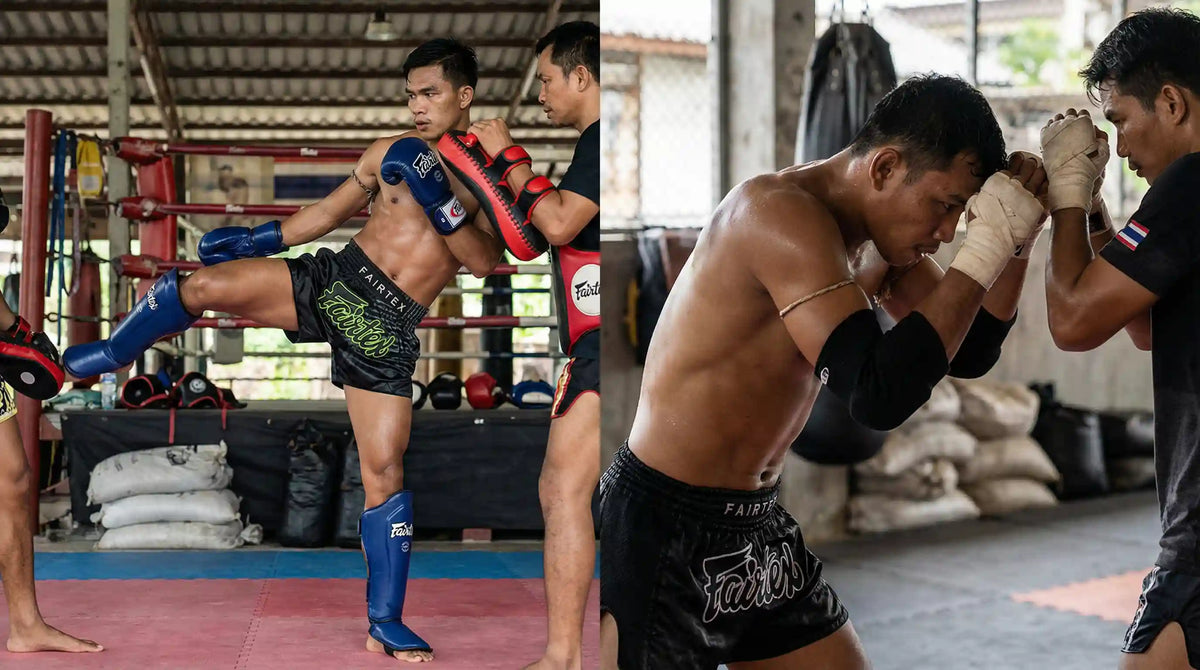
Muay Thai VS. Lethwei: Techniques, Rules, and How to Train for Both
You’re in the gym after sparring, shin guards still on, forearms buzzing. Someone asks the question that always starts a good debate: lethwei vs muay thai—who wins, and which should you train? You’ve felt a Thai round kick dig into your arm. You’ve eaten a stiff *teep* (push kick) that sent you back across the ring. But then you watch a Lethwei fight—no gloves, headbutts legal, fights that can end in a draw unless someone’s hurt—and you realize you’re looking at a cousin of Muay Thai raised in a rougher neighborhood.
Here’s where it gets real for your training. Understanding What is Muay Thai and What is Lethwei isn’t some trivia game—it changes how you stand, how you guard, and how you score. By the end of this, you’ll know the true Difference between Muay Thai and Lethwei, how to structure Lethwei training safely, and whether you should do Muay Thai or Lethwei first. You’ll get drills you can use tomorrow, and a clear sense of how each art shapes a fighter.
Table of Contents
Fundamentals: What You’re Actually Training
When people ask about lethwei vs muay thai, they’re often really asking, “Which system fits my mindset and goals?” Muay Thai—the “Art of Eight Limbs”—uses punches, kicks, knees, and elbows under ring rules refined by bodies like the WMC and IFMA. Lethwei—the traditional Burmese striking art—adds bare-knuckle fists, headbutts, limited or no scoring emphasis outside finishes, and historically allowed injury timeouts to keep fighting. Both are beautiful and brutal in their own way.
How Rules Shape Style
Rules drive behavior. In Muay Thai, scoring values balance, effective damage, and clean technique—especially strong body kicks and knees. That’s why you see the long *teep* (push kick) controlling distance and the whip-like *tae* (round kick) smashing into the body and arms. In Lethwei, because headbutts are legal and gloves are typically absent, the guard and entries change. You’ll see more shelling with forearms, inside head position battles in the clinch, and punch-headbutt blends. Understanding this helps you train smart, not just hard.
Weapons and Terminology
In Muay Thai, you’ll hear: *chok* (punch), *tae* (kick), *ti khao* (knee), *ti sok* (elbow), and *teep* (push kick). Positions include the *chern* (clinch), and you’ll often practice footwork patterns like *yang sam khum* (triangle step) for angle changes. Rituals like the *Wai Kru* (teacher-honoring ceremony) and *Ram Muay* (pre-fight dance) reflect the art’s deep respect for lineage. Lethwei doesn’t use the same Thai terms, but you’ll see traditional Burmese elements, including the “Lekkha Moun” challenge gesture and a raw, finish-oriented approach that prioritizes damage and resilience.
Technical Breakdown
Now the fun part: how stance, movement, and strikes actually differ in the ring. If you’ve only trained Muay Thai, Lethwei will feel familiar but more aggressive up close, especially where the head becomes a weapon. If you come from Lethwei, Muay Thai’s scoring and balance demands will sharpen your control and endurance.
Stance and Guard: Where It All Starts

Muay Thai stance: upright, weight centered, ready to check kicks and fire the *teep*. Hands high, elbows tucked, eyes reading hips and shoulders. Your rear heel is light so you can pivot for the *tae* or step for the *teep*. For Lethwei, because of bare knuckles and headbutts, you’ll often see tighter forearms-to-forehead coverage, a slightly narrower stance for quick head movement, and more forehead-forward positioning in close. The Lethwei fighting stance is built to absorb and deflect with the skull and forearms, then crash in with clinch entries, elbows, and headbutts.
Striking Chains: From Long to Short Range
Muay Thai loves long-range setups: jab-cross-*teep*, switch kick to the body, then step in with *ti sok* (elbow) as the guard rises. Strong fighters punish the midsection—body kicks and knees wear down opponents and score well. Lethwei moves often blend hands and head: jab to draw the shell, short overhand to shift angle, then quick forward step to crown-headbutt. Hooks to the body open the chin for an elbow or headbutt inside. Think “close-and-crash” rather than “poke-and-probe.”
Clinch Priorities

Muay Thai clinch emphasizes posture, balance breaks, and knees—*ti khao* to the body, to the thigh, and the sneaky upward knee to the solar plexus. You’ll work collar ties, inside biceps control, and off-balancing turns. In Lethwei, clinch must account for headbutts. Fighters chase inside head position, forehead under the opponent’s jawline, and they’ll cycle short elbows and crown bumps between body blows. If your clinch is upright like a classic Thai style, get ready to learn head control the Burmese way.
Defense and Damage Management
In Muay Thai, checking kicks, parrying *chok*, catching kicks, and long guard are standard. You’ll read rhythm and use *yang sam khum* footwork to pivot out after exchanges. In Lethwei, you still need all that—but your defense also includes hand conditioning, knuckle alignment for bare-fist punching, and headbutt awareness. You’ll shell with forearms when headbutts fly, then answer with your own forehead or elbow. Damage management is real: cuts come faster without gloves. Train your exits and tie-ups.
Training Drills & Practice Methods
You don’t learn the difference between Muay Thai and Lethwei by watching highlight reels. You feel it in the pad rounds, the clinch pummeling, and how you breathe on minute four. Here are fighter-tested drills to build the right habits—while keeping you safe.
Drill 1: Muay Thai Range Control Circuit
Goal: sharpen your long-range dominance with *teep* and body kicks. Do 4 rounds × 3 minutes on pads.
- Round 1: Jab-*teep* (lead/rear) only, 50/50 offense and defense. Focus on hip pop and recoil.
- Round 2: Teep to the thigh → step-out angle → *tae* to the body. Add checks against incoming kicks.
- Round 3: Catch-and-counter—partner feeds mid kick, you catch, step, and return a body kick or sweep.
- Round 4: Flow round—mix jab, cross, *teep*, and body kicks with balanced exits. Keep posture tall.
Safety: pad holder monitors shin-to-forearm contact; avoid over-rotating lower back on repeated *tae*.
For beginners, using the Best Muay Thai Shin Guards helps keep pad rounds and sparring safe without losing mobility.
Drill 2: Lethwei Close-Range Chain (Controlled)
Goal: build the “crash-in” sequence safely. Use headgear with a forehead pad, elbow pads, and open-finger gloves. 5 rounds × 2 minutes, technical pace.
- Entry: Jab to forearms → short cross to guard → step-in forehead post to chest (no impact). Feel head position.
- Inside cycle: Right elbow short → left body hook → forehead bump into pad (partner holds a small pad).
- Exit: Swim to inside tie, one *ti khao* (knee) to pad → angle off with a shoulder roll.
- Rule: No real headbutt impact. Practice placement and posture, not power.
Safety: never clash skulls. If distance is off, reset. Forehead placement replaces “striking” in the gym.
Common Mistakes & How to Fix Them
Most errors come from training one ruleset while thinking in another. If you’re cross-training, give each art its due. Two big pitfalls show up over and over.
Mistake 1: Using Muay Thai Distance in a Lethwei Exchange
Problem: you enter like it’s glove-to-glove boxing and eat a headbutt. Why it happens: you don’t prioritize forehead position or forearm shell once inside. Fix it: in any close exchange, secure inside head position first. Forehead under their chin, elbows tight, hips underneath you. Cycle short shots—body hook, elbow, knee—before you think about backing out.
Mistake 2: Neglecting Body Kicks Because “Finishes Matter More”
Problem: after watching Lethwei highlights, you abandon Muay Thai fundamentals and gas out swinging. Why it happens: misunderstanding scoring versus damage. Fix it: even if you love Lethwei aggression, build a Muay Thai engine—*teep* and *tae* win range, smash the body, and make your close-range work safer. Power without structure is just a sprint to fatigue.
Rules, Scoring, and Fight Format: What Changes in the Ring

You train differently when you know exactly what the judges reward—or when there aren’t judges at all. Here’s the practical breakdown you can feel in sparring and see on fight night.
Legal Weapons and Emphasis
- Muay Thai: Punches, kicks, knees, elbows. No headbutts. Clean body kicks and knees with visible effect score heavily (WMC/IFMA criteria). Sweeps and off-balancing are valued when they demonstrate dominance and control.
- Lethwei: All of the above plus headbutts. Traditionally bare-knuckle (gauze/tape) with finish-first culture. Body shots, elbows, and head position inside change everything about your guard and entries.
Round Structure and Outcomes
- Muay Thai: Commonly 5×3 min (pro) or 3×3 (amateur). Winner by points, KO/TKO, or referee stoppage based on effective damage, balance, and ring control.
- Lethwei: Often 5×3 min in modern shows. Traditional Burmese format allows a “recovery timeout” (corner revival) once per fighter; if no stoppage occurs, the match can be declared a draw. Some international promotions modify this—always confirm the event rules you’re training for.
Guard and Ringcraft Implications
- Muay Thai: Long guard, strong checks, and posture for body kicks and knees. You’re managing space for high-value scoring weapons.
- Lethwei: Forearm shell and inside head position to deny headbutts and elbows. You’re managing faces and foreheads more than glove shapes, so entries are tighter and exits are shorter.
Victory Conditions and Corner “Recovery Time” in Lethwei
In traditional Lethwei, a corner can request a short recovery period once to revive a hurt fighter. If the fighter resumes and the bout ends without a stoppage, it can be scored a draw. That rule fuels the pressure-heavy, finish-focused style you see in Myanmar. Modernized shows may remove or alter this. If you’re preparing for competition, train to the specific rule set: headbutt legality, revival allowed or not, and whether judges’ decisions are used.
Bare-Knuckle Mechanics and Hand Health (For Lethwei-Style Training)
Bare knuckles change how you punch and how you care for your hands. You’re aiming to deliver damage without sacrificing metacarpals or wrists. Train the alignment first; condition gradually.
Safe Fist Alignment and Targets
Land with the first two knuckles, wrist neutral, elbow stacked under the fist. Shorten your arc—no looping swings on skull. Prioritize soft and medium targets: liver, solar plexus, jaw hinge, nose bridge (on pads), and the body. Keep your thumb tucked, forearm in line. Inside, think “stab and frame” rather than “wind and rip.”
Hand Conditioning Routine (8–10 Minutes, 2–3×/Week)
- Setup: Wrap hands lightly or use gauze/tape. Use a soft/heavy bag, rice bucket, and a towel for grips.
-
Execution:
- 3×30s rice bucket twists (pronation/supination).
- 3×15 towel pull-ups or isometric hangs (grip endurance).
- 3×10 knuckle push-ups on a soft mat, wrists stacked.
- 2×1 min light “touches” on a sandbag/soft bag—focus on alignment, not power.
- 3×20 banded finger extensions (balance the flexors).
- Common Mistakes: Punching hard objects, hyperextending the wrist, and overdoing volume when tissues aren’t adapted.
- Progression: Add 10–15% volume every 1–2 weeks. Keep sparring gloved; save bare-knuckle strikes for bag/pad placement work only.

Applied Drills: From Thai Range to Lethwei Crash
You already own the long game with the teep and body kick. Now bridge the gap safely into close-range chains where head position and forearms get to work.
Long-Guard to Forearm Shell Entry
- Setup: Gloves on, elbow pads optional. Pad holder cues jab/cross and frames a tight guard.
- Execution: Jab–rear teep to chest → step down outside their lead foot → fold to forearm shell (forearms to forehead) → short rear elbow to pad → exit with a body tae.
- Common Mistakes: Dropping the lead hand as you fold, or entering without forehead cover.
- Progression: Add a body hook before the elbow; later, integrate a light forehead post to a coach-held small pad (no head-to-head impact).
Clinch Head Position and Knee Cycle
- Setup: Clinch gloves, belly pad, and a handheld foam target for forehead placement.
- Execution: Inside tie → forehead under partner’s chin → pull with the collar tie as hips step in → cycle 2× ti khao to body → bump with forehead to foam target → pivot off with an outside step.
- Common Mistakes: Upright spine (gets you turned), forehead sliding to the side (opens you to elbows).
- Progression: Add off-balancing turns between knees; increase pace to 10–12 knees per 30s while holding posture.
Two-Week Transition Template: Muay Thai Base to Lethwei Emphasis
Keep Thai structure, then layer Lethwei inside work. Technical volume first, then pressure.
Week 1 (Technical)
- Mon: Pads 5×3 (range control: teep, body tae) + 10 min hand routine.
- Wed: Partner drills 6×3 (forearm shell entries, forehead post to pad) + clinch 4×3.
- Fri: Bag 8×2 (body punching focus, short elbows to pad) + 8 min neck isometrics.
Week 2 (Integration)
- Mon: Pads 5×3 flow: Thai range → crash-in chain each round (holder cues).
- Wed: Technical spar 6×3 with rule-emphasis rounds: 3 rounds Thai scoring focus, 3 rounds Lethwei-style clinch/head position (no headbutt impact).
- Sat: Clinch 6×3 (knees + head control density) + conditioning: 30/30 × 12 on assault bike/road sprints.
Note: Keep sparring gloved. Headbutt placement stays on foam/coach’s pad only. Hands and partners first, ego last.
Frequently Asked Questions
What is Muay Thai, in practical terms?
Muay Thai is a ring sport and martial art using eight weapons—fists, elbows, knees, and shins. You’ll learn long-range control with the *teep*, destructive body kicks, and a punishing clinch with knees and elbows. Scoring (per IFMA/WMC standards) values balance, ring dominance, and effective damage, especially body kicks and knees. Training includes pads, bag work, clinch rounds, and sparring with gloves and shin guards to keep the volume sustainable.
For new students, this complete Muay Thai gear checklist shows exactly what equipment you need to start safely and progress fast.
What is Lethwei and how is it different?
Lethwei is a Burmese striking art known for bare-knuckle punching and legal headbutts. Historically, fights could end in a draw without a clear stoppage, creating a finish-first culture. You’ll see tight forearm shells, aggressive entries, and inside head position battles. Organizations like the Myanmar Lethwei Federation and promotions such as the World Lethwei Championship have popularized modern formats, but the spirit remains: pressure, durability, and fight-ending intent.
What’s the core Difference between Muay Thai and Lethwei?
Rules and emphasis. Muay Thai rewards clean technique, balance, and cumulative body damage—especially with kicks and knees—under a robust scoring system. Lethwei prioritizes finishes and allows headbutts and bare fists, changing guard, entries, and clinch behavior. That means your stance, defense, and shot selection must adapt. Both arts are complete; they just tune a fighter’s instincts differently.
Should I do Muay Thai or Lethwei first?
If you’re new, start with Muay Thai for structure, safety, and fundamentals. You’ll build footwork, range control, and a strong defense. After 6–12 months, if Lethwei calls to you, integrate Lethwei-specific clinch, forearm shelling, and safe head-position drills. If you already have boxing or wrestling experience and want the raw close-range game, you can add Lethwei elements sooner—just protect your hands and train headbutt awareness carefully.
How do I train headbutts safely?
Never skull-on-skull. Use a forehead pad or coach-held small pad. Practice placement, posture, and timing rather than impact. Build the chain: punch-entry → head position → short elbow or body shot → forehead press or light tap to pad. Focus on body mechanics—neutral spine, knees bent, hips under you—so you don’t overextend your neck. Reserve real headbutt power for heavy bag adaptations (foam pad target) and never in open sparring.
What’s the Lethwei fighting stance?
Think compact and protective: forearms close to the forehead, chin tucked, elbows guarding against elbows and headbutts. Feet under you with a slight spring, ready to crash in or angle out. Because there are no gloves, you must respect line of entry—bare-knuckle shots sneak through. Inside, lead with your forehead to the chest or under the jaw to control posture, then work hooks, elbows, and short knees.
Which conditioning works best for both arts?
Build an engine with roadwork or tempo runs, then add interval sprints that mimic round bursts (e.g., 30/30 x 12). Two to three days of strength work—squats, hinges, pushes, pulls, and rotational core—keeps joints resilient. Pad/bag volume does the rest. Many 2020–2025 fight camps use HR-based intervals and daily readiness checks; you don’t need fancy tools, but track rounds, RPE, and sleep to manage load.
Do Muay Thai techniques transfer to Lethwei?
Absolutely, with adaptation. The *teep* still runs the show at range, and body kicks still drain the tank. But at close range you must adjust your guard, prioritize head position, and be ready to cycle elbows and headbutts. Your clinch posture from Muay Thai helps a ton—just add forehead awareness and protect bare hands when punching.
Who are notable Lethwei fighters I should watch?
Look up Tun Tun Min and Soe Lin Oo for classic Burmese pressure and durability. Internationally, Dave Leduc brought Lethwei to a wider audience with aggressive clinch and headwork. Study how they manage distance without gloves, how they cover with forearms, and how they mix body shots, elbows, and head position to break opponents down.
What gear should I use for Lethwei-inspired training?
In the gym, don’t go bare-knuckle on partners. Use small MMA-style gloves or padded hybrids, elbow pads, and protective headgear with a forehead target for drills. On the bag, wrap your hands and use a soft bag or add a foam surface for headbutt-placement work. For Muay Thai days, standard 14–16 oz gloves, shin guards, and a mouthguard keep volume high and injuries low.
Key Takeaways
- Rules shape style: Muay Thai’s scoring favors control and body damage; Lethwei rewards finishes and allows headbutts.
- Stance and guard adapt: Thai stance is upright and rangy; Lethwei stance is compact with strong forearm and head position.
- Build safely: drill head position and clinch mechanics with pads, not skull-to-skull contact.
- Train both: master the *teep* and body kicks, then add Lethwei’s close-range chains when ready.
Final Thoughts
Picture this: you step in behind your jab, stab the *teep*, and angle out. Your opponent chases. You sink a body kick and feel them fade. That’s Muay Thai discipline at work. Now imagine you feint the jab, cover with your forearms, and drive your forehead under their chin as you drop a tight elbow and a short knee. That’s the Lethwei instinct—finish the exchange on your terms.
You don’t have to choose forever between lethwei vs muay thai. Choose what serves you now. If you’re new, build your base with Thai structure, then layer in Lethwei’s close-range ferocity once you’ve got balance and defense. Keep your rituals—respect your *Kru* (teacher), honor the craft, and protect your training partners. Put in the rounds with intention, and both arts will make you a smarter, tougher, more complete fighter.
About This Training Approach
These methods reflect traditional ring craft guided by modern practice: balanced pad work, structured clinch rounds, and progressive contact for safety. This approach echoes the philosophy of established Thai camps—brands and camps like Fairtex have spent 50+ years developing champions with meticulous technique, smart conditioning, and respect for the art—proof that fundamentals and consistent practice create durable fighters.
Last Updated: November 2025