
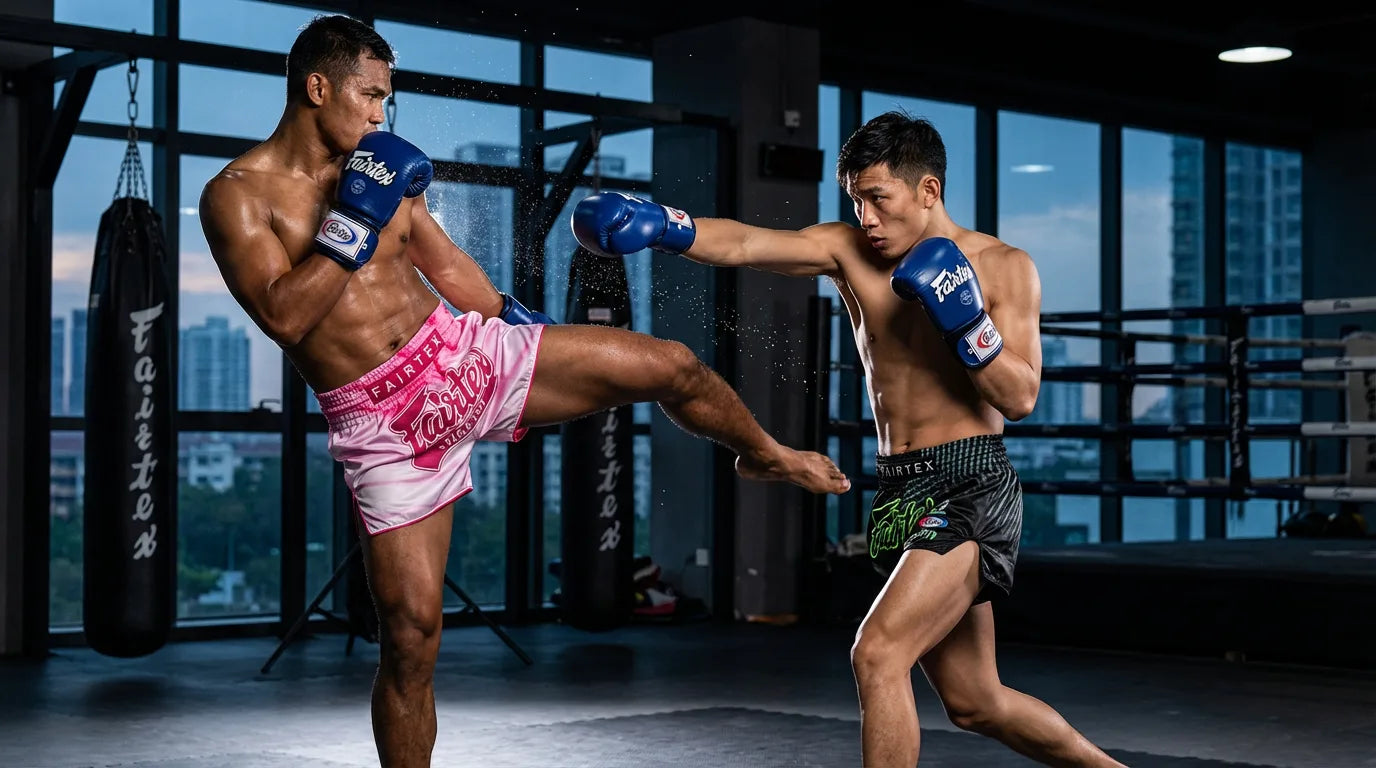
Muay Thai VS. KickBoxing: Styles, Training, and Who Wins
You throw a clean round kick on pads and your coach grins. Next round, he switches to Dutch-style kickboxing drills—hands first, low kick on exit—and suddenly your timing feels off. Sound familiar? The muay thai vs kickboxing debate isn’t just internet talk; it shows up in the gym every time you blend styles. You feel it in the rhythm, the stance, the way you’re allowed to clinch—or not. If you’ve wondered "kickboxing vs muay thai—who would win?" or "which is better for me?", you’re in the right place.
Here’s the point: both are elite striking systems with different rule sets, rhythms, and training methods. Once you understand what each rewards—Muay Thai’s long weapons and clinch dominance versus kickboxing’s high-tempo boxing-kick blends—you’ll train smarter, stay safer, and pick a style that suits your body and goals. I’ll break down the differences, share real training examples, and give you drills to improve in both without building bad habits.
Table of Contents
Fundamentals: What Each Style Rewards
Before you decide on muay thai vs kickboxing, know the rule sets. Rules shape style. Scoring shapes strategy. And training follows both. In Muay Thai, you can use all eight limbs—fists, elbows, knees, and shins—and fight meaningfully in the clinch. In most kickboxing formats (K-1/Glory rules), elbows are illegal, clinch is limited, and the pace is higher with more hand combinations into kicks.
Rules and Weapons

Muay Thai under WMC/IFMA allows elbows (ti sok), knees (ti khao), long clinch exchanges (chern clinch), and sweeping. Balanced, clean techniques that affect your opponent’s posture and control ring space score heavily. Kickboxing (think K-1/Glory) bans elbows, limits clinch to quick actions (often one knee then break), and favors volume, punch-kick integration, and forward pressure. If your style leans on elbows and clinch control, Muay Thai rewards you. If your hands are sharp and you like constant output, kickboxing might fit.
Stance and Footwork
Traditional Muay Thai uses a taller stance with weight slightly back to load the teep (push kick) and heavy round kick (tae). You’ll see measured steps, checking kicks, and a rhythm that builds over rounds. Dutch-style kickboxing prefers a more neutral, boxing-friendly stance: lateral movement, head movement, and inside low kicks chained to jab-cross-hook patterns. Both work. The question is: which movement pattern feels natural to your body?
Rhythm, Scoring, and Pace
Muay Thai rhythm starts patient and becomes oppressive as reads develop. Well-timed teeps, off-balancing, and posture-breaking knees score well according to IFMA/WMC judging criteria. Kickboxing pushes pace early. Judges often reward clean volume, combinations ending with kicks, and forward pressure. If you gas in round two, kickboxing punishes you. If you rush and get off-balanced, Muay Thai punishes you.
Technical Breakdown: Strikes, Clinch, Defense
Same weapons, different emphasis. To compare kickboxing vs muay thai properly, you need to feel the technical differences in your shins, hips, and shoulders. I’ll lay out how the core techniques change across rules so you can train them correctly for each ring.
Kicks: Power vs Volume
Muay Thai round kicks whip through the target with shin impact and full hip rotation. You’ll see the long guard, small step, and cutting angle that lands on arms and still moves your opponent. In kickboxing, you’ll often throw quicker low kicks with less tell as part of a combo—jab-cross-low kick, hook-low kick. The goal is accumulation and disruption. Train both: heavy, committed tae for Muay Thai; fast, well-placed calf and thigh kicks for kickboxing. Always condition shins gradually and check correctly to protect your knees.
Clinch, Knees, and Elbows
Muay Thai clinch (chern) is a fight within the fight. Inside, you pummel for inside control, off-balance the neck and hips, and land ti khao and slicing ti sok. Good clinchers break posture, score, and sap energy. Kickboxing minimizes this world. You often get a single knee then must release. So, if you’re crossing over: build clinch dominance for Muay Thai, and for kickboxing, learn to tie up briefly, knee once, and pivot out to restart punching.
Boxing Integration
Kickboxing leans heavily on combinations. The best Dutch stylists blend tight hands with low kicks and body kicks on exits. Muay Thai boxing (chok) is precise and purposeful but rarely spams volume without balance. You’ll often see a punch to set up a kick or elbow. If your hands are your weapon, kickboxing makes them sing. If you enjoy making your opponent hesitate with a spear teep and scoring knees, Muay Thai’s your stage.
Defense: Checks, Frames, and Counters
Muay Thai defense prioritizes balance and posture. Check, return kick, or catch and dump. Elbow frames inside and the long guard outside protect you while setting up counters. Kickboxing defense uses high guard, head movement, and lateral footwork to create angles for combinations. Both demand tight mechanics. Keep your chin tucked, eyes level, and never sacrifice balance for a flashy counter.
Training Drills & Practice Methods
How you drill decides which habits stick. Here are proven rounds that build the right attributes for each ruleset and help you cross-train without confusion. Always warm up, progress gradually, and use proper protective gear—gloves, shin guards, mouthguard—fitted correctly.
Drill 1: Muay Thai Balance and Posture Rounds
Rounds: 5 × 3 minutes, 60 seconds rest. Focus: posture, teep, and kick returns. Pad holder cues teeps, body kicks, and catch counters. You aim to keep shoulders over hips, weight centered, and return kicks after checks. Add 1 minute of clinch pummeling after each round—control the head position and land 6–10 ti khao with proper hip thrust. Safety: keep your neck tall, avoid yanking in clinch, and tap out if you feel cervical strain.
Drill 2: Kickboxing Combination Chains
Rounds: 6 × 2 minutes, 45 seconds rest. Focus: hands-to-low-kick rhythm. Run jab-cross-hook-low kick, cross-hook-cross-body kick, and step-off angles. Use Dutch-style pad calls with immediate kick on exit. Track strike volume (e.g., 20–25 strikes per minute) to build the tempo kickboxing demands. Safety: rotate shins and avoid smashing the same spot repeatedly—your peroneals will thank you.
Drill 3: Hybrid Sparring with Rule Toggles
Rounds: 6 × 2.5 minutes, 60 seconds rest. Alternate rounds: R1 Muay Thai clinch allowed; R2 kickboxing clinch break; repeat. This teaches real-time adaptation. You’ll feel how your stance, guard, and combos change when elbows and extended clinch are off the table. Keep contact at controlled technical levels. Stop immediately on any head clash or elbow cut risk.
Drill 4: Conditioning the Right Way (2025 Standard)
Use mixed energy systems: 2 sessions/week of tempo intervals (10 × 90 seconds at RPE 7 with 60 seconds easy), and 1 session/week of alactic power (8 × 10-second explosive kick flurries, 50 seconds rest). Strength work: twice weekly compound lifts with moderate load, plus knee and ankle prehab (copenhagen planks, tib raises). Many fighters now monitor HRV or morning RPE to adjust intensity—use data to guide, not to dominate.
For protection during high-volume low-kick rounds, choose the best Muay Thai shin guards for consistent safety.
Real-World Training Examples
Example 1: You’re a tall fighter with a strong teep. In Muay Thai rounds, that’s your jab—own the center and off-balance. In kickboxing rounds, shift to jab-cross and finish with body kick, because repeated teeps won’t slow volume strikers as much when clinch is limited.
Example 2: You love inside low kicks. Great for kickboxing. In Muay Thai sparring, set them up with a hand feint and be ready to check the return body kick—Thai scoring favors that balance swing.
Example 3: You’ve got nasty elbows. In kickboxing rule sparring, retrain your “elbow range” to instead frame and exit with a hook-low kick. Same distance, different legal option.
Common Mistakes & How to Fix Them

When people jump between muay thai vs kickboxing without understanding the differences, the same errors pop up. Clean these up and your game levels up fast.
Mistake 1: Wrong Stance for the Ruleset
Problem: Tall Thai stance in kickboxing gets you flurried; boxing-heavy kickboxing stance in Muay Thai gets you off-balanced and kneed. Fix: Build two “default” stances. Thai stance: weight slightly back, heel light, long guard. Kickboxing stance: more neutral, lateral footwork ready, hands active. Shadowbox three rounds per stance every session.
Mistake 2: Clinch Habits in Kickboxing
Problem: You enter clinch and wait for elbows or prolonged pummeling—illegal or reset immediately. Fix: Train “touch-knee-exit”: one knee, frame, pivot out, re-engage with hands. Make it a pad call so it becomes automatic.
Mistake 3: Overcommitting to Big Thai Kicks in Kickboxing
Problem: Full-hip body kicks get jammed by combos. Fix: Mix fast low kicks and step-off body kicks with hand setups. Save the full-commit Thai kick for clear windows or counters.
Mistake 4: Neglecting Defense Because of Volume
Problem: Chasing kickboxing volume and forgetting checks, catches, and balance. Fix: End every combination with either a check, a step-off angle, or a long guard reset. Build defensive punctuation into combos.
Mistake 5: Shin and Knee Overuse
Problem: Too many heavy kicks, not enough tissue prep. Fix: Progressive volume. Limit new kick volume increases to ~10–15% per week, vary targets, and use soft pads/shields on high-volume days. If pain persists, get assessed—don’t “tough it out” into patellar or tibial stress issues.
Ruleset Snapshots & Scoring Examples (2025)
When you know exactly what the judges reward, your choices get sharper. Here’s the clean, fighter-useful breakdown you can take straight to pads and sparring.
IFMA/WMC Muay Thai: What Judges Reward
- Effect and balance: Kicks, knees, dumps that visibly move, off-balance, or sap posture score big.
- Clean technique: Long weapons—teep, body kick (tae), knees (ti khao)—show dominance when they land with control.
- Clinch supremacy: Breaking posture, turning, and landing knees beats light punching volume.
- 10-point must: Edge the round with effect and ring control; knockdowns and clear dominance widen the margin.
K-1/Glory Kickboxing: What Judges Reward
- Effective aggression and volume: Hands-first combinations into low/body kicks, early and often.
- Clean scoring shots: Jab-cross-hook-low kick chains, body kicks on exits, and sustained pressure.
- Limited clinch: Often one quick knee, then break. Work to exit with punches, not pummeling.
- 10-point must: Clear volume, ring generalship, and damage decide close rounds; knockdowns tip the scale fast.
Illegal/Edge Cases You Must Know
- Muay Thai: Catch-and-dump is legal when you off-balance or turn and release cleanly; hooking behind the ankle to “scissor” or spiking the head is not. Elbows (ti sok) legal in pro; restricted in many amateur bouts.
- Kickboxing: Elbows illegal. Extended clinch illegal. Trips, reaps, or catching the kick and dumping are illegal—return with a strike, don’t throw.
Round Example: Same Exchange, Different Winner
Scenario: You eat a 3-punch combo, check a low kick, then land a heavy body kick that turns your opponent and finish with a short clinch knee.
- Muay Thai: Your turn + body kick effect + knee and balance control likely steals the round.
- Kickboxing: If their combo landed clean and you didn’t follow with sustained volume, judges may favor their output.
Ringcraft That Changes the Fight
Same ring, different chessboard. Use the ropes, corners, and breaks according to the rule set.
Cutting the Ring vs Owning Center
Kickboxing favors cut-and-trap: step outside their lead foot, finish with low kick, and keep them turning. Muay Thai often favors owning center with the spear teep and body kick—make them reset and show posture breaks for the judges.
Clinch Entries and Exits
Muay Thai: enter behind a body kick or teep, head high, inside control, turn, knee, and dump when available. Kickboxing: “touch-knee-exit”—one knee, frame the collarbone, pivot off, and re-fire hands immediately.
Managing Tempo and Breaks
Kickboxing: start fast, build layers of combinations. Muay Thai: build reads, hammer effect—clean kicks, turns, and visible control late. If you’re gassing early in kickboxing, shorten your combos and chop the leg every exit. If you’re rushing in Muay Thai, slow the exchange with a stiff teep and make them show balance errors.
Competition Prep: Rounds, Weigh-Ins, and Corner Cues
Know the format before camp starts. Small details decide close fights.
Rounds and Timing
- Muay Thai (pro): Commonly 5×3. Amateur/IFMA often 3×3 with equipment requirements; check your event rules.
- Kickboxing (Glory/K-1): Non-title 3×3; title bouts often 5×3. Tournament formats are usually 3×3 per bout.
Weigh-Ins and Recovery
- Tournaments (IFMA): Frequent or morning checks. Plan conservative cuts and consistent fueling.
- Pro shows (Glory/K-1/Muay Thai stadia): Often day-before. Rehydrate methodically—electrolytes, light carbs, then proteins.
Corner Cues to Drill Now
- Muay Thai: “Teep the entry, turn the clinch, body kick on break.”
- Kickboxing: “Hands score, low kick ends it, angle out.” Call “one knee and out” near clinch range.
New fighters can start safely with the best beginner boxing gloves designed for daily padwork and sparring.

Targeted Drills to Close the Gap
Build habits the rules reward. Keep contact technical and progress weekly.
Corner Trap to Low-Kick Finish
- Setup: Ring corner or two cones 2–3 meters apart; partner or pad holder.
- Execution: Step outside their lead foot with the jab, cross to freeze, hook to turn their shoulders, finish with inside or outside low kick. Reset angle, don’t admire work.
- Common Mistakes: Squaring feet in the corner, low kick without hip turn, standing in the pocket after the kick.
- Progression: Add body kick on exits; final minute add check–return when partner fires back.
Catch-No-Dump Pad Calls (Kickboxing Legal)
- Setup: Pad holder throws mid kick.
- Execution: Brief catch, immediate return body kick or cross—no turn, no dump. Think “touch and fire.”
- Common Mistakes: Holding too long, stepping across and tripping, dropping the opposite hand.
- Progression: Add jab-cross before the catch or low kick on exit.
Turn, Knee, Dump Chain (Muay Thai)
- Setup: Clinch pummeling with light resistance.
- Execution: Inside position, pull-posture, step outside, hip turn, knee to body, release and dump as they resist.
- Common Mistakes: Bending at the waist, yanking the neck, knees without hip drive.
- Progression: Add catch-knee-turn entries off a body kick; finish with a clean release to avoid fouls.
Safety & Injury Prevention by Ruleset
Train hard, finish healthy. Adjust your safety focus to the rules you’re preparing for.
Managing Cuts and Elbows (Muay Thai)
Drill elbows (ti sok) on pads with clear lines and control. In clinch sparring, agree on contact level and use elbow pads if required. Practice immediate defensive reactions to accidental head clashes—freeze, frame, reset. Keep Vaseline and clean towels handy on hard days.
Head Trauma Load (Kickboxing Volume)
High hand volume means more head contact risk. Cap hard, boxing-heavy spars weekly. Use density on pads and bags, not partners. Track RPE and sleep; if either drops for multiple days, reduce intensity and prioritize defense-only rounds.
Knee and Ankle Care for Low-Kick Wars
Before sessions: tib raises, calf raises, hip airplanes. After sessions: gentle soft-tissue and isometrics. Rotate kick targets through thigh, calf, and body to avoid overloading one tissue. If checks sting deep in the bone for 48+ hours, back off impact and see a professional.
Always use a properly fitted mouthpiece—here’s how to choose the best boxing mouth guard for kickboxing and Muay Thai training.

Frequently Asked Questions
Muay Thai vs kickboxing: which is better?
"Better" depends on your goals. For full striking with elbows, knees, and clinch dominance, Muay Thai is more complete. If you love high-tempo boxing-kick flow with limited clinch, kickboxing fits. For self-defense carryover, Muay Thai’s clinch and elbows add tools. For fitness and pace, kickboxing’s volume is great. Try both for a month and see which rhythm feels like home.
Kickboxing vs Muay Thai: who would win under neutral conditions?
The rules decide. Under Muay Thai rules, a seasoned Thai clincher with elbows usually beats a pure kickboxer. Under K-1/Glory rules, elite kickboxers often out-volume Thai stylists unless the Thai adapts his stance and tempo. Historically we’ve seen both outcomes—whenever a fighter mastered the rule set, they had the edge.
Is Muay Thai safer or more dangerous than kickboxing?
Different risks. Muay Thai adds cuts from elbows and neck strain from clinch. Kickboxing’s pace adds cumulative head contact from hands. Risk management is the key: proper headgear in hard sparring, elbow control in training, and smart volume. Follow your coach’s safety protocols and seek medical clearance for ongoing issues.
How should I cross-train without confusing my technique?
Segment your weeks. Example: Mon/Wed Thai focus (clinch, teep, full-hip kicks); Tue/Thu kickboxing focus (hands-first combos, low-kick volume). Use stance-specific shadowboxing daily. Before each session, state the rule set out loud. It sounds silly, but it primes your habits correctly.
What’s the biggest technical difference I’ll feel on day one?
The clinch. In Muay Thai, once you tie up, the fight continues and you can score big with knees and dumps. In kickboxing, you’ll be reset. That changes how you enter, how you frame, and how you exit exchanges. Your stance will feel different because of that.
Do I need different conditioning for each?
Yes. Kickboxing emphasizes sustained output—think higher strike density. Muay Thai demands postural strength for clinch and explosive hips for big kicks and sweeps. Keep a common base (road work or tempo intervals, strength twice a week) and add style-specific conditioning: clinch rounds for Muay Thai, combination density rounds for kickboxing.
Can a kickboxer succeed in Muay Thai quickly?
With focused adaptation. You’ll need clinch basics—posture control, pummeling, knees—and to value balance and effect over pure volume. If you’re athletic and coachable, you can be ring-ready in 3–6 months for novice Muay Thai, but clinch mastery takes years. Respect the learning curve.
What about scoring—how do judges actually see it?
In Muay Thai (WMC/IFMA), clean techniques that show control, off-balancing, and visible effect score high, especially kicks, knees, and dominant clinch. In kickboxing (K-1/Glory), judges reward clean volume, combinations, effective aggression, and knockdowns. Study the rulebook for your event; it changes how you choose shots.
Should beginners start with Muay Thai or kickboxing?
If you want a traditional base with all eight limbs and clinch, start with Muay Thai. If you’re boxing-oriented and love fast combos, start with kickboxing. Either way, learn fundamentals: stance, guard, footwork, and safe kicking mechanics before you chase power or volume.
How do I handle leg kick damage across both styles?
Shin conditioning is gradual. Use quality shin guards early, check correctly (knee out, toes up), and vary targets. Post-session, do calf raises, tib raises, and gentle soft-tissue work. If you feel bone pain beyond 48 hours, reduce impact and consult a professional. Long careers come from smart recovery.
Round Example: Same Exchange, Different Winner
Scenario: You eat a 3-punch combo, check a low kick, then land a heavy body kick that turns your opponent and finish with a short clinch knee.
Cutting the Ring vs Owning Center
Kickboxing favors cut-and-trap: step outside their lead foot, finish with low kick, and keep them turning. Muay Thai often favors owning center with the spear teep and body kick—make them reset and show posture breaks for the judges.
Clinch Entries and Exits
Muay Thai: enter behind a body kick or teep, head high, inside control, turn, knee, and dump when available. Kickboxing: “touch-knee-exit”—one knee, frame the collarbone, pivot off, and re-fire hands immediately.
Managing Tempo and Breaks
Kickboxing: start fast, build layers of combinations. Muay Thai: build reads, hammer effect—clean kicks, turns, and visible control late. If you’re gassing early in kickboxing, shorten your combos and chop the leg every exit. If you’re rushing in Muay Thai, slow the exchange with a stiff teep and make them show balance errors.
Are sweeps and dumps legal in kickboxing?
Under K-1/Glory-style kickboxing, trips, reaps, and catch-and-dumps are illegal. You can check, you can fire back, and you can briefly knee, but you cannot hold a caught kick and throw the opponent. In Muay Thai, sweeping or turning an opponent off a caught kick or from the clinch is legal when executed cleanly—turn, off-balance, and release without spiking. If you cross-train, announce the rules before each round. In kickboxing rounds, practice “catch–immediate counter” so you don’t build illegal habits.
What is Dutch kickboxing and how is it different from Muay Thai?
Dutch kickboxing leans on tight boxing combinations chained to low and body kicks, high tempo, and forward pressure. Clinch is minimal and usually broken fast. Muay Thai emphasizes long weapons—teep, body kick, knees, elbows—and values balance, posture control, and effect, especially in the clinch. In training you’ll feel it: Dutch rounds chase combination density; Thai rounds reward clean kicks, turns, and dominant clinch. If you can blend both, use Dutch hands to set up Thai kicks and score with posture-breaking moments.
Which style transfers better to MMA striking?
Both help, but in different ways. Muay Thai’s teep, knees, and clinch frames translate well to cage control and dirty boxing, plus elbow literacy is a major asset. Kickboxing’s footwork and combination volume suit open-space striking and quick entries. For MMA, build a Thai base for clinch and short-range weapons, then add Dutch-style punch-to-kick chains and lateral exits. Most importantly, learn to sprawl and strike off the break—your “one knee and out” from kickboxing becomes “frame, elbow, circle” against the fence.
Fighter Examples: How Pros Solve the Rules
Buakaw Banchamek adapted to K-1 MAX by blending Thai body kicks with Dutch-style hand volume, ending most exchanges with a low kick to win on kickboxing criteria. Giorgio Petrosyan showed the flip side—elite distance, punch-kick balance, and angle changes that muted traditional Thai rhythms under Glory rules. Sitthichai Sitsongpeenong proved a Thai can excel in kickboxing by sharpening his boxing entries, then punting the body with southpaw power kicks. Study how each fighter’s choices match the rulebook they’re in.
Equipment Setup by Ruleset (Training to Competition)
Amateur Muay Thai often requires shin guards and, in many events, elbow pads with limited elbow targeting—confirm with your organizer. Kickboxing prohibits elbows; train with lighter shin guards on density days to protect peroneals and vary impact zones. For hard pad rounds, use well-fitted 14–16 oz gloves; switch to 10–12 oz only for ring-speed mitts or competition prep under coach supervision. Professional fighters emphasize durable, well-stitched gear for daily work; quality Thai-made equipment is the standard for long camps.
Managing Cuts and Elbows (Muay Thai)
Drill elbows (ti sok) on pads with clear lines and control. In clinch sparring, agree on contact level and use elbow pads if required. Practice immediate defensive reactions to accidental head clashes—freeze, frame, reset. Keep Vaseline and clean towels handy on hard days.
Head Trauma Load (Kickboxing Volume)
High hand volume means more head contact risk. Cap hard, boxing-heavy spars weekly. Use density on pads and bags, not partners. Track RPE and sleep; if either drops for multiple days, reduce intensity and prioritize defense-only rounds.
Knee and Ankle Care for Low-Kick Wars
Before sessions: tib raises, calf raises, hip airplanes. After sessions: gentle soft-tissue and isometrics. Rotate kick targets through thigh, calf, and body to avoid overloading one tissue. If checks sting deep in the bone for 48+ hours, back off impact and see a professional.
Key Takeaways
- Rules shape style: clinch and elbows favor Muay Thai; volume and hands favor kickboxing.
- Build two stances and rhythms so your habits match the rule set you’re training.
- Conditioning differs: clinch strength for Muay Thai, combination density for kickboxing.
- Safety first: progress kicking volume, protect your neck in clinch, and manage sparring intensity.
Final Thoughts
So, muay thai vs kickboxing—who wins? The fighter who understands the rules, builds the right habits, and imposes their rhythm. If you thrive on elbows, knees, and the chess match of clinch, Muay Thai is your home. If you love combinations, angles, and non-stop pace, kickboxing will light you up. Many great fighters borrow from both. Train smart: set your stance, state your rule set, and drill the details until they’re automatic. You’ll know you’re on track when your partner thinks they’ve seen your plan, and you quietly change the game underneath them.
About This Training Approach
These methods reflect how modern camps blend tradition and science—measured drilling, rule-specific sparring, and intelligent conditioning. Camps in Thailand with long histories, including those like Fairtex, have helped refine this balance for over 50 years by developing champions through disciplined fundamentals and fighter-tested training cycles. For rule details, see IFMA/WMC guidelines and Glory/K-1 regulations.
Last Updated: November 2025