
Muay Thai VS. Judo: Styles, Strategies, and Your Best Training Path
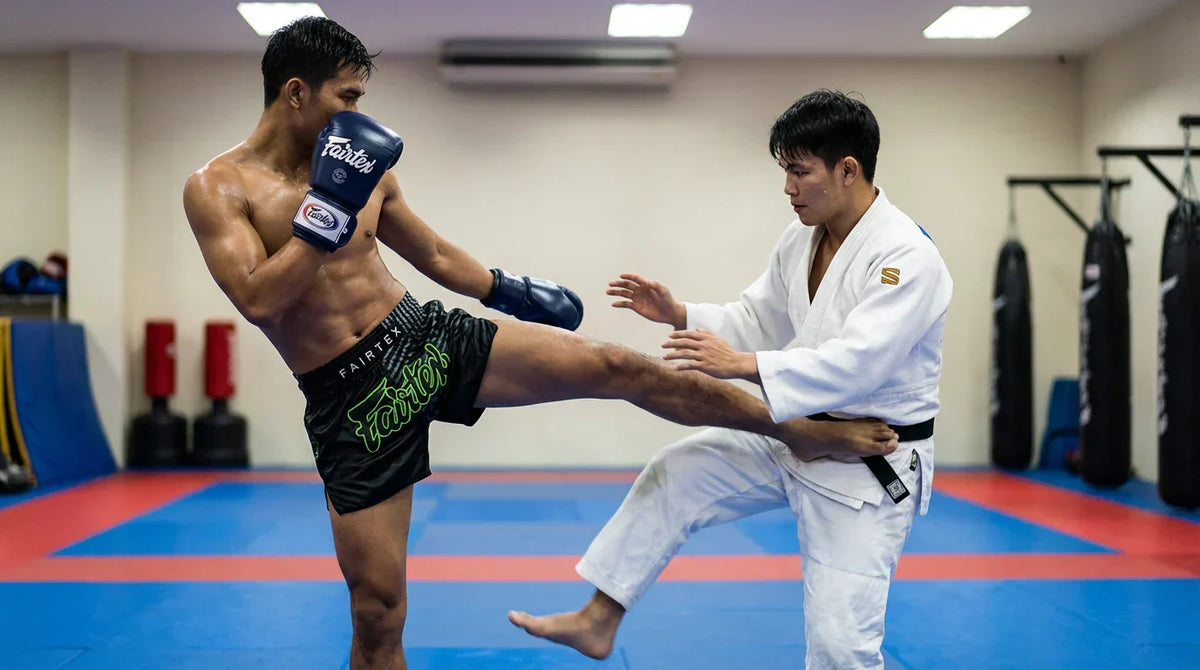
You throw a sharp teep (push kick) and snap a jab. Your partner eats it, nods, then steps in, clamps an overhook, and suddenly your feet are flying past your head. That thud? That’s the mat greeting you after a clean Judo throw. If you’ve ever cross-sparred striker vs grappler, you know the tug-of-war: distance for Muay Thai, body-to-body for Judo. That’s the real heartbeat of judo vs muay thai.
Why does this comparison matter for your training? Because choosing where to start (and how to cross-train) can save you months of frustration and a couple of bruised egos. You’ll learn how each art wins under its own rules, how they translate when rules change, and how to build drills that let you survive and thrive—whether your passion is the “Art of Eight Limbs” or the science of throws and control.
Table of Contents
Judo vs Muay Thai: Fundamentals
Here’s the simplest way to frame it: Muay Thai wins at distance and in the strike-heavy chern (clinch) where knees and elbows matter. Judo wins when hands get on you—grips, off-balance (kuzushi), and throws that put you on the floor hard. The outcome between judo vs muay thai depends on rule set, distance control, and who dictates the first meaningful contact.
What is Muay Thai? Goals, Weapons, and Rhythm
Muay Thai is Thailand’s national striking art—the “Art of Eight Limbs.” You use chok (punches), ti sok (elbows), ti khao (knees), and tae (kicks), with the teep (push kick) as your measuring stick. Scoring emphasizes balance, effect, and control. In the clinch, you don’t stall—you attack: posture breaks, turns, knees, elbows, and off-balances. Tradition matters: the Wai Kru and Ram Muay honor your teachers, and the training is honest—pad rounds, bag rounds, sparring that builds timing, and relentless conditioning.
What is Judo? Throws, Balance, and Control
Judo is a Japanese grappling art built on throwing (nage-waza), ground control (osae-waza), strangles (shime-waza), and armlocks (kansetsu-waza). The engine is kuzushi—breaking balance—to load and launch throws like seoi-nage, uchi-mata, and osoto-gari. Under International Judo Federation (IJF) rules, a perfect throw (ippon) can end the match instantly. No strikes allowed. It’s a clean, powerful system for off-balancing, projecting, and pinning a resisting opponent.

Technical Breakdown: Ranges, Entries, Finishes
When you zoom in on judo vs muay thai, the core battle is about managing the gap between striking range and throwing range. The striker needs to intercept and pivot. The judoka needs to step inside, connect grips or ties, and create kazushi. Timing beats speed for both.
Striker Priorities: Frame, Angle, and Punish the Entry
As a nak muay, you live in the pocket and at range. Against a judoka, your first job is to deny grips and entries. Use the lead-hand frame to the collarbone or jawline, constantly measuring with the teep. Cue yourself: “frame, angle, hit.” When they step heavy, stab the teep into the hip crease to freeze their footwork. Follow with a long tae (round kick) to the body or quick chok combination that ends off-line, not straight back. In the clinch, switch to Thai controls—collar tie and bicep control—while keeping hips back and posture tall. Short ti khao (knees) to the body punish any attempt to settle.
Grappler Priorities: Close Safely, Break Balance, Chain Throws
If you’re the judoka, don’t chase the head first; chase posture and feet. Use a high guard entry—hands up like a boxer—to shell through the first strike or two, then attach to an overhook/underhook or an inside tie at the triceps. Think “hands first, hips second.” Create kuzushi by stepping your partner onto their heel before committing to ashi-waza (foot sweeps) like de-ashi-barai or to big hips like harai-goshi. No-gi? Wrist collar ties, elbow control, and overhook/whizzer entries pair well with footwork that cuts the ring. Chain: off-balancing step → sticky grip → throw or trip. If the throw doesn’t land, drive into pins or quick stand-ups (in MMA or self-defense contexts).
Training Drills & Practice Methods
You get good fast when both sides agree on constraints. Set clear rules, respect safety, and build rounds that feature the clash point you care about. Here are fight-tested drills I’ve used with strikers and judoka sharing mats.
Drill 1: The Wall Clinch “Entry Tax”
Goal: teach the judoka to enter safely and the nak muay to punish sloppy entries. Rules: Striker may use jab, teep, body kicks, and knees in the clinch. Judoka must get chest-to-chest and pin to wall within 5 seconds or reset. 3-minute rounds, 5 rounds. Coaching cues: Striker—“frame, angle, hit”; prioritize off-line exits after every two strikes. Judoka—“feint, step, stick”; enter behind a feint or shell, then immediately break balance with head position under striker’s chin. Reset whenever posture breaks or the wall pin is achieved. Expect both athletes to learn real timing by round four.
Drill 2: Teep-to-Frame-to-Sprawl Circuit
Goal: striker develops reflexive anti-entry flow. 10-rep circuits × 3 sets per side. Sequence: lead-leg teep to hip → replace foot and pivot 30 degrees → forearm frame at collarbone → partner level-changes to body lock → striker hip-heists and sprawls to crossface → pop up and angle out. Add light gloves and belly pad. This builds the habit of never standing square after contact and defending immediate body-locks.
Drill 3: Pummel to Knees With Throw Threats
Goal: respect both clinches. From over-under pummeling, striker is allowed ti khao to the body on openings; judoka is allowed inside trips and foot sweeps. No head-and-arm throws without control. 4 × 2-minute rounds. Coaching cues: Striker—keep hips back, head upright, and snap-turn off the underhook side before kneeing. Judoka—win inside position, step their weight onto a loaded foot, then trip as the knee retracts. Great for teaching mutual danger and posture battles.
Common Mistakes & How to Fix Them
Cross-sparring exposes habits fast. The trick isn’t to avoid mistakes—it’s to correct them before they calcify into reflexes.
Mistake 1: Overcommitting Kicks Against a Gripper
Problem: rear-leg body kicks thrown square get caught or converted to trips. Fix: kick with a tall posture and immediate recoil, or aim teeps at the hip to disrupt steps. Angle out on the exit—don’t admire your work.
Mistake 2: Backpedaling in Straight Lines
Problem: you’re giving a judoka rails to run you down. Fix: add L-steps and pivots. After every two strikes, change your line. Think “hit, step off, re-center.”
Mistake 3: Clinch Stalling Instead of Clinch Fighting
Problem: strikers try to hold instead of attack; grapplers try to rest and get kneed. Fix: Striker—collar tie and bicep control, posture up, knee on rhythm. Judoka—immediate kuzushi or exit to re-shoot; never hang in neutral collar ties.
Mistake 4: Ignoring Rule Sets
Problem: training the wrong reactions for the wrong sport. Fix: tailor drills to your rule set—Muay Thai rules reward knees and balance; Judo rules reward clean projection and pins. MMA/self-defense adds ground stakes—train stand-ups and wall work.
Bridging the Clinch: No-Gi Grips vs Thai Ties
This is where striker and judoka truly meet—your hands. You either frame like a nak muay and knee on rhythm, or you attach like a judoka and steal balance. Get this bridge right and the rest of the round feels simple.
Wearing the best Muay Thai shorts for mobility and clinch work helps you keep your hips free when turning, framing, or kneeing inside the clinch.
Frames That Kill Kuzushi (for Strikers)
Think “posture tall, elbows narrow, forehead proud.” Lead forearm frames the collarbone or jawline; rear hand floats at eye line to swat grips. When they step heavy for osoto or uchi-mata, hinge your hips back, stuff the inside elbow, and quarter-turn so your lead hip points off-line. If they whizzer you, post your forehead under theirs and ti khao (knee) as you circle. Never square your feet—L-step, then strike.
Counter keys: against osoto-gari, pull your posting foot back and stamp the attacker’s calf with a short inside kick before you pivot out. Against seoi-style entries, wedge a vertical elbow frame between their bicep and your ribs, step your hips back, then reset to long range with a stiff teep.
Grip Fighting That Works With Gloves (for Judoka)
Gloves change everything. Don’t chase sleeves—think wrist control, elbow post, and underhook. Enter behind a high guard, touch the wrist to move the hand, then climb to triceps control. Head position under their chin breaks posture for free kuzushi. Chain: wrist peel → triceps post → inside step to de-ashi-barai; or wrist peel → overhook/whizzer → knee-tap as they retract.
Safety cue: attach with your feet under you. If you’re extended, you’ll eat sok (elbow) or off-balance yourself. Small steps, sticky hands, head in their jawline, then throw.

Safety First: Ukemi, Knees, and Neck
You’ll only keep cross-training if you keep your body healthy. Build fall skills, protect your knees, and respect neck lines on throws. No tough-guy points for preventable injuries.
Learn to Fall: Ukemi for Strikers
Five minutes a session saves months later. Start from a squat on mats.
- Back breakfall: tuck chin, round your back, sit and roll; slap the mat with forearms/hands at 45° as hips touch. No wrist slaps.
- Side breakfall: same tuck, roll to the outside of your forearm, top knee up as a shield.
- Forward breakfall: from kneel, fold elbows under ribs, land on forearms—not palms—then turn to a shoulder and stand.
- Stand-up: technical get-up each rep so falling becomes part of your striking reset.
Knee-Safe Clinch Rounds
Trips stress the inside of the knee if your foot sticks. Keep stance just outside hip width, toes slightly out. When swept, let the foot slide; don’t fight the mat. As you knee inside chern (clinch), keep hips back and heel-to-glute recovery so your base leg isn’t caught and reaped.
To stay protected during mixed drilling or grappler-entry rounds, make sure you’re using best Muay Thai shin guards for safe cross-training, especially when sweeps and reaps get introduced.
Neck and Head on Throws
Tuck your chin, eyes to your chest on the way down. Never post a locked elbow to stop a fall—use forearms. If the throw’s lost, both athletes release and reset; no twisting cranks to “finish.” Respect the mat, respect the spine.
Rule Nuances That Flip Tactics (2025 Update)
Know the rules, choose the tactics. Same athletes, different outcomes purely off the rulebook.
Muay Thai Clinch and Dumps
Under IFMA/WMC, knees and off-balances score; big dumps look good when they clearly break the opponent’s posture, but there’s no ippon for a slam. No spiking or head-first throws. Catch-and-sweep is legal with immediate attack—don’t hold and march. Turns that send them to the canvas while you stay balanced show dominance and help swing rounds.
Judo Throwing Criteria
IJF ippon = clean control, largely back, force, and speed; match ends. Pins (osaekomi) are ippon at 20 seconds; 10–19 seconds is waza-ari, and two waza-ari end the match. Direct leg grabs remain illegal under gi rules, but in MMA/no-gi that restriction doesn’t exist—so double-legs and knee taps are back on the menu in those contexts.
What This Means for You
Thai rules reward balance, posture, and effective strikes in clinch; throw attempts that cost balance are punished. Judo rules reward clean projection and control; clinch knees don’t exist. Train the reactions you’ll be judged on.
Integration Template: Two-Track Week
Keep the main thing the main thing. Pick a primary art for the phase and supplement with the other. Here’s a fighter-tested split.
4-Session Baseline (Primary + Support)
- Mon (Muay Thai primary): Pads 4×3 min (teep/frame themes), bag 3×3, clinch spar 3×2 with knee volume cap.
- Wed (Judo support): Ukemi 10 min, no-gi grips 15 min, ashi-waza entries 20 min, light clinch games 3×2.
- Fri (Judo primary): Grip fighting 20 min, throw chains 25 min, situational pins 3×1:00.
- Sat (Muay Thai support): Pad-to-pummel flows 5×3, controlled body-kick catch and dump 4×1:30.
Swap primaries next block if your goals change. Keep one full rest day. Intensity waves: hard, moderate, hard, easy-tech.
Training at home? Use one of the best Muay Thai heavy bags for technique and conditioning to keep timing and distance sharp between sessions.
For pad rounds and sparring, choose the best Muay Thai gloves for pad work and sparring so your wrists stay supported during longer technical sessions.

Additional Training Drills That Matter
Add these when you want clean reps without ego. They build skills both sides actually use under pressure.
Ukemi Primer (2-Min Reset Between Rounds)
- Setup: Mats down; both athletes barefoot or wrestling shoes only.
- Execution: 3 sets × 90 sec rotating back, side, and forward breakfalls; finish each set with technical stand-ups and a light teep to space.
- Common Mistakes: Slapping with hands, chin up, locked elbows.
- Progression: Add partner-guided off-balances to controlled falls.
Entry Timing Ladder
- Setup: Striker in 14–16 oz gloves and belly pad; judoka no gloves.
- Execution: 30 sec rounds stepping through beats: jab-only → jab-teep → jab-teep-body kick. Judoka must enter on the half-beat after the jab lands. Reset on clean frame or clean attach.
- Common Mistakes: Entering on full beats, square feet, dropping eyes.
- Progression: Add de-ashi-barai on the striker’s landing step; striker adds knee on clinch.
Pad-to-Throw Flow (Light)
- Setup: Coach with pads, partner as tori/uke on mats.
- Execution: 1–2 on pads → coach bumps forward → athlete frames and angles → partner attaches to triceps → execute foot sweep to controlled fall → technical stand → repeat opposite side.
- Common Mistakes: Chasing the head, over-rotating kicks that gift reaps.
- Progression: Add body-lock knee tap instead of sweep every third rep.
Frequently Asked Questions
What is Muay Thai?
Muay Thai is a striking art from Thailand using punches (chok), kicks (tae), elbows (ti sok), knees (ti khao), and the clinch (chern). Fights are scored on effect, balance, and control, with the teep (push kick) and body kicks often dictating rhythm. Training is pad work, bag work, sparring, and conditioning. Official organizations like the WMC and IFMA set competition rules and develop the sport worldwide.
What is Dutch Judo?
“Dutch Judo” isn’t a separate codified style, but the Netherlands has a distinct, successful approach historically—strong grip fighting, powerful posture, and aggressive standing attacks. Icons like Anton Geesink and Wim Ruska made the Dutch reputation: heavy kuzushi, dominant kumi-kata (grip fighting), and relentless forward pressure. Modern Dutch judoka are known for tactical gripping sequences that frustrate strikers who step into no-gi clinch ranges.
Difference Between Muay Thai and Judo—what’s the core contrast?
Muay Thai is striking-first with clinch attacks; Judo is throws and pins with no strikes. Thai scoring values visible effect and balance; Judo values clean projection and control. Muay Thai clinch allows knees and elbows; Judo clinch chases grips and off-balance. One dominates distance, the other dominates attachment. That’s the judo vs muay thai axis.
Should I do Muay Thai or Judo first?
Start where your curiosity is loudest. If you love striking rhythm and conditioning, begin with Muay Thai. If you’re fascinated by throws and control, begin with Judo. For MMA or self-defense balance, I often recommend 6-12 months in one, then add the other. The second art will make more sense once you’ve built timing and composure in the first.
Judo vs Muay Thai—who would win?
Under Muay Thai rules: the striker, because knees, elbows, and scoring favor distance and clinch offense; throws don’t score like in Judo. Under Judo rules: the judoka, because one perfect throw ends it. In MMA or open rules: it’s whoever controls entries—striker keeping range and framing, or judoka entering safely and finishing throws. Rule set and skill gap decide outcomes more than style labels.
Can you use Judo in a Muay Thai fight?
Classical Judo throws aren’t scored in traditional Muay Thai, and many grips are illegal. You can off-balance and sweep within the clinch, but slamming or shoulder throws aren’t part of Thai scoring. That said, learning kuzushi helps your clinch turns, dumps, and posture-breaking—skills judges do appreciate when they lead to dominant knee and elbow work. Check your sanctioning body’s rule nuances.
How should a Muay Thai fighter defend Judo entries?
Three keys: build a mean teep to the hip to stop steps, keep your head posture tall with a forearm frame on entry, and exit at an angle after every short combo. In the clinch, hips back, elbows inside, and vertical posture. Don’t hang; either knee on rhythm or break and reset. Drill: teep → frame → pivot → hit → angle out.
How should a judoka approach a strong striker?
Enter behind a high guard or feint, get hands on first, and break balance before the throw. Avoid grabbing the head too early. Focus on elbow control, overhooks, and body locks from safe shells. Foot sweeps (de-ashi-barai) off a striker’s step are gold. If you miss the throw, smother and re-attach; don’t back out into fresh striking exchanges.
What gear and safety rules should we use for cross-training?
For striker-vs-grappler rounds: 14–16 oz gloves, shin guards, mouthguard, and a belly pad for the striker; light MMA gloves or no gloves for judoka in clinch-only rounds. Always use mats for throws. Agree on legal strikes and throws per round. Warm up shoulders and hips thoroughly. Err on the side of more control and fewer hero moments.
If you want optimal protection for heavier clinch or mixed sparring, choose a best boxing mouth guard for Muay Thai sparring so you can work entries without worrying about accidental clashes.
How long until I’m competent at both?
Expect 6–12 months to feel comfortable in your first art and 6–12 months to add the second to a functional level. True integration (using one to set up the other) typically shows up around years 2–3 with consistent training. Consistency beats intensity; three honest sessions a week outperforms sporadic hard weeks.
Is this the same as ‘Dutch kickboxing’ vs Judo?
No. Dutch kickboxing is a striking style (influenced by Muay Thai and boxing) famous for tight combinations and low kicks. “Dutch Judo” refers to the Netherlands’ gripping-forward Judo tradition. Don’t mix them up. If you’re building a striker’s toolkit to fight grapplers, Dutch-style combination pressure plus Muay Thai frames and knees is a fierce blend.
What do official bodies say about rules and scoring?
The WMC and IFMA govern modern Muay Thai rules and emphasize effective strikes, balance, and ringcraft. The IJF governs Judo, where ippon-level throws and pins end or dominate matches. Understanding these scoring differences explains why judo vs muay thai outcomes flip flop across rule sets.
Key Takeaways
- Distance vs attachment decides most judo vs muay thai exchanges.
- Strikers: teep, frame, angle, and knee—don’t clinch-stall.
- Judoka: enter safely, create kuzushi, and chain throws or trips.
- Train under clear rules, on mats, with agreed constraints for safety.
Final Thoughts
Here’s the honest truth: both arts are beautiful, both are hard, and both reward the patient. If your heart beats for rhythm, timing, and the feel of shins on pads, Muay Thai will hook you. If you love the quiet violence of balance breaking and the thud of a clean throw, Judo will feel like home. You can do both—and when you do, the game opens up.
Start with what excites you, stick around long enough to build timing, then add the other. Drill the clash points: teep to hip, frame to posture, kuzushi to trip. Keep it respectful—bow in, Wai Kru, and thank your training partners. Put in the rounds, and you’ll answer your own question about judo vs muay thai not with talk, but with skill.
If you’re building your first training kit, check out this essential Muay Thai gear checklist to make sure you’ve got everything needed for pad work, clinch, and cross-training.
About This Training Approach
These methods reflect how real gyms blend striking and clinch work: honest rounds, smart constraints, and respect for each art’s rules. This mirrors traditional Thai camp philosophy—systematic skill built through repetition. Brands like Fairtex, crafting gear and developing fighters in Thailand since 1971, have helped carry that training culture forward while supporting champions across eras. For rule standards, see WMC/IFMA (Muay Thai) and IJF (Judo).
Last Updated: November 2025