
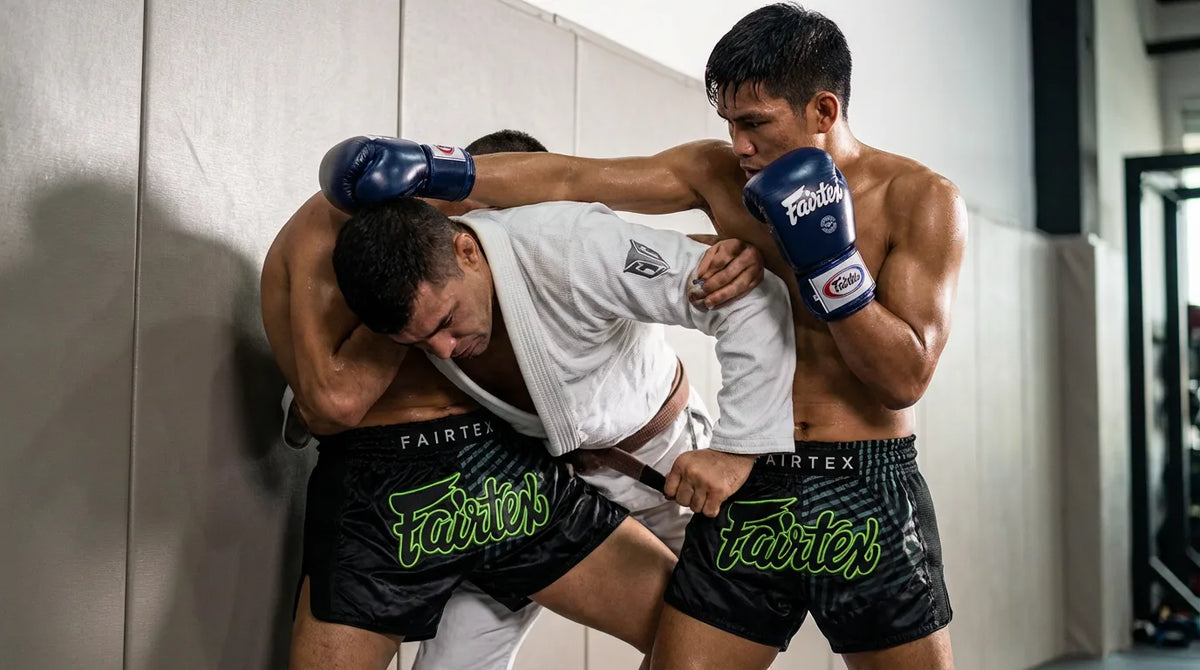
Muay Thai VS. Jiu Jitsu: How to Choose, Train, and Win the Exchanges
You’re midway through sparring when a new partner switches stance, level-changes, and hugs your hips. Instinct says sprawl, but your feet are set for a round kick. Sound familiar? That’s the heart of muay thai vs jiu jitsu—timing, distance, and who imposes their game first. If you’ve ever wondered which art dominates, who would win, or what to learn first, you’re in the right place.
Here’s the truth: both arts are elite at what they do. Muay Thai owns the stand-up with the “Art of Eight Limbs”—punches (*chok*), kicks (*tae*), elbows (*ti sok*), knees (*ti khao*)—and ruthless clinch control (*chern*). Jiu Jitsu masters the transition to the ground, positional dominance, and submissions. In this article, you’ll learn the real differences, how to train for common exchanges, how to cross-train smart, and how to decide between Muay Thai or BJJ based on your goals. And if you searched for “mai tai classes,” quick laugh—Mai Tai is a cocktail; Muay Thai is the martial art you’re after.
Table of Contents
Fundamentals: What Separates Muay Thai and Jiu Jitsu

When you compare muay thai vs jiu jitsu, you’re really comparing environments. Muay Thai is about striking at all ranges with balance, timing, and relentless pressure. Jiu Jitsu is about control—off-balancing you, changing levels, taking you down, then turning the floor into a trap. Both reward patience and fundamentals. The winner is usually the one who gets to their strongest range first and keeps it there.
Range, Weapons, and Balance
Muay Thai builds you to fight with eight weapons. Your stance keeps you ready to attack and defend without sacrificing balance. You learn the *teep* (push kick) to manage distance, the long guard to intercept punches, and how to break posture in the clinch with knees and elbows. On the other side, Jiu Jitsu expands your weapon set once the fight hits the mat: grips, frames, hooks, and upper-body connections that turn pressure into positional control and submissions. If you’re choosing between the arts, ask yourself: do you prefer dictating range with strikes, or solving human puzzles on the ground under pressure?
Control, Transitions, and Time-to-Effect
Muay Thai’s damage is immediate—one clean *tae* (round kick) to the leg changes the round. Jiu Jitsu’s threat grows quietly: a grip becomes a sweep, a scramble becomes back control, a choke ends the night. In mixed rules or self-defense, the transition moments decide outcomes: entries, sprawls, wall-work, and clinch breaks. Building skill here is less about “is Muay Thai better than Jiu Jitsu” and more about understanding the difference between Muay Thai and Jiu Jitsu at the seams where they meet.
Technical Breakdown: Stand-Up, Clinch, and Ground Transitions
Let’s walk through the exchanges you’ll actually face. Whether you’re a striker learning anti-grappling or a grappler learning to close distance safely, the mechanics don’t lie. These are the spots where fights turn.
Distance Management: Teep, Frames, and Level-Change Defense
On the feet, manage distance with the *teep* (push kick) to the hip bone or diaphragm. Think “sternum or belt line” to stop forward momentum. Pair that with a long guard: lead hand extended, rear hand ready to parry or post. When a Jiu Jitsu player level-changes, your first cue is hips back, head up—sprawl principles from wrestling complement your Muay Thai base. Don’t chase the head; control underhooks. Footwork matters: take half-steps diagonally to force them to turn, then fire a quick *chok* (jab-cross) and reset with another *teep*. The goal is to make entries expensive and second attempts hesitant.
Clinch Tactics: Muay Thai Posture vs. BJJ Grips
Muay Thai clinch (*chern*) prizes posture, frames, and inside position. Head upright, hips close, hands fighting for inside control at the biceps or collar-tie. Jiu Jitsu players seek over-unders, body locks, and trips. Your answer: win the inside, stuff the head, and knee the midline when safe. If you feel a body lock, widen your base, drop your level slightly, and pummel for at least one underhook. Look for the crossface frame (forearm across the face) to turn them away and create space for a fast exit—two *chok* and a *teep* before they can re-engage.
When It Hits the Ground: Survival, Get-Ups, and Damage Limitation
If you’re pure Muay Thai and you hit the floor, protect your neck and arms first. Frames on the hips, forearm across the throat to make space. Think “guard retention for survival, wall-walk for escape” if a barrier is nearby. Learn technical stand-ups: frame, sit to one hip, kick through with the bottom leg, stand while maintaining a shield. In self-defense or MMA cross-training contexts, the lesson is simple—survive, build frames, and get back to your best range.
Training Drills & Practice Methods

You get good at what you repeat. If you want to understand muay thai vs jiu jitsu in your body, you have to drill those transition moments. Here are practical sessions I’ve used or coached to build confidence at the seams.
Drill 1: Teep-to-Frame Anti-Entry Rounds
Format: 5 rounds × 3 minutes, 60 seconds rest. Partner A (striker) works 70% *teep*, jab, and long-guard. Partner B (grappler) performs light, realistic entries: level changes, snatch singles, body locks. Objective for A: use *teep* to hip line, post on shoulder/head, half-step out, and re-center with a jab-cross. Objective for B: chain attempts—after a stuffed shot, transition to a body lock or snap-down. Rotate roles each round. Track success by counting clean entries vs successful first-line defenses. This drill teaches you to keep your weapons while respecting the level change.
Drill 2: Clinch Pummel to Exit with Strikes
Format: 4 rounds × 4 minutes. Start chest-to-chest. Partner A hunts double collar-tie; Partner B seeks under-overs or body lock. Every 20 seconds, the active partner must create an exit: A uses crossface, knee bump, quick *ti khao* (knee) to the body and pivots out; B tries to convert to a takedown or heavy snap-down. When you exit, you must throw a 3-strike combo: e.g., *chok-chok-tae* (jab-cross-round kick) or *chok-ti sok-tae* (punch, elbow, kick). The habit becomes automatic—win inside, make space, then punish the re-entry.
If you’re training at home or supplementing gym time, investing in one of the Best Muay Thai Heavy Bags helps you develop timing and balance between classes.
Common Mistakes & How to Fix Them
Whether you’re a striker testing the mats or a grappler testing the ropes, certain mistakes show up in every gym. Clean these up and the whole matchup feels simpler.
Overcommitting Your Base on Power Shots
Problem: You load up on a rear *tae* or big cross and your hips drift over your lead foot. A decent grappler changes levels and hugs your hips. Fix: Shorten your strikes when the opponent is level-changing. Use more lead *teep*, jab, and low kick with quick recovery. Drill “kick and catch” balance—throw the kick, land under your center, and be ready to sprawl or frame within half a beat.
Accepting Bad Clinch Posture
Problem: You let your head fold and your hips drift back in the clinch. Now you’re in their world. Fix: Chin neutral, crown tall, elbows close. Fight for inside biceps control and underhooks. If you can’t win inside, crossface and exit. Add 3 minutes of pummeling every session—small investment, big payoff.
Wall Work: Anti-Takedown and Exit Skills Every Nak Muay Needs
Most gyms talk about sprawls, few teach you what happens when your back hits the wall. That’s where wrestlers and BJJ players finish. Build habits that keep you upright, create space, and put your strikes back to work.
Head, Hips, and Hands on the Wall
Think three rules: head high, hips heavy, hands inside. Drive the crown of your head under their chin, hips pressed to the wall just enough to widen your base (don’t let feet square). Inside hands mean you’re fighting for underhooks or at least one forearm crossface. If they lock their hands around your hips, drop your level a palm’s width, stagger your feet, and peel grips before you think offense.
Overhook (Whizzer) and Crossface Mechanics
If they win an underhook, answer with a deep overhook (whizzer): palm to their triceps, elbow tight, shoulder heavy on their shoulder. Pair it with a crossface—forearm across the cheekbone, fingers pointing behind their head. Turn their nose away from your hips, then walk your hips off the wall a step at a time. When their posture breaks, pummel for your own underhook or post their head and pivot out.
Exit to Strikes: Post, Pivot, and Teep
Once you square them to the side, step the outside foot back 45°, slide your hip out, and post on the crown of their head. As you clear, hand on forehead, fire a short ti khao (knee) to the body if safe, then stiff-arm and hit a fast teep to the belt line. Reset to mid-range with a sharp chok-chok (jab-cross) before they shoot again.
Wall Drills That Translate on Day One
Put your back on the wall and get honest reps. These rounds teach you to breathe, base, and exit without panic.
Drill: Wall Sprawl to Whizzer Walk
- Setup: Partner B shoots to the wall at 30–50%. Partner A starts with shoulder blades touching the wall.
- Execution: A drops level, hips back, frames on head/shoulder. Establish one overhook + opposite-side head post. “Walk” the whizzer: circle steps to free hips, then pummel to an underhook and pivot out. Tag a light teep on exit.
- Common Mistakes: Squaring feet, reaching for the neck, and trying to knee before breaking head position.
- Progression: Add a knee tap counter for B if A stalls; A must feel it and re-pummel before exiting.
Drill: Crossface Turn + Teep Reset
- Setup: Clinch on wall, over-under. Timer beeps every 15 seconds.
- Execution: On the beep, A must crossface, step-out, and land a 1–2 + rear teep within 3 seconds. Reset and switch roles.
- Common Mistakes: Soft crossface, stepping straight back, dropping hands after the exit.
- Progression: B chases immediately with a re-entry; A must punish with a low tae (round kick) or intercepting knee.
Self-Defense Priorities: Stay Up, Get Up, Get Out

Under chaos, simple beats fancy. Your job isn’t to “win positions,” it’s to avoid damage and create exits.
The First Five Seconds
Frame the head and hips, widen your base, and get your back off hard surfaces. If you’re taken down, protect your neck first, elbows in, hands as frames on collarbones/hips. No reaching. Eyes up, breathe through the nose, keep your knees between you and them.
Technical Stand-Up Under Strikes
From a seated shield: post your hand behind you, shin up as a barrier, foot planted. Lift hips, kick the space with your bottom leg, retract, and stand on the back foot while the front shin stays as a shield. As you gain distance, fire a defensive teep and move. Priority: exit lanes > exchanges.
6-Week Transition Microcycle (Striker-Focused)
This block builds anti-grappling without watering down your Muay Thai. Two focused seams sessions each week layered onto your regular pads/bag work.
Weekly Structure
- Session A (30–40 min): Footwork vs level change, teep-to-frame, wall pummeling.
- Session B (30–40 min): Whizzer/crossface exits, technical stand-ups, pad finishes after exits.
- Weeks 1–2: 60–70% pace, 3×3 min isolation rounds each seam (distance, wall, get-up).
- Weeks 3–4: Chain attempts: partner re-shoots after first defense. Add 1–2 strike combos on every exit.
- Weeks 5–6: Integrated spar: 4×4 min with “grappler entries allowed, no finishes,” striker scores only on clean exits into strikes.
Equipment Essentials for Cross-Training Without Injuries
Right gear keeps you training tomorrow. Here’s the no-nonsense setup that respects both mats and ring.
Gloves and Shin Guards
Use 14–16 oz gloves for sparring, 10–12 oz for bag/pad rounds. Shin guards with secure straps and full shin coverage help you drill checks safely; avoid flimsy slip-ons for sparring. Keep gloves dry and aired out after sessions—wipe salt, open palms, and use inserts to cut bacteria.
Mouthguard and Headgear
Boil-and-bite works for beginners; custom is best if you spar regularly. Light headgear for hard sparring days only—don’t let it become a crutch. In BJJ, a mouthguard still matters when accidental head clashes happen.
Gi/No-Gi Fit and Hygiene
Gi top should allow full shoulder mobility; sleeves to the wrist bone, not over the hands. For no-gi, wear compression and a clean rashguard to prevent skin issues. Wash gi/rashguard after every session and disinfect matside gear; it’s respect for partners as much as safety.
Comfort and range of motion matter in both striking and wall drills — here’s how to pick the best Muay Thai shorts for daily training.
If you’re building your training kit from scratch, start with the fundamentals — gloves, shinguards, shorts, and wraps. Here’s a complete guide to the Best Muay Thai Gear for all levels.
What the Numbers and Rules Say (2025)
Public MMA databases from recent seasons show a consistent trend: KOs/TKOs make up roughly four to five fights out of ten, submissions around two out of ten, and the rest go to decision. Translation: striking damage decides plenty—but once control is established on the ground, submissions end nights fast. In IBJJF no-gi advanced divisions, heel hooks and knee reaping are legal (points still reward takedowns, guard passes, mounts, and back control). IFMA scoring continues to value balanced posture, clean knees in the clinch, effective dumps, and visible impact. Train to the rules you plan to compete under.
Frequently Asked Questions
What is Muay Thai?
Muay Thai is a striking art from Thailand known as the “Art of Eight Limbs.” You’ll use punches (*chok*), kicks (*tae*), elbows (*ti sok*), knees (*ti khao*), and the clinch (*chern*). Training blends padwork, bagwork, sparring, and clinch rounds. If you’re researching “what is muay thai,” think full-body striking that builds conditioning, timing, and balance. Under IFMA and WMC rules, scoring emphasizes effective, balanced strikes and control. It’s a complete stand-up system that pairs well with takedown defense if you cross-train.

What is Jiu Jitsu?
Brazilian Jiu Jitsu (BJJ) focuses on takedowns, positional control, and submissions—arm locks, chokes, leg attacks. Training revolves around drilling techniques, positional sparring, and rolling. If you’re asking “What is Jiu Jitsu,” it’s the art of breaking posture, using leverage, and finishing without strikes. In IBJJF competition, points reward takedowns, guard passes, and dominant positions. It’s a problem-solving art that teaches calm under pressure—especially when you’re stuck under someone who wants to hold you down.
Jiu-jitsu vs Muay Thai—who would win?
Under Muay Thai rules, an experienced nak muay keeps it standing and wins with damage and control. Pure BJJ rules favor the grappler dramatically. In open scenarios or MMA, it’s about who imposes their range first. A good striker with anti-grappling beats a one-dimensional grappler; a good grappler with smart entries beats a one-dimensional striker. Training, ruleset, and ring IQ decide more than the style label.
Is Muay Thai better than Jiu Jitsu?
Better for what? For stand-up power, conditioning, and striking confidence, Muay Thai is unmatched. For ground control, submissions, and calm under pressure, Jiu Jitsu shines. For self-defense, either can work if you train situational awareness, exit strategies, and basic anti-grappling. Most modern fighters benefit from both, especially if MMA or real-world scenarios interest you.
What’s the difference between Muay Thai and Jiu Jitsu in training?
Muay Thai sessions mix jump rope, shadowboxing, padwork, bagwork, partner drills, and sparring—plus clinch rounds. You’ll sweat, you’ll kick, you’ll learn to manage distance. Jiu Jitsu classes start with movement drills, technique reps, positional sparring, then rolling. You’ll get comfortable being uncomfortable—frames, escapes, timing, and patience. Both arts demand consistency: 2–4 sessions a week will show you steady progress in 8–12 weeks.
Should I do Muay Thai or BJJ?
Choose based on what excites you. Love striking, rhythm, and the feel of shin-on-bag? Go Muay Thai. Love puzzles, leverage, and submissions? Go BJJ. If your goals are fitness and confidence, either works. If your goal is MMA or all-around self-defense, plan to study both over time—start with one for 6–12 months, then add the other.
Should I learn Muay Thai or Jiu Jitsu first?
If you’re unsure, start with the environment that scares you more. Afraid of getting hit? Try Muay Thai—learn defense, distance, and composure. Afraid of being held down? Try BJJ—learn frames, escapes, and breathing under pressure. Many athletes begin with Muay Thai to build base conditioning and balance, then add BJJ. Others start with BJJ to remove fear of the ground, then add striking. There’s no wrong order—just start.
Can Muay Thai clinch stop takedowns?
It can help—if your posture is correct and you have at least basic pummeling and underhook awareness. The *chern* clinch focuses on inside control, frames, and off-balancing with knees and elbows. Against a practiced takedown artist, add crossface frames and hip position from wrestling. A few months of dedicated pummeling and sprawl work make a huge difference.
What about “Mai Tai classes”—is that the same thing?
Nope—Mai Tai is a tropical cocktail. Easy mix-up. If you meant Muay Thai classes, you’re looking for striking training with pads, bags, and sparring. When you search gyms, check for authentic Muay Thai coaching, padwork experience, and controlled sparring culture. Good gyms teach technique first and respect always.
How do I cross-train without burning out?
Alternate emphasis blocks. For example: 8–12 weeks Muay Thai-focused (3 MT sessions + 1 BJJ), then flip it (3 BJJ + 1 MT). Keep one recovery day, limit hard sparring and hard rolling to 1–2 days weekly, and track soreness and sleep. Sports science and coaching experience agree—quality beats sheer volume. You’ll adapt better with smart periodization.
What safety tips should beginners know?
Warm up thoroughly, progress contact gradually, and never sacrifice form for intensity. In Muay Thai, learn to block and check before you swing hard; in BJJ, tap early and often. If a joint or your lower back sends sharp signals, stop and get checked. Use properly fitted mouthguards, gloves, and shin guards in Muay Thai, and trim nails and wear a clean gi or rashguard in BJJ. Cleanliness prevents skin issues—no shortcuts.
Head, Hips, and Hands on the Wall
Think three rules: head high, hips heavy, hands inside. Drive the crown of your head under their chin, hips pressed to the wall just enough to widen your base (don’t let feet square). Inside hands mean you’re fighting for underhooks or at least one forearm crossface. If they lock their hands around your hips, drop your level a palm’s width, stagger your feet, and peel grips before you think offense.
Overhook (Whizzer) and Crossface Mechanics
If they win an underhook, answer with a deep overhook (whizzer): palm to their triceps, elbow tight, shoulder heavy on their shoulder. Pair it with a crossface—forearm across the cheekbone, fingers pointing behind their head. Turn their nose away from your hips, then walk your hips off the wall a step at a time. When their posture breaks, pummel for your own underhook or post their head and pivot out.
The First Five Seconds
Frame the head and hips, widen your base, and get your back off hard surfaces. If you’re taken down, protect your neck first, elbows in, hands as frames on collarbones/hips. No reaching. Eyes up, breathe through the nose, keep your knees between you and them.
Technical Stand-Up Under Strikes
From a seated shield: post your hand behind you, shin up as a barrier, foot planted. Lift hips, kick the space with your bottom leg, retract, and stand on the back foot while the front shin stays as a shield. As you gain distance, fire a defensive teep and move. Priority: exit lanes > exchanges.
Gloves and Shin Guards
Use 14–16 oz gloves for sparring, 10–12 oz for bag/pad rounds. Shin guards with secure straps and full shin coverage help you drill checks safely; avoid flimsy slip-ons for sparring. Keep gloves dry and aired out after sessions—wipe salt, open palms, and use inserts to cut bacteria.
Mouthguard and Headgear
Boil-and-bite works for beginners; custom is best if you spar regularly. Light headgear for hard sparring days only—don’t let it become a crutch. In BJJ, a mouthguard still matters when accidental head clashes happen.
Gi/No-Gi Fit and Hygiene
Gi top should allow full shoulder mobility; sleeves to the wrist bone, not over the hands. For no-gi, wear compression and a clean rashguard to prevent skin issues. Wash gi/rashguard after every session and disinfect matside gear; it’s respect for partners as much as safety.
Pad Round: Entries Punishers
This pad round teaches you to make shots expensive.
Fighter Lens: Using Range to Beat the Shot
Watch how Jose Aldo built his takedown defense: hips back before hands, inside frames, then punishing jabs and low kicks on exits—classic “make entries expensive.” On the other side, Demian Maia showed how disciplined entries and chain attacks beat one-shot sprawls. In mixed-rules showcases like Rodtang vs. Demetrious Johnson (ONE, special rules), you see the lesson clearly: when the striker kept it in pure Muay Thai range, damage piled up; once it shifted to grappling time, control and finish threats spiked. Range first, then work.
How long until my takedown defense holds up in sparring?
If you’re already solid on pads and footwork, expect 8–12 weeks of focused anti-grappling (2 short sessions weekly) to feel a real shift. Weeks 1–2 build stance and teep timing; weeks 3–4 add wall work and whizzer exits; weeks 5–6 integrate it into live spar with controlled entries. The key isn’t memorizing moves—it’s keeping your base under you when the level changes. Track results: how many clean entries you allow per round. If the number drops week to week, you’re on target.
Is Muay Thai or BJJ better for self-defense if I’m smaller?
Either can work. If you’re smaller, striking that manages distance—sharp teep, exit footwork, clean checks—lets you avoid grips entirely. BJJ gives you survival under pressure and the ability to stand up safely when someone bigger ties you up. For real-world risk, train: distance awareness, hand fighting to break grips, technical stand-ups, and sprint exits. Add a little wall work. Your best bet is competence at the seam—don’t get held, don’t get stuck, move your feet.
Will cross-training BJJ hurt my Muay Thai technique?
Not if you structure it. Keep one emphasis block at a time (6–8 weeks), cap hard contact to 1–2 days weekly, and put your priority art first in the session while you’re fresh. Use positional BJJ rounds (start in bad spots) to save your shoulders and shins for pads. In Muay Thai days, keep grappling to hand-fighting, pummeling, and technical stand-ups. When your body says “enough”—sore neck, cranky knees—back off intensity, not frequency. Consistency wins.
Key Takeaways
- Muay Thai rules the stand-up; Jiu Jitsu rules the ground. Train the transitions to decide the matchup.
- Build habits: *teep* to frame, posture in clinch, technical stand-ups when grounded.
- Choose based on your goals—or cycle emphasis and learn both over time.
- Safety first: form, controlled contact, and consistent recovery keep you training longer.

Final Thoughts
When people ask “jiu-jitsu vs muay thai—who would win,” they want a clean answer. You and I both know fights aren’t that tidy. The better question is: who imposes their strongest range first and keeps it? If you’re a striker, add anti-grappling and clinch posture. If you’re a grappler, sharpen your entries and respect the *teep*. Put in a month of focused drilling at the seams and you’ll feel the matchup tilt your way.
Whether you start with Muay Thai or Jiu Jitsu, commit. Two to four sessions a week, 12 weeks straight. Log your rounds. Fix one detail per session. Respect the arts, respect your partners, and stay curious. You’ll build a skill set that travels: ring, mat, or wherever life puts you. That’s the quiet edge that wins when it counts.
About This Training Approach
These methods reflect what fighters practice worldwide: solid stand-up mechanics, smart anti-grappling, and respect for range. Camps with deep Thai boxing heritage—like Fairtex, training champions since 1971—blend traditional technique with systematic drilling to harden these skills under pressure. For rules and standards, see IFMA/WMC for Muay Thai and IBJJF for Jiu Jitsu competition frameworks.
Last Updated: November 2025
About the Author
Fairtex Team, 50+ Years of Muay Thai Equipment Manufacturing – Combat Sports Equipment Specialists.
The Fairtex Team has decades of experience supporting Muay Thai athletes with training-proven gear and fight-ready performance standards. Their work focuses on practical striking fundamentals, clinch training needs, and cross-training considerations that help fighters prepare for real stand-up to grappling transitions.
Related topics:
-
Be Inspired. The Story of Mr. Phillip Wong and the Spirit of Fairtex
-
Discover the Benefits of Fairtex Bamboo Towels: A Sustainable Choice for Your Everyday Comfort