
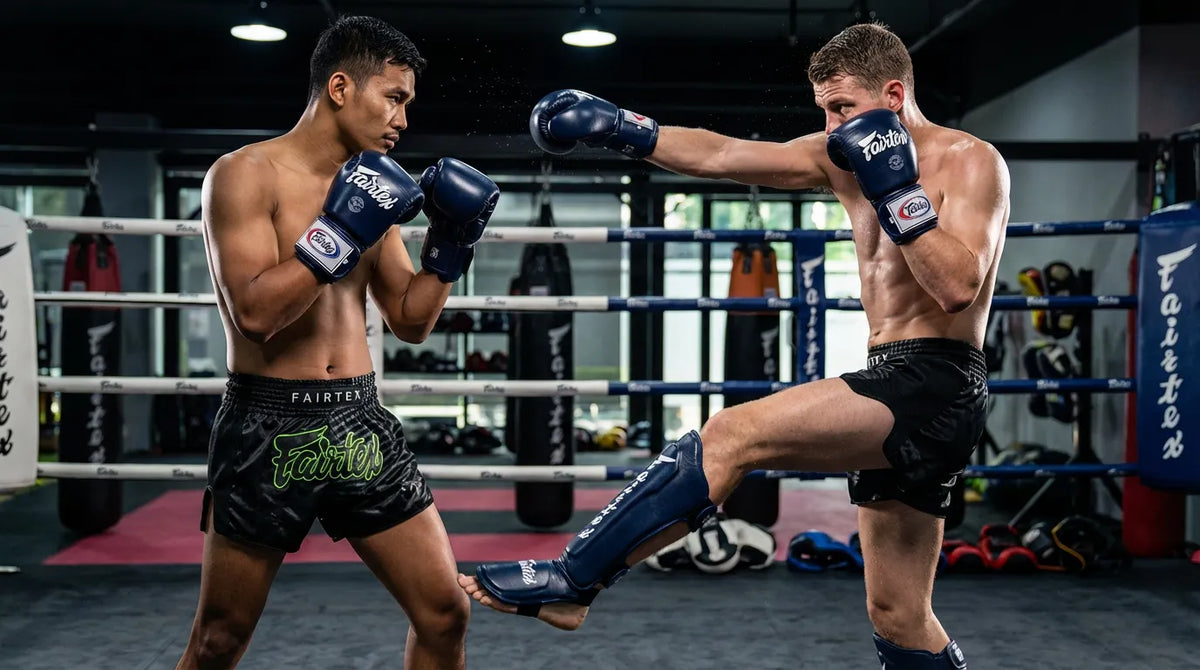
Muay Thai VS. Dutch Kickboxing: Styles, Rules, and Training That Actually Work
Your sparring partner marches you down with a high guard, ripping 1–2–low kick on repeat. You answer with a stiff teep (push kick) to the belly, angle off, and tie them in the chern (clinch) when they crash in. That little exchange is the heart of dutch kickboxing vs muay thai. Two striking cultures that share a lot of DNA, but fight like cousins with very different personalities.
If you’re choosing a gym or planning your next camp, understanding these differences saves you months of frustration. In this article, you’ll see what each style prioritizes, how rules shape tactics, and the training drills that build real fight skills. You’ll also get clear answers to common questions like “What is Muay Thai?” and “What is Dutch Kickboxing?”—and the honest take on whether you should start with one before the other.
Table of Contents
Fundamentals: What Each Style Values
If you strip away the labels, you’ll see style is driven by rule sets and coaching traditions. Muay Thai grew inside Thai stadiums with scoring that rewards balance, effect, and dominant control—especially with kicks, knees, and the chern (clinch). Dutch kickboxing evolved from Kyokushin karate, savate, and western boxing, sharpened in European rings and K‑1 tournaments where volume, pressure, and low kicks shine.
If you’re choosing a gym or planning your next camp, understanding these differences saves you months of frustration. Newer athletes usually ask what equipment they actually need, so here’s a quick breakdown of the best Muay Thai gear for beginners.
What is Muay Thai?
Muay Thai—the “Art of Eight Limbs”—uses punches (chok), kicks (tae), elbows (ti sok), knees (ti khao), and clinch grappling (chern). Thai scoring in the stadiums historically favored clear impact and off-balancing with body kicks and knees. You’re judged on posture and control—if you land, stay balanced, and make your opponent show effect, you’re winning the narrative. Rituals like Wai Kru (honoring the teacher) and Ram Muay are more than tradition; they reinforce focus and respect. Thailand also has decades of gear innovation behind it — if you want a quick overview of the best Muay Thai brands, here’s a full breakdown.
What is Dutch Kickboxing?
Dutch kickboxing blends heavy western boxing combinations with hard low kicks, mid-kicks, and knees—elbows and clinch are limited or excluded depending on rules. Think high guard, forward pressure, and long combinations: jab–cross–hook–low kick, step-in knee, repeat. The lineage runs through gyms like Mejiro (Jan Plas), Chakuriki (Thom Harinck), and Carbin (Lucien Carbin), producing legends like Ramon Dekkers and Rob Kaman. In K‑1 style bouts, three high-paced rounds reward aggression, clean hits, and damage.

Technical Breakdown: Weapons and Tactics
Same tools, different emphasis. Here’s how dutch kickboxing vs muay thai diverge when you zoom in on technique, stance, and rhythm.
Stance, Guard, and Footwork
Muay Thai prefers a narrower stance with the weight slightly over the rear leg, ready to check kicks and fire the lead teep. Hands are relaxed but alert, eyes reading rhythm. Footwork is conservative—small steps that preserve balance for counters and the clinch. Dutch stance is broader with a tighter, higher guard to slip into punches and absorb return fire. You’ll see more lateral movement, pivots off the hook, and aggressive step-ins behind the jab.
Primary Weapons and Combinations
Muay Thai’s money shots: long body kicks, teep control, sharp elbows inside, and knees in the chern. Typical Thai sequencing is simple and purposeful—catch, off-balance, body kick; teep, angle, counter kick; clinch, turn, knee. Dutch kickboxing chains longer boxing combos into low kicks and knees. Classic patterns like 1–2–low kick, cross–hook–cross–body kick, and hook–low kick will chop a leg in three rounds if unchecked.
Timing, Rhythm, and Feints
Muay Thai plays with tempo. You might cruise early, then turn the screw in rounds 3–4, especially in traditional five-round fights. Feints set up body kicks, and catching kicks to off-balance is a scoring statement. Dutch timing is more linear and sustained—jab to set range, pull a counter, blast the low kick. Feints happen, but the backbone is pressure and output.
Dutch Kickboxing vs Muay Thai in Sparring and Fights
Picture this: you’re a Thai-style fighter in a Dutch gym. First spar, a partner shells up and storms forward. Your boxing trades even, but your teep keeps stalling them. You catch a body kick? In Muay Thai you’d off-balance and score. In K‑1 rules you only get a moment—ref will break the clinch fast. That changes your choices.
Scenario 1: The Pressure Boxer vs The Teep Artist
One of my guys—long legs, slick teep—faced a Dutch-style pressure fighter. Round one, the pressure looked scary. By mid-round two, timed teeps and southpaw body kicks drained the gas tank. He finished strong without throwing many punches. Same night, the Dutch fighter looked amazing against another opponent who stood still and tried to trade hooks. Styles make fights.
Scenario 2: Low Kick Clinic vs Narrow Thai Stance
We’ve also had a Thai-style switch-hitter eaten alive by low kicks in a K‑1 rules bout. He checked late and tried to clinch, but the ref separated quickly. After, we added Dutch-style check-and-fire drills and punch–low-kick counters. Next fight? He returned the favor—two checks, then crushed calf kick timing and flipped the script.
Scenario 3: Clinch Domination vs Boxing Chains
In full Muay Thai, a strong chern game wins fights. One student with average boxing but ruthless collar-tie knees won three bouts by turning and off-balancing—classic Thai scoring. Against a Dutch combination fighter, he neutralized pressure by tying up, turning, and landing knees until posture broke.
Rules, Rounds, and Scoring Differences
Rules decide what “good” looks like. That’s the core Difference Between Muay Thai and Dutch Kickboxing you need to respect.
Muay Thai (Stadium and IFMA)
Professional Thai stadium bouts are five rounds, three minutes each with two-minute breaks. Elbows and clinch are legal. Judges value effective techniques that disrupt balance and demonstrate dominance—clean body kicks, knees, controlled throws from the clinch. Punches score, but not as heavily as kicks and knees when effect is similar. IFMA amateur Muay Thai (recognized by IFMA and national federations) uses protective gear in lower classes and enforces elbow rules by division; scoring emphasizes effectiveness and ring generalship.
Dutch/K‑1 Style Kickboxing
Most K‑1 rules fights run three rounds of three minutes. Limited clinch—often one strike before the break. Elbows are usually illegal. Judges favor clean strikes, damage, knockdowns, and aggression. Low kicks can swing rounds. That’s why Dutch camps drill boxing chains into low kicks until it’s second nature.
Want official language? Check IFMA’s rulebook for amateur Muay Thai and K‑1/Enfusion/Glory rules for kickboxing. WMC-sanctioned events follow traditional Muay Thai frameworks. The nuances explain why dutch kickboxing vs muay thai tactics look different under pressure.

Training Drills & Practice Methods
The best cross-trainers respect both systems. Build pillars: balance, defense, weapons, and pace. Here are gym-tested drills you can put into rounds today.
Drill 1: Thai Balance and Body Kick Authority
- Rounds: 5 x 3 minutes, 1-minute rest
- Focus: rear-leg body kick, land balanced, step down ready to check or teep.
- Cues: Long hip turn, shin through the target, eyes up. On return, check immediately or teep to exit. Partner feeds belly pad kicks and tries to nudge you off balance. Score only when balance is perfect.
Progression: Add catch-and-counter. Partner throws a mid-kick; you catch, off-balance, return body kick. Safety: communicate power; knees soft on catches.
Drill 2: Dutch 1–2–Low Kick Engine
- Rounds: 6 x 2 minutes, 45-second rest (high pace)
- Focus: jab–cross–low kick variations (inside, outside, calf).
- Cues: Punches snap, not push. Step outside on the cross to line the thigh. Reset guard fast. Mix levels: head–body–low.
Progression: Add checks and returns. Partner checks? You hop step and kick the rear leg calf. Partner retreats? Chase with cross–hook–low kick. Shin conditioning builds gradually—don’t go full power every round.
Punches should snap, not push. If you’re new to striking and still figuring out glove padding and weight, check the best beginner boxing gloves guide.
Drill 3: Clinch Blocks for Kickboxers
- Rounds: 4 x 3 minutes, light-to-moderate.
- Focus: entering safe, collar tie control, knee timing, off-balancing turns.
- Cues: Posture upright, elbows inside, fingers closed. Snap knees with the hip; don’t slam. Turn on their step; land clean, then re-frame.
Kickboxers gain quick survival skills for full Muay Thai. Keep it technical—no yanking necks. Neck soreness is normal; stabbing pain means stop and reset.
Drill 4: Teep vs Pressure Gauntlet
- Format: 3-minute rounds x 5 partners rotating every 30 seconds.
- Goal: Stop pressure teep to body, then angle off or clinch safely.
- Cues: Ball of foot, straight line from hip, recover fast. Add rear teep as they adapt. If they break through, jam and clinch—don’t back straight up.
Drill 5: K‑1 Scoring Simulation
- Rounds: 3 x 3 minutes, high output.
- Rules: One clinch strike max, no elbows, low kicks emphasized.
- Goal: Build pace and combination depth. Track knockdown threats and damage cues. Switch to Dutch rhythm: pressure, reset, pressure.
Drill 6: Five-Round Thai Pace
- Rounds: 5 x 3 minutes, tactical focus.
- Round plan: 1 feel, 2–3 build, 4 dominate, 5 control.
- Goal: Learn to “tell the story” judges recognize in Muay Thai—clean kicks, balance, and clinch control when it matters.
Warm up thoroughly—ankles, hips, and shoulders—before power kicks and knees. Technique before power. If your shin or knee pain lingers more than 48–72 hours, back off and talk to your coach or a sports physio.
Common Mistakes & How to Fix Them
Most problems come from mixing rules in your head. When you know which fight you’re training for, the right habits stick.
Mistake 1: Boxing Too Much in Full Muay Thai
Why it happens: You get seduced by Dutch-style combos and forget stadium scoring. In equal exchanges, kicks and knees often edge punches. Fix: Build rounds where every punch exchange ends with a body kick or knee. Practice check-and-fire; show balance on exits.
Mistake 2: Clinching in K‑1 Like It’s Lumpinee
Why it happens: You love the chern. But K‑1 breaks clinch immediately—your inside work gets wasted. Fix: Clinch only to land that single allowed knee or to off-balance into a strike on release. Drill hand fighting into hooks and low kicks.
Mistake 3: Not Checking Low Kicks Early
Why it happens: Thai stance invites teep and counter, but Dutch fighters will chew the lead leg. Fix: Program automatic checks in your warmups and shadow rounds. First 30 seconds of every spar: check, return, angle. Build the reflex.
Mistake 4: Ignoring Elbows When Allowed
Why it happens: Kickboxers migrating to Muay Thai often neglect ti sok (elbows). Fix: Add safe elbow pad rounds on Thai pads—3 x 2 minutes of elbow entries after every catch or clinch entry. Focus on cutting angles, not windmilling.
How the Same Exchange Scores Differently (Judge’s Lens)
Two fighters, same moment—very different score reads depending on the rule set. Train your choices to the judges’ eyes so you don’t leave points on the table.
Exchange 1: Body Kick Caught into Punch Flurry
Muay Thai: If you land a clean body kick and stay balanced, that single kick often out-values a quick punch flurry—especially if the catcher moves or shows effect. If they catch, turn them, and you recover posture, you’re still ahead.
K‑1/Dutch: Catching stops your momentum. The punch flurry back can swing the moment if it shows damage or forces you to shell. Best answer: kick, land balanced, guard high, exit on angle—don’t get stuck in the pocket.
Exchange 2: 1–2–Low Kick vs Check-and-Return
Muay Thai: A clean check that clearly off-balances the kicker, followed by a firm body kick or knee, wins the exchange. Judges value balance and effect over volume.
K‑1/Dutch: If the 1–2 lands clean and the low kick hammers the thigh, that sequence scores big. A check without an immediate return doesn’t erase the damage. Build the habit: check, step, fire back now.
Exchange 3: Clinch Turn and Dump
Muay Thai: Legal turn-and-dump (no sweeping the planted leg with the foot/ankle) that puts the opponent on the floor while you stay standing is high value. Add a knee before or after and you’ve told the judges a strong story.
K‑1/Dutch: Extended clinch is broken. If you dump while holding a prolonged clinch or by reaping, expect a warning. Safer option: snap a single knee, release, and hit the exit with punches or a low kick.

Legal Techniques & Dump Mechanics by Rule Set
Know what’s legal before you build a habit. A small rules tweak can turn your favorite move into a foul.
Kick Catches and Dumps
- Muay Thai: Catch, off-balance, and dump by turning the torso/shoulders. Avoid sweeping the post leg with your foot. Stay standing to show dominance.
- K‑1/Dutch: Brief catch is tolerated; sweeping or prolonged holding is usually illegal. One strike on the catch, then release. Train quick hands and fast exits.
Clinch Limits and Knee Counting
- Muay Thai: Continuous clinch allowed. Knees (khao) that move or off-balance the opponent score well; posture and control matter.
- K‑1/Dutch: Minimal clinch. One knee typically permitted before a break. Do your hand fight fast, knee once, and punch on release.
Elbows and Forearm Strikes
- Muay Thai: Elbows (sok) legal; cutting with clean mechanics is rewarded when effect is visible. Use pads in training to protect partners.
- K‑1/Dutch: Elbows usually illegal. Replace with short hooks and shovel punches. Keep your head safe—elbow habits can draw fouls.
Safety Notes
Always confirm local promotion rules (IFMA/WMC for Muay Thai; K‑1/Glory/Enfusion for kickboxing). When in doubt, ask the referee in the back room before you walk.
Injury Prevention that Fits Each Style
Train hard, but train long. Different styles stress different tissues—prep accordingly so you can keep showing up.
Shins and Ankles (Low-Kick Wars)
- Setup: 2–3 bag days/week with 150–250 controlled kicks per side.
- Execution: Progress power slowly; 70–80% on heavy days, 50–60% on technical days. Mix angles and depths.
- Common Mistakes: Bone-on-bone drills, skipping mobility, training through sharp pain.
- Progression: Add partner checks at light power, then medium with shin guards. If you’re not sure which shin guards actually protect without feeling like pillows, see our guide to the best Muay Thai shin guards.
Knees and Hips (Checks, Turns, and Volume)
- Setup: Hip flexor/glute med activation before rounds; Copenhagen planks for adductors.
- Execution: When checking, toe up, knee out, heel slightly back—don’t twist from the knee.
- Common Mistakes: Spinning the planted foot late, slamming checks at max power cold.
- Progression: Start with shadow checks, pad checks, then medium spar checks. Build tolerance weekly.
Neck & Cuts (Clinch and Elbows)
- Setup: 2 x/week neck isometrics; clinch rounds capped at quality, not max minutes.
- Execution: Posture tall, elbows in. Elbow sparring with pads only; no bare-elbow play.
- Common Mistakes: Yanking the head, forehead clashes, chasing cuts in the gym.
- Progression: Add controlled frame-and-cut entries after you can hand fight without breaking posture.
Training Load
Use a simple RPE log (1–10). If two consecutive days sit at 8+, pull the third day to 5–6 and focus on technique, mobility, and film. Small deloads prevent big layoffs.
8-Week Switch Camp: Dutch to Muay Thai (and Reverse)
Give yourself time to change habits. Here’s a simple schedule that gets you ready without confusion.
Weeks 1–2: Reset Fundamentals
- Dutch → Thai: Narrow stance, rear-weight bias, teep volume every round. Pad focus: body kicks and balance checks.
- Thai → Dutch: Broader stance, head movement after combos, 1–2–low kick engine daily. Pad focus: punch chains into calf/thigh kicks.
Weeks 3–4: Rule-Specific Sparring
- Thai camp: 5 x 3 spar with full chern, kick catching, dumps. Finish with 3 x 2 clinch only.
- Dutch camp: 6 x 2 spar with one-knee clinch breaks, no elbows. Track low-kick damage by round.
Weeks 5–6: Weapon Emphasis
- Thai camp: Elbow entries after every catch; turn-and-knee sequences. Score with posture.
- Dutch camp: Counter low kick on checks; chase exits with cross–hook–low kick. Build pace.
Weeks 7–8: Fight Rehearsal
- Thai camp: Round story: 1 feel, 2–3 build, 4 take over, 5 control. No brawling late—stay composed.
- Dutch camp: Three-round sprints. Start fast, keep pressure, finish stronger. Win the first minute of each round.
Pad Work Templates: Dutch Flow vs Thai Rhythm
Run these as written for 2–3 weeks, then rotate focuses. Keep power appropriate for volume.
Dutch 3 x 3 Output Ladder
- Round 1: 60–70% pace. 1–2–low kick, jab–body–low, cross–hook–cross–low. 20–25 combos/min.
- Round 2: Add angle. Step-off hook–low, rear body kick off the cross. Finish each minute with 10-sec burst.
- Round 3: Counters: check–cross–hook–low, slip–3–2–low. Finish with 3 x 20-sec sprints, 10-sec rest.
Thai 5 x 3 Scoring Story
- Round 1: Rhythm, teep, long guard. End with balanced body kick.
- Round 2: Catch-and-return kicks; show posture on every kick return.
- Round 3: Enter chern, turn-and-knee, exit with a kick. No chasing.
- Round 4: Dominance: heavy body kicks, elbows off the frame, dump if they square.
- Round 5: Control and deny—score clean, no chaos. Make it look easy.

Frequently Asked Questions
What’s the main Difference Between Muay Thai and Dutch Kickboxing?
Muay Thai includes elbows and clinch, and scoring favors body kicks, knees, balance, and control. Dutch kickboxing (often under K‑1 rules) limits clinch and elbows, with three fast rounds emphasizing combinations, low kicks, damage, and forward pressure. Same tools, but different priorities shaped by judging and traditions.
Should I do Muay Thai or Dutch Kitckboxing first?
Start with the rule set you plan to compete in within the next 6–12 months. If you’re unsure, Muay Thai builds a broader base—teep, clinch, elbows—then you can trim to Dutch rules for K‑1 bouts. Already love boxing-heavy combos? Begin Dutch, then add clinch and elbows later. The right answer is the gym you’ll consistently show up to.
Is dutch kickboxing vs muay thai mostly about scoring?
Scoring is huge, but culture and coaching matter too. Thai camps cue balance and effect; Dutch gyms push pace and combination volume. Train long enough in each and your instincts change—what you “see” becomes different. That’s why cross-training with rule-specific sparring rounds is so effective.
Can I compete in both?
Yes. Many athletes fight K‑1 rules and full Muay Thai in the same season. The key is cycling your camp emphasis—Dutch pace and low-kick counters for K‑1; clinch, elbows, and kick-catching for Muay Thai. Give yourself 6–8 weeks to switch habits before a fight.
Why do Thai fighters seem calm while Dutch fighters push nonstop?
Thai pacing reflects five-round strategy and scoring—build through rounds and show dominance late. Dutch kickboxing evolved for three-round sprints where early damage secures the decision. Both can be aggressive; the rhythm is just different.
Do punches really score less in Muay Thai?
Punches absolutely score, especially if they visibly affect posture or balance. But when impact looks equal, stadium judges traditionally value clean body kicks and knees more. If you box, finish with a kick, or use punches to set up knees and elbows. IFMA guidance and WMC standards align with this effectiveness-first lens.
What low-kick checks work best against Dutch combinations?
Classic Thai check with the knee outside works, but Dutch fighters set kicks behind punches. Drill simultaneous high guard with elbow pin to ribs while lifting the shin. Angle off after the check and return kick or calf kick. If you’re late, jam the hip with a step-in and clinch (Muay Thai) or clinch-and-fire-one (K‑1).
How should I condition shins without getting injured?
Repetition over brutality. Two to three heavy bag sessions per week, 150–250 controlled kicks each side. Gradually increase pad power; avoid bone-on-bone drills. Mobility for ankles and hips reduces clash pain. If a bump forms, rest, ice-on/heat-off cycles, and see a sports therapist if tenderness persists.
Who are examples of crossover success?
Ramon Dekkers brought Dutch aggression into Thai stadiums, earning respect for his wars. Buakaw Banchamek adapted beautifully to K‑1, using teep and mid-kicks to manage Dutch combinations. Modern K‑1 and Glory veterans like Nieky Holzken showcase textbook Dutch chaining; Thai specialists dominate clinch-heavy promotions. Study both.
What’s a smart weekly split if I want the best of both?
Three to four skill sessions: 1 Thai pad + clinch, 1 Dutch combination pad + low-kick defense, 1 sparring/b-games under the target rules, 1 optional technique/film study. Add two strength and conditioning sessions focused on posterior chain and rotational power. Taper volume 10–14 days pre-fight.
Key Takeaways
- Know your rule set. It decides which habits win: clinch/elbows and balance (Muay Thai) vs pace/low kicks (Dutch).
- Build both: Thai balance and teep control plus Dutch combination depth and low-kick counters.
- Train the story judges reward—body kicks and knees for Muay Thai, pressure and damage for K‑1.
- Drill safely: progress shin conditioning, respect the neck in clinch, and prioritize technique over power.
Final Thoughts
Here’s the honest truth: dutch kickboxing vs muay thai isn’t a rivalry—it’s a conversation. When you understand why each system does what it does, your training clicks. Learn to stop pressure with the teep, score with balanced body kicks, and dominate the chern. Then layer in Dutch pace, combination depth, and ruthless low-kick counters. You’ll be dangerous in any ring.
Pick a rule set, commit for a full camp, and track what actually wins you rounds. Film your sparring. Ask your Kru (coach) and teammates to call out balance errors, late checks, and missed clinch turns. Do that for three months and your style won’t just be “Thai” or “Dutch.” It’ll be yours—and it’ll hold up when the bell rings.
About This Training Approach
These methods reflect what top Thai stadium camps and leading European kickboxing gyms teach today. IFMA guidance and WMC judging criteria emphasize effectiveness, balance, and ring control. K‑1/Glory rules reward pressure and damage. Coaches from Mejiro, Vos, and Thai stadium teams all echo the same truth: train to the rules you fight under.
This training approach mirrors the philosophy of traditional Thai boxing camps, including those like Fairtex, where balance, body kicks, and clinch control have been honed for over 50 years to build champions while integrating modern conditioning.
Last Updated: November 2025