
Muay Thai Shorts Size & Fit Guide: Muay Thai Shorts Size Chart + How They Should Fit
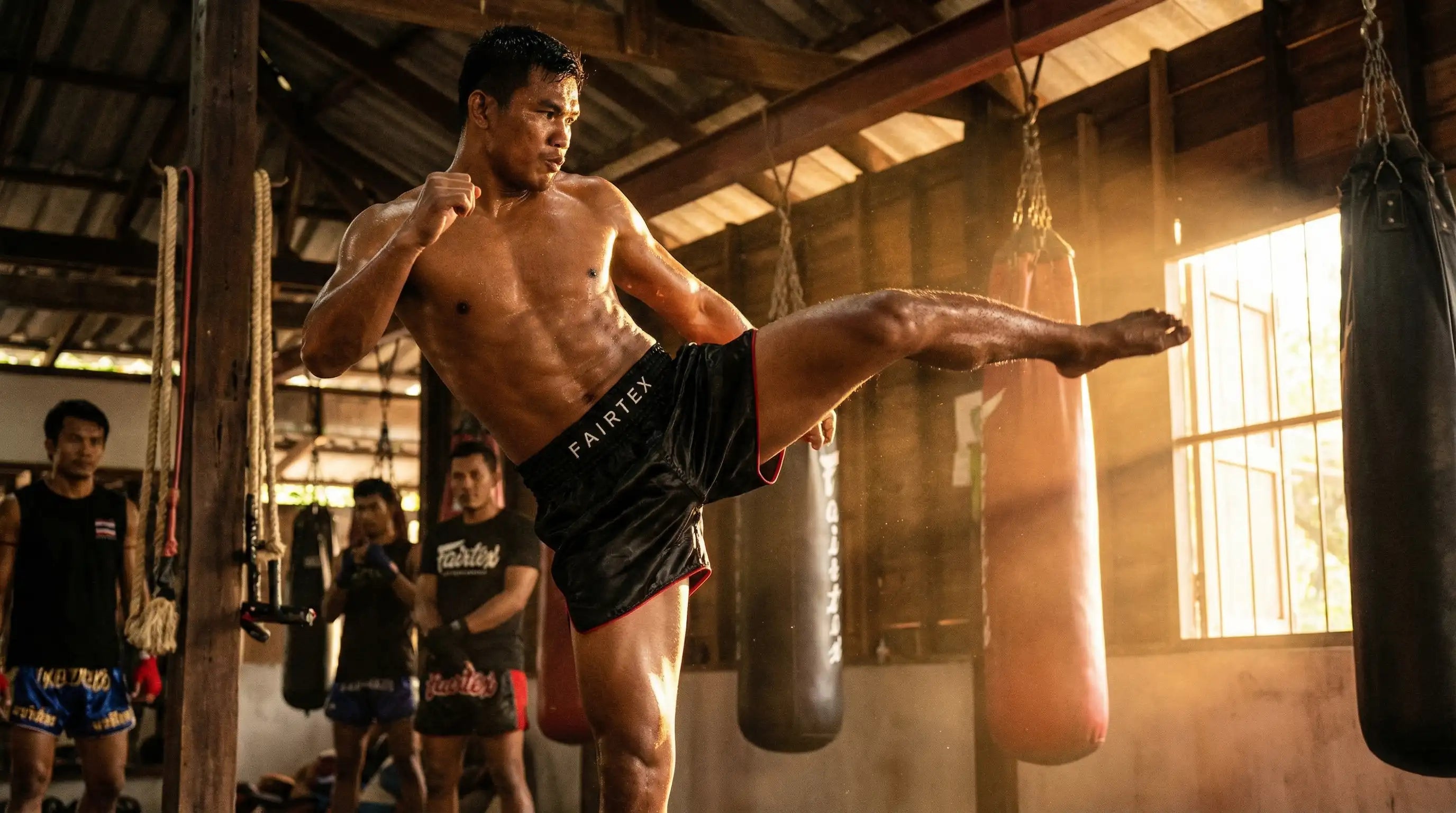
The first time you try to kick hard in the wrong shorts, you feel it immediately. Your hip starts to turn over, your knee lifts, and the fabric grabs your thigh like a brake. You adjust between rounds, you pull the waistband up, and you still feel restricted. That is when you realize Muay Thai shorts are not just “gym clothes.” Fit changes how freely you can teep, how high you can round kick, and how confident you feel walking into sparring.
At Fairtex, every piece of equipment is handcrafted in Thailand using Grade A materials and tested by professional fighters. It is quality you can feel from the first round. In this guide, you will use a practical Muay Thai shorts size chart approach, learn how Muay Thai shorts are supposed to fit, and avoid the sizing mistakes that show up the moment the pace increases.

How should Muay Thai shorts fit?
Here’s the thing: the “right” Muay Thai shorts fit is not about looking baggy or tight. It is about range of motion and staying in place when you are sweaty, clinching, and turning your hips hard.
What correct fit feels like in real training
When your shorts fit correctly, you can lift your knee high without the leg opening pulling against your inner thigh. You can pivot on kicks without the hem twisting and binding. In clinch, the waistband stays stable, so you are not constantly adjusting while your partner is trying to turn you.
Key fit checkpoints (quick and honest)
- Waistband: snug enough to stay put when you jump and knee, but not so tight it digs into your ribs when you shell up.
- Rise: sits at your natural waist or slightly below, not sagging at the hips where it drags during teeps.
- Leg opening: wide enough for high kicks and knees, without exposing too much when you step in and out.
- Side slit: should open as you lift the leg, not pull the front panel upward.
What most fighters overlook is that shorts that feel “fine” standing still can fail the first time you do 50 switch kicks. Always test fit with movement.
How to measure for Muay Thai shorts sizing (the way fighters actually should)
If you are asking “what size Muay Thai shorts should I get,” start with measurement, then adjust for cut and preference. Don’t guess off your jeans size. Jeans sit lower, stretch differently, and are often vanity-sized.
Measurements that matter
- Natural waist: measure around where you want the waistband to sit (usually just above hip bones).
- Hip: measure around the widest part of your hips and glutes.
- Thigh: measure around the fullest part of your thigh if you have powerful legs or you do a lot of strength work.
Two simple rules before you choose a size
Rule 1: If your waist and hips fall into different size ranges, prioritize the waist for stability, then choose a cut with enough leg room.
Rule 2: If you are between sizes, decide based on use. For hard sparring and clinch rounds, most athletes prefer the waistband slightly more secure. For casual pad work, a slightly roomier feel is fine.
Muay Thai shorts size chart: how to choose the right size without overthinking
A Muay Thai shorts size chart is only useful if you understand what it is trying to tell you. Shorts sizing is mainly driven by waistband measurement, then adjusted by the brand’s cut. Traditional Thai shorts tend to be shorter with wider leg openings, and slim-cut designs reduce extra fabric.
Use this size chart method (works across most brands)
Consider this a practical way to land on the right size even when different brands label sizes differently.
- If your waist measurement is the priority: choose the size where your waist sits in the middle of the listed range, not at the maximum.
- If you have larger thighs or glutes: stay true to waist size, then choose a traditional cut or a model known for wider leg openings.
- If you want a tighter, cleaner look: choose a slim cut but do not size down so far that knee lifts feel restricted.
Movement test: the “3-drill fitting room”
From years of gym experience, you can identify a bad size in under 60 seconds:
- 10 knees each side: waistband should not roll and the rise should not drift down.
- 10 teeps each side: front panel should not pull tight across the hip flexor.
- 10 round kicks each side: side slit should open, not drag the hem upward.
If you fail any of these, do not “wait for it to break in.” Shorts do not break in like leather. You need the correct size and cut from day one.

Traditional satin vs slim cut: choosing the shorts that match your style
Now, when it comes to Muay Thai shorts fit, the cut matters as much as the number on the tag. A traditional Thai cut is built for kicking volume and clinch movement. A slim cut is built for a cleaner silhouette with less excess fabric.
Traditional satin shorts: classic freedom of movement
Traditional satin shorts usually sit shorter, flare more at the leg opening, and use deeper side slits. If you throw a lot of body kicks, knees, and long-step teeps, this cut tends to feel effortless. It also helps if your thighs are thick from squats, sprints, or years of kicking pads.
Slim cut shorts: less fabric, less distraction
Slim cut shorts reduce “flap” when you are moving fast. Some fighters like the way they stay neat during footwork-heavy sessions and boxing-focused rounds. The tradeoff is you need to be more accurate with sizing, especially in the thigh and hip area, or you will feel restriction on high knees and high kicks.
If you want to browse both styles, start with the main Muay Thai shorts collection and pay attention to how the waistband and leg opening are described for each cut.
Training fit vs fight night fit: what actually changes?
The reality is that training exposes weaknesses in your sizing faster than competition does. In a fight you wear the shorts for minutes. In the gym, you wear them through warmups, pads, clinch, conditioning, and maybe sparring after.
Best fit for daily training
For daily training, choose the size that stays stable during repeated movement. A secure waistband matters when you are holding pads or clinching hard. If your shorts slide down, you lose focus and your posture gets sloppy. Pair that with reliable support like ankle supports when you are doing lots of kicking volume, especially on harder mats.
Best fit for sparring and clinch
In sparring, you want shorts that do not bunch up when you check kicks or rotate your hips under pressure. If you clinch a lot, avoid extra-long shorts that can catch on knees or get grabbed unintentionally. And if you are gearing up, the shorts should not interfere with your shin guards straps around the calf and lower knee area.
Fight night preferences
Some fighters size slightly slimmer on fight night for a cleaner look and less fabric movement. That can work if you have already tested the size in full-speed pad rounds. Do not experiment on the week of the bout.
Fairtex equipment is used by world champions at the Fairtex Training Center in Pattaya and trusted by ONE Championship athletes competing on the global stage. That level of performance starts with basics like correct fit, so you can focus on timing and technique instead of adjusting gear.
Muay Thai shorts with pockets, what to wear under them, and how to wear Muay Thai shorts
Fighters ask about pockets more than you would expect. Usually it is because they want to throw shorts on for strength training, roadwork, or coaching. In actual Muay Thai training, pockets are mostly a downside.
Muay Thai shorts with pockets: do they belong in the gym?
If you spar or clinch, avoid pockets. Fingers and gloves can catch in pocket openings, and the pocket fabric can bunch up. For bag work only, pockets are not dangerous, but they still add bulk and movement. If you want something pocket-friendly for cross-training, consider fight shorts instead of true Thai boxing shorts.
What to wear under Muay Thai shorts
Most fighters wear one of three options: compression shorts, a jockstrap, or fitted briefs. Compression shorts are the most comfortable for high volume kicking and clinch because they reduce friction. If you train in Thai-style shorts with a slick interior, compression helps prevent chafing around the inner thigh.
- For pad work and drills: compression shorts are a safe default.
- For sparring: compression plus a groin protector if your gym requires it.
- For hot gyms: lightweight compression fabric reduces sweat pooling and rubbing.
How to wear Muay Thai shorts (so they stay put)
Tie the drawstring, then do two deep squats and a few knee lifts. If the waistband slides, tighten it before the round starts. Keep the waistband at your natural waist, not low on the hips, especially if you throw teeps and long knees.
And remember, shorts are only part of the setup. If you are gearing up for full training, your shorts should work alongside essentials like hand wraps and gloves that match your session intensity. If you want a deeper glove breakdown, read our Best Muay Thai Gloves 2025 guide.

Fit problems that look like “bad shorts sizing” (but aren’t)
Sometimes shorts feel wrong because something else is off. A lot of athletes blame the waistband when the real issue is sweat management, friction, or even how they warm up.
Chafing and irritation
If you are chafing, it is often a fabric-on-skin problem, not a size problem. Compression layers help, and so does choosing a cut that does not rub the inner thigh. If you are doing long sessions, consider rotating shorts and washing them properly so sweat salts do not stiffen the fabric.
Waistband rolling
Waistband rolling usually means the shorts are too small in the waist or too short in the rise for your torso. It can also happen if you tighten the drawstring so hard that the waistband folds on itself. Go secure, not strangled.
Restricted kicks
Restricted kicks can be a cut issue. A slim cut that is perfect for boxing-heavy rounds might feel tight when you start throwing head kicks. If your style is kick-first, choose traditional Thai cuts and size for movement, not for a “tucked-in” look.
If you want more context on what separates well-built shorts from fashion shorts, see our breakdown of Best Muay Thai Shorts 2025.
This is why Fairtex developed the three-layer foam system for gloves and protective gear. You get superior shock absorption that protects your hands round after round, built on over 50 years of Thai craftsmanship. The same professional mindset applies to shorts: correct cut, clean construction, and purpose-built movement.
Frequently Asked Questions
How are Muay Thai shorts supposed to fit?
Muay Thai shorts are supposed to sit securely at your waist, stay put during knees and clinch, and give you full hip mobility for kicks and teeps. The leg opening should feel free, not tight, and the side slits should open as your knee lifts. If you are constantly adjusting the waistband or you feel restriction on round kicks, your size or cut is off.
What size Muay Thai shorts should I get if I’m between sizes?
If you are between sizes, decide based on how you train. For sparring, clinch, and hard pad rounds, most fighters choose the size that gives a slightly more secure waistband, as long as knee lifts still feel smooth. For lighter training, you can go roomier. Always test with movement: knees, teeps, and round kicks will reveal a bad choice quickly.
Should I size up in Muay Thai shorts for bigger thighs?
Not automatically. Start with your waist measurement first, because a stable waistband matters most in Muay Thai. If you have bigger thighs, choose a traditional cut with a wider leg opening rather than simply sizing up, which can cause the shorts to slide down. If you do size up, make sure the waistband still locks in with the drawstring during hard movement.
Are Muay Thai shorts supposed to be short?
Traditional Thai boxing shorts are usually shorter than typical gym shorts because the design is meant to free the hip and thigh for kicking. Shorter length also reduces fabric that can snag in clinch or bunch up during checks. That said, “short” should not mean restrictive. If the hem pulls upward when you kick, you need a different cut or size.
Do Muay Thai shorts with pockets work for sparring?
For sparring and clinch, pockets are a risk. Gloves, fingers, or even a knee can catch on pocket openings, and the added fabric can bunch up when you move. If you want pockets for cross-training, pick a different short style designed for that purpose. For Muay Thai-specific work, keep it clean and simple.
What should I wear under Muay Thai shorts?
Compression shorts are the most common choice because they reduce friction and stay in place during kicks and clinch. Some fighters use fitted briefs or a jockstrap, and many gyms require a groin protector for sparring. The goal is support and comfort without bunching. If you are prone to chafing, compression is usually the best fix.
How do I keep Muay Thai shorts from slipping during training?
Make sure the waistband sits at your natural waist, then tie the drawstring securely. Test with a few squats and knee lifts before the round starts. If the waistband rolls or slides, the shorts are often too large, or the rise does not match your body. If you are sweating heavily, a compression layer can reduce slipping by improving friction between layers.
Where can I learn more about building a full Muay Thai training kit?
Shorts are one piece of the setup. For a complete gear overview, read our guides on Best Muay Thai Shin Guards 2025 and Best Boxing Hand Wraps 2025. When your shorts, shin guards, and wraps all fit correctly, you move better and you train with more confidence.
Key Takeaways
- Use waist measurement first for Muay Thai shorts sizing, then choose cut based on thigh and hip build.
- Correct Muay Thai shorts fit passes the movement test: knees, teeps, and round kicks without restriction or waistband slip.
- Traditional satin cuts usually offer the most freedom for high-kick volume and clinch-heavy training.
- Avoid Muay Thai shorts with pockets for sparring and clinch to prevent snagging and bunching.
- Compression shorts under your Thai shorts reduce chafing and help everything stay stable when you sweat.
Conclusion
Shorts sizing feels like a small detail until the gym gets loud, your legs get heavy, and you have to keep moving anyway. When you use a Muay Thai shorts size chart the right way, you stop guessing. Measure your waist, pick the cut that matches your build, and test the fit with real strikes, not a mirror pose. If the waistband stays locked and your hips move freely, you will feel it right away in your kicks and knees.
Explore Fairtex's complete collection of Muay Thai shorts, handcrafted in Thailand for fighters who demand professional quality.
Last updated: February 2026