
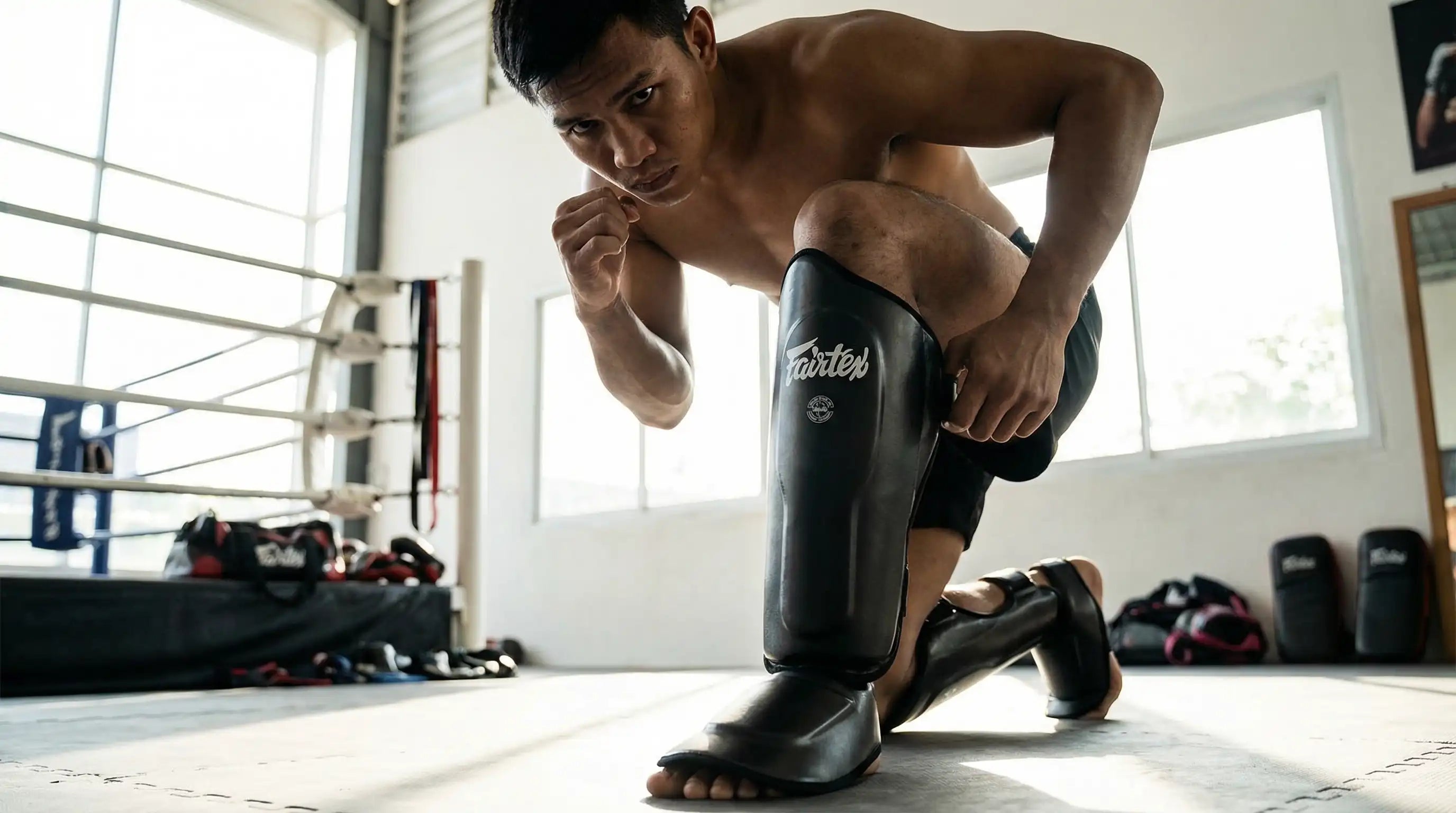
Muay Thai Shin Guards Size & Fit Guide
The first time you take a hard kick in sparring, you learn fast that shin guards are not just “extra padding.” If they slide when you check, twist when you kick, or leave your shin bone exposed, you start hesitating. And once you hesitate, your timing gets sloppy.
This muay thai shin guards size guide is built for the real gym problem: getting a secure fit that stays put through checking drills, Dutch-style combos, and clinch breaks. At Fairtex, every piece of equipment is handcrafted in Thailand using Grade A materials and tested by professional fighters. It is quality you can feel from the first round. If you are shopping the Muay Thai shin guards collection, this guide will help you measure correctly, interpret a Muay Thai shin guards size chart, and choose the right size for your training style.

Why Shin Guard Fit Matters in Muay Thai
Consider this: in Muay Thai you are not only absorbing impact, you are also creating it. Every kick, check, and step is friction, rotation, and force fighting against your straps.
If the fit is off, you get three problems. First, protection fails because the foam is no longer covering the right spot. Second, your technique changes because you do not trust your gear to stay centered. Third, you increase risk for your partner because a loose guard can expose hard edges, buckles, or your bare shin during exchanges.
From years of gym experience, the “right size” is not just about height and weight. It is about calf volume, ankle shape, and how aggressive you are with checks and teeps. A good fit makes you comfortable throwing full power without thinking about your equipment.
How Muay Thai Shin Guards Are Supposed to Fit
What a correct fit feels like
Here’s the thing: a properly fitted shin guard feels like it becomes part of your lower leg. It should sit centered on your shin bone and stay centered when you pivot, kick, or step back to check.
You want firm contact without cutting off circulation. The straps should lock the guard in place, and the foot pad should not pull your toes upward or cramp your arch.
Coverage checkpoints: shin, knee line, and instep
Use these quick checkpoints when you first put them on:
- Top edge: sits just below the kneecap line. It should not bang into your knee when you chamber a kick.
- Center line: padding runs straight down your shin, not drifting to the inside.
- Bottom edge and instep: covers the lower shin and instep without leaving a gap above the ankle.
How tight is “tight enough” for straps?
Now, when it comes to strap tension, aim for secure, not strangled. You should be able to slide a finger under the straps with a little resistance. If your foot is tingling after a round, you went too tight. If the guard spins after a check, you went too loose or you are in the wrong size.
How to Measure for Muay Thai Shin Guards
Most fighters overlook how easy it is to measure wrong. They measure their height and guess. Then the shin guard shows up, and it either feels like a snowboard boot or like a kids pad sliding around.
To answer “how to measure Muay Thai shin guards” the right way, you need two simple measurements and one reality check.
What you need
- Soft measuring tape (or a string and ruler)
- Pen and notes
- Your usual training socks or ankle supports if you wear them
Measurement 1: shin length (knee to ankle)
Sit with your knee bent about 90 degrees. Measure from just below your kneecap line down to the top of your ankle bone. This tells you whether a guard will actually cover your shin without running into your knee when you kick.
Measurement 2: calf circumference (widest point)
Stand relaxed. Measure around the widest part of your calf. This matters because shin guard size is as much about wrap and strap reach as it is about length. Fighters with strong calves often need to size up, even if they are not tall.
Reality check: simulate movement
Before you decide, imagine what your training looks like. If you hard check, step in heavy, and like tight gear, you can run closer to the snug end of the range. If you clinch a lot, you need a fit that stays centered even when someone is pulling and turning you.
Muay Thai Shin Guards Size Chart and How to Use It
A Muay Thai shin guards size chart is a starting point. Brands vary by cut, padding thickness, and how the foot pad is shaped. That is why you should always use your measurements first, then choose size second.
General shin guard size chart Muay Thai fighters can use
Use this as a general guide. If you are between sizes, read the next subsection on how to choose based on training.
- Small (S): shorter shin length, slimmer calves, usually lighter fighters
- Medium (M): average shin length and calf size for most adults
- Large (L): longer shin length and thicker calves, heavier impact training
- Extra Large (XL): very tall fighters, very large calves, or athletes who want maximum coverage
How to size Muay Thai shin guards when you are between sizes
The reality is that “between sizes” is common. Here is how I coach fighters through it:
- Size down if your shin length matches the smaller size and you want a tighter, more responsive feel for fast kicking.
- Size up if your calf circumference is near the top of the smaller size range, or your guards always spin during checks.
- Size up if you are buying mainly for sparring and you want a little more coverage and partner safety.
Why padding thickness changes sizing feel
Thicker padding can make a guard feel “bigger” even when the length is right. This is also where quality shows. This is why Fairtex developed the three-layer foam system. You get superior shock absorption that protects your shins round after round, built on over 50 years of Thai craftsmanship. Better foam disperses impact without needing to feel bulky or unstable.
If you want a deeper breakdown of models and use-cases, see our guide to the best Muay Thai shin guards.
Choosing Your Size Based on Training Style
For technical sparring and high volume rounds
If you spar light but often, comfort and stability matter more than maximum bulk. A guard that fits snugly keeps your timing clean. You can check without re-adjusting between exchanges.
This is also where the rest of your kit affects sizing decisions. If you wear thicker ankle supports and accessories under your guards, account for that in your calf and instep feel.
For hard sparring and strong checking gyms
In gyms where checks are sharp and kicks are thrown with intent, you usually want a little more coverage and a little more forgiveness in the fit. Not loose, just enough room that your shin guard does not bite into your calf when you brace for impact.
Pair this with gloves that match the intensity. If you are stepping into harder rounds, your Muay Thai gloves should be sparring-appropriate, and your shin guards should be sized to stay centered under contact.
For pads, bag work, and conditioning
For pad work, you can run slightly lighter and more mobile. But do not go too small. Small guards often slide down when you sweat, especially during long kick counts.
And if you are holding pads too, good coaching equipment saves your body over the long haul. Quality kick pads make it easier to keep rounds crisp without asking your shins to do all the absorbing.
For competition prep
In fight camp, you want consistency. Pick the size that matches your movement and do not change it mid-camp unless it is truly wrong. Consistent fit means consistent kicking mechanics, which means better timing under fatigue.
Fairtex equipment is used by world champions at the Fairtex Training Center in Pattaya and trusted by ONE Championship athletes competing on the global stage. That same performance standard matters in your camp too: stable fit, reliable protection, and gear you can trust when rounds get serious.
Common Shin Guard Sizing Mistakes (and Fixes)
Mistake 1: buying based on height alone
Height helps, but calf circumference often decides the real fit. Two fighters can be the same height and need different sizes because one has thicker lower legs from years of roadwork and kicking.
Fix: measure shin length and calf circumference, then choose the size that solves the spinning problem first.
Mistake 2: accepting shin guards that rotate
If your guard rotates when you check, it is not “normal.” It is a fit issue. Rotation exposes your shin and makes you hesitate, especially when you start checking harder kicks.
Fix: tighten straps properly, make sure the guard is centered, and if it still spins, move up a size or choose a model with a more secure wrap and foot profile.
Mistake 3: going too big for “more protection”
Oversized guards can clip your knee line, slow your kick return, and make your foot pad shift. You feel protected, but your technique gets messy.
Fix: prioritize stable coverage. If you want more protection, choose better foam and build quality instead of going oversized.
Mistake 4: ignoring how your shorts affect movement
This sounds small, but it matters. If your shorts restrict your hip, you compensate in your lower leg, and the guard feels “off.” A clean, wide leg opening keeps your kick mechanics honest.
Fix: wear proper Muay Thai shorts in training. For more on choosing the right cut, read our Muay Thai shorts guide.
Fit Troubleshooting by Problem (Slide, Spin, Foot Pad Issues)
If your shin guards spin when you check
Spinning is the classic sign that the wrap does not match your leg shape. Usually the calf is too small for the size you picked, or you are strapping around the wrong part of the calf.
- Check strap placement: the upper strap should sit above the widest part of the calf so it can “lock” instead of riding on the peak.
- Center the spine of the pad: line the guard up with your shin bone first, then strap it down. Do not strap first and then try to twist it into place.
- Size decision: if the straps are maxed out or the pad still rotates on impact, you need more wrap. That is a size up problem, not a “tighten harder” problem.
Real gym test: do three hard checks in a row, right after you put them on. If the pad walks to the inside of your shin, it will only get worse once you are sweaty.
If your shin guards slide down while kicking
Sliding down is usually too much length for your shin or not enough tension at the top strap. When the top edge sits too close to the knee line, the guard can get pushed down every time you chamber.
- Confirm top edge height: it should sit just below the kneecap line when you are standing, and still clear the knee when you chamber.
- Dryness matters: a soaked inner lining loses friction. If the guard only slips late in training, it is often sweat plus slightly-too-big sizing.
- Size decision: if the shin length is long and you feel the pad bunching at the ankle, size down.
If the foot pad pulls on your toes or cramps your arch
This is a fit detail many fighters ignore until their feet start aching. The instep section should protect the top of your foot, but it should not feel like it is forcing your toes up.
- Look at where the foot pad sits: it should cover the instep, not ride too far forward over the toes.
- Check ankle gap: if you have a gap above the ankle but the foot pad is tight, you likely have the wrong proportion for your shin length, and a different size will balance it.
- Training reality: if you teep a lot, that toe-pull feeling gets worse fast. Choose the size that lets your foot stay relaxed.
If the straps feel like they “barely reach”
If you are on the last inch of hook and loop from day one, that is not a break-in situation. It is also not safe. Straps that barely catch tend to pop under contact, especially when you clinch and someone turns you.
The right fit is when the straps lay flat, with enough overlap that you can re-tension mid-round without fighting the closure.
How to Put On Shin Guards So They Stay Put
Step 1: seat the guard on the shin bone first
Start by putting the guard on without touching the straps. Slide it into position so the center of the padding tracks straight down your shin bone, then check the top edge clearance under your kneecap line.
Step 2: set the foot and instep, then strap from bottom to top
Get your foot pad centered on the instep, not twisted inward. Then strap the lower strap first, followed by the upper strap. Bottom-to-top keeps the guard from creeping upward and lets you lock the wrap around your calf.
Step 3: do a quick movement check before you start the round
Before the bell, do three things: one light kick, one step-in check, and one teep. If the pad shifts on any of those, fix it now. In sparring, you will not have time to adjust after a hard exchange.
A simple rule that works in every gym
If you can put them on fast and they land in the same spot every time, you picked the right size. If you are constantly “finding the center” each round, you are fighting your own gear.

Care, Drying, and Longevity (So Fit Stays Consistent)
Fit is not only about sizing. It is also about keeping the materials in good shape. When shin guards stay damp, the lining softens, the closure gets clogged, and the wrap starts to feel sloppy. That is when even the right size begins to slide.
After training: wipe, open, and air-dry
Wipe the inside and outside with a clean towel after class, then open the straps fully and let the guards air-dry in a ventilated spot. Do not leave them closed up in your bag. That warm, dark, damp environment is where odor and breakdown start.
Do not cook your gear
Avoid direct heat like radiators or hot car trunks. Heat can dry materials too aggressively and shorten the life of the outer shell and strap system. Airflow beats heat every time.
Keep the hook and loop clean
If your straps stop sticking, fighters usually blame the brand. Half the time it is just lint and fabric fuzz in the hook side. Pull the debris out regularly so your closure can actually lock. A strap that is not locking makes the same size feel wrong.
When “break-in” becomes “packing out”
Shin guards should mold to your leg over time, but they should not collapse. If you notice the padding feels flat, the guard sits lower than it used to, or you suddenly need to overtighten straps to get the same security, the foam has started to pack out. That is a protection issue, not a comfort upgrade. Replace them before you start taking shin-on-shin contact with tired padding.
Frequently Asked Questions
How should Muay Thai shin guards fit?
They should feel secure and centered on your shin, with the top edge sitting just below the kneecap line and the instep protected without pulling your foot into discomfort. The straps should be firm enough that the guard does not rotate when you check. If you are constantly re-centering them between rounds, you are either wearing the wrong size or not getting a tight, stable wrap.
How are Muay Thai shin guards supposed to fit for sparring?
For sparring, prioritize stability and full coverage. Your guard should not slide down when you sweat, and it should not leave gaps near the ankle where shin-on-shin contact happens. A slightly more forgiving fit can be fine as long as it does not spin. If you are picking models, our shin guards roundup helps you match protection to intensity.
What size Muay Thai shin guards should I get?
Start with shin length (below kneecap to top of ankle) and calf circumference (widest point). Then choose the size that gives you coverage without hitting your knee line and enough wrap that straps sit flat and secure. If you are between sizes, size up for hard sparring and big calves, and size down for a tighter, faster feel if your calves are slimmer.
What size shin guards do I need for Muay Thai if I have big calves?
Big calves often push you into the next size up, even when your shin length is average. If the straps barely reach or the guard gaps away from your leg, it will rotate under impact. Choose the size that allows the straps to sit centered and flat with firm tension. Tight-fit is good, but a guard that cannot wrap properly will never stay stable.
How to measure for Muay Thai shin guards at home?
Use a soft measuring tape. Measure shin length from just below the kneecap line down to the top of the ankle bone, with your knee bent. Then measure calf circumference at its widest point while standing relaxed. Write both numbers down and compare them to a Muay Thai shin guards size chart. If you train in ankle supports, measure while wearing them.
Should shin guards cover the knee?
No. Shin guards should sit just below the knee line. If they cover or bang into the kneecap when you chamber a kick, they will restrict movement and shift during rounds. You want the knee free so you can check, step, and clinch without the top edge catching. If you need knee protection for a specific injury, that is a separate piece of support equipment.
Why do my shin guards slide down when I kick?
Sliding usually comes from one of three issues: the guard is too large, the straps are not tensioned correctly, or sweat is reducing friction and the guard lacks a secure wrap. Try tightening the calf straps first and making sure the guard is centered. If it still slides after a few rounds, move down a size or switch to a model with a more locked-in fit profile.
Do Muay Thai shin guards break in like gloves?
Yes, but differently. Gloves break in mainly through the hand compartment and foam settling. Shin guards break in through the wrap and how the padding conforms to your shin and instep. After a few weeks, the guard should feel more “molded” to your leg. If it is still rotating after break-in, it is not a break-in problem, it is a sizing problem.
Can I use the same shin guard size across brands?
Not always. One brand’s medium can fit like another brand’s large because of different cuts, strap layouts, and padding thickness. Treat any shin guard size chart as brand-specific. Measure your shin length and calf circumference every time you switch brands or models. If you want to keep your whole kit consistent, match your sizing decisions with your other gear like gloves and shorts.
Is it better to size up or size down for sparring?
If you are truly between sizes, I lean slightly up for sparring as long as the guard does not hit your knee line and it does not spin. The priority is stable coverage and partner safety. If sizing up creates rotation, go back down and focus on a tighter wrap and correct strap placement.
Why do my shin guards cramp my feet or pull my toes up?
That usually means the foot pad is sitting too far forward, or the overall size proportion does not match your shin length and ankle position. Re-seat the guard so the instep pad covers the top of your foot, then re-strap from bottom to top. If it still pulls, consider a different size so the instep and shin sections line up naturally.
How do I stop shin guards from smelling and feeling “slippery”?
Dry them properly. Wipe them down after training, open the straps fully, and air-dry in a ventilated area. A guard that stays damp will feel slick inside, which leads to sliding and rotation. Keeping the hook and loop clean also matters, since weak strap closure makes any size feel unstable.
Key Takeaways
- Measure shin length and calf circumference to answer “what size Muay Thai shin guards should I get” with confidence.
- Proper fit means centered coverage, no knee interference, secure straps, and zero rotation when you check.
- If you are between sizes, size up for thicker calves and harder sparring, and size down for a tighter, faster feel.
- Oversizing for “more protection” often makes technique worse. Better foam and stable wrap matter more than bulk.
- Test fit with movement in mind: kicking, checking, and clinch turning are where bad sizing shows up.
- If your guards spin, slide, or cramp your foot, treat it like feedback. Re-seat, re-strap, and adjust size based on the specific problem, not guesswork.
- Drying and basic care keep fit consistent. Damp gear slips more, and dirty closures do not lock the way they should.
Conclusion
When your shin guards fit right, you stop thinking about them. You check with confidence, you kick without hesitation, and you can stay focused on timing and composure instead of gear adjustments. That is the real goal of any Muay Thai shin guard sizing decision.
Use your measurements, respect how your training style changes what “best fit” means, and do not ignore rotation or sliding. The right size should feel stable in round one and still stable when you are drenched in sweat in round five. Explore Fairtex's complete collection of combat sports equipment, handcrafted in Thailand for fighters who demand professional quality. If you are ready to choose, browse the Fairtex shin guards collection and match your size to the way you actually train.
Last updated: February 2026