
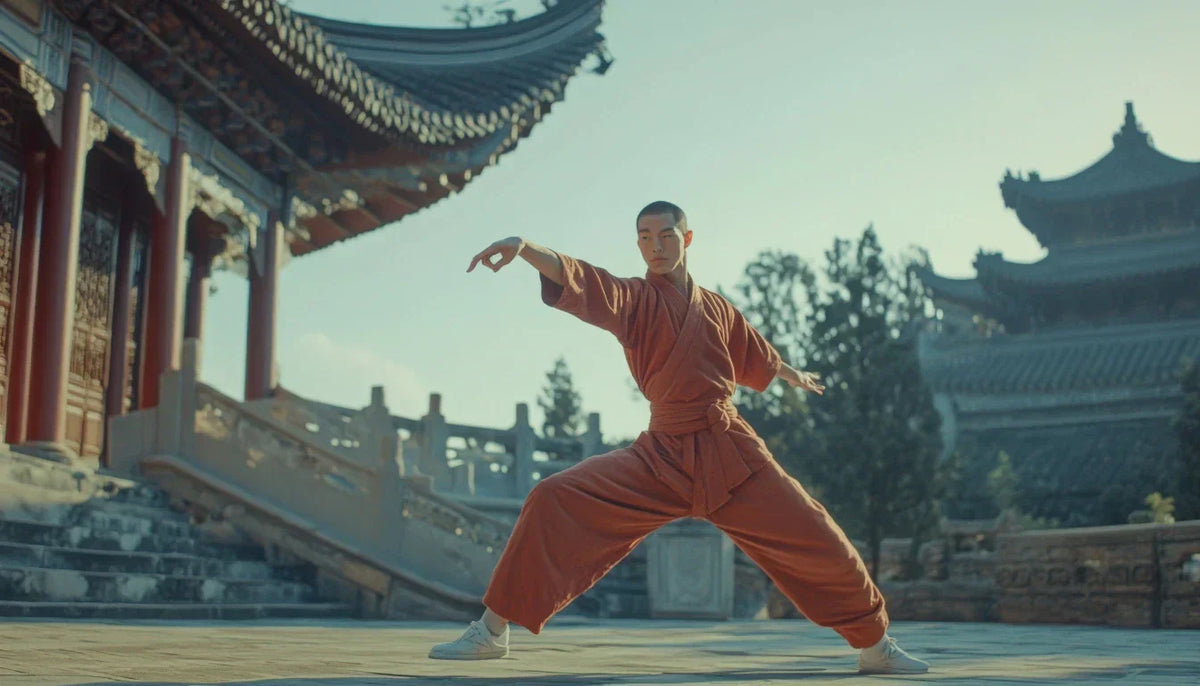
Your buddy asks “Kung Fu or Muay Thai—what’s better?” and suddenly you’re comparing apples and coconuts after class. Sound familiar? Maybe you’ve done a bit of Wing Chun chain punching, then got stuck in a Thai clinch where the *ti khao* (knee strike) kept finding your ribs. Or you tried to throw a crisp Muay Thai *teep* (push kick) at a Sanda athlete and got caught and swept off your feet. Kong fu vs muay thai debates usually miss the point: the real answer depends on range, ruleset, and how you train.
Here’s what you’ll get today: a clear, experience-based breakdown of how Muay Thai and the many branches of Kung Fu stack up—techniques, training culture, conditioning, and practical application. You’ll see where each style shines, how to avoid common cross-training mistakes, and how to choose which to start with based on your goals—self-defense, fitness, or competition.
Table of Contents
Fundamentals: Kung Fu vs Muay Thai—What You’re Really Comparing
Comparing kung fu vs muay thai starts with clarity. “Kung Fu” isn’t a single style—it’s an umbrella for hundreds of Chinese martial arts, from Wing Chun to Choy Li Fut, Hung Gar, Long Fist, and modern Sanda (Chinese kickboxing). Muay Thai is one art with consistent rules, pads, and competition structure. That matters, because how you train day to day shapes what you can actually do under pressure.
Range & Rules Define Your Weapons
Muay Thai focuses on the “Art of Eight Limbs”: fists (*chok*), elbows (*ti sok*), knees (*ti khao*), and shins (*tae*). The clinch—*chern* (clinch control)—is a battlefield of posture, frames, and knees. Under Thai rules, you learn to score, damage, and off-balance. Many Kung Fu systems have a broader technical library—trapping, sweeps, qin na (joint controls), animal styles—but the expression varies by school. Sanda adds full-contact realism: punches, kicks, catches, and powerful dumps off the platform.
Training Culture & Conditioning
Thai training is reps and rounds. Pads, heavy bag, sparring, clinch rounds, roadwork—repeat. It’s pressure-tested weekly. Traditional Kung Fu emphasizes forms (taolu), partner drills, sensitivity (e.g., Chi Sao in Wing Chun), and line drills; some schools spar hard, some don’t. Modern Sanda programs look a lot like kickboxing with wrestling—very practical. Your outcome reflects your training culture: consistent live practice builds timing and composure.
Technical Breakdown: Difference Between Muay Thai and Kung Fu
When you put the two arts side by side, the biggest differences show up in stance, footwork, striking mechanics, and clinch/grappling options. Let’s break it down the way you actually feel it in sparring.
Stance and Footwork

Muay Thai stance is stable and balanced: chin tucked, hands high, elbows in, weight centered to check kicks and fire back. Footwork is purposeful—small steps, strong base, and angle changes when needed. You’ll feel heavy on the legs because checking kicks and clinching require that base. Kung Fu stances vary wildly: Wing Chun’s narrow stance for forward pressure, Hung Gar’s deep rooted bases, Long Fist’s dynamic transitions. Sanda adopts a kickboxer’s bounce with wider lateral movement and fast entries to catches and dumps.
Kicks: Hip-Driven vs Chambered
Muay Thai’s round kick (*tae*) is a whip from the floor—pivot, open the hip, cut through with the shin. No snapping the foot—it’s a baseball bat. In many Kung Fu styles (and TKD-influenced schools), kicks chamber more, emphasizing speed, precision, and sometimes the foot as the striking surface. Sanda kicks blend both worlds. In sparring, the Thai kick punishes the body and legs; Kung Fu kicks often excel at quick point-scoring or setups—unless the school cross-trains for full-contact impact.
Punching and Elbows
Muay Thai punching draws heavily from boxing: jab, cross, hook, uppercut—integrated with elbows (*ti sok*) at short range. Guard stays high, shoulders active. Wing Chun delivers centerline chain punches and vertical fists; other Kung Fu systems use corkscrew punches or backfists. Against a tight Thai guard, looping or light punches can get eaten by counters unless they’re set up with footwork and angles. Sanda punches look like kickboxing—clean and powerful.
Knees, Clinch, and Trapping
Here’s a massive separator. Muay Thai clinch (*chern*) is a full subsystem: hand fighting, head position, inside ties, posture breaks, off-balancing, and relentless knees. Kung Fu styles typically emphasize trapping, qin na, and quick hand control over extended clinch. Sanda allows clinch entries but prioritizes immediate throws. In a Thai ring, if you can’t fight the clinch—or at least break and exit—you’re in trouble.
Defense and Guards
Thai defense is structured: high guard, parries, checks, long guard to control distance, and the *teep* (push kick) as a jab with the leg. Many Kung Fu systems defend with angling, parries, and redirections; Wing Chun favors structure and centerline control. Against heavy low kicks, a traditional Kung Fu guard can feel exposed unless adapted with checks and shin conditioning. Sanda players usually already have these adaptations.
Training Drills & Practice Methods
If you’re choosing between arts—or cross-training—build sessions that target the real differences. These drills sharpen decision-making, timing, and conditioning while keeping you safe.
Drill 1: Teep vs Entry (Distance Duel)
Goal: Develop Muay Thai-style distance control against a fast entry. Round format: 4 x 3 minutes, 60s rest.
Partner A (Thai role): Only *teep* and jab. Focus on balance, timing, and retraction. Partner B (Kung Fu/Sanda role): Light entry with angle steps and a single counter (cross or kick). Progression: Add catch-and-sweep for B; A learns to retract the teep quickly and frame with long guard. Safety: Shin guards, controlled pace. Outcome you’ll notice after two weeks: better foot placement and fewer off-balance moments on teeps.
Drill 2: Clinch Survival for Non-Thai Stylists
Goal: Build posture, frames, and knee awareness against Thai clinch pressure. Format: 5 x 2-minute clinch rounds, 60s rest, 2-3x/week.
Partner A: Full clinch offense—hand fighting, off-balancing, *ti khao* to pad. Partner B: Survival only—posture up, elbows inside, hip back, pummel to underhooks or biceps ties, then clean break on coach’s call. Start with neck harness holds on a cable stack 2x/week (3 x 12) for neck strength. Outcome: your first week feels like quicksand; by week three, you’ll break posture less and eat fewer knees.
Drill 3: Round Kick Conversion for Kung Fu Stylists
Goal: Transition from chambered kicks to hip-driven Thai kicks. Format: 6 x 20 kicks each side on heavy bag, 90s rest, 3x/week.
Cues: Plant the lead foot, pivot hard, swing the hip, shin through the target, let the arm counter-swing. Add 3 x 10 low-kick checks each side to build shin familiarity. Safety: Ease into shin conditioning; avoid banging bone-on-bone early. Outcome after a month: more thud, less slap—bag movement increases and your balance improves.
Drill 4: Sanda Catch vs Thai Counter
Goal: Train both sides of the kick-catch game. Format: 4 x 3-minute technical spar.
Phase 1: B catches body kicks, executes safe dump to mat or posts the knee and shucks. Phase 2: A anticipates catch—hides kicks behind punches, step-off angle, or whips the leg free and counters with cross or elbow (pad recommended). Outcome: You’ll stop giving away free sweeps and start punishing sloppy catches.
If you need a bag that can handle high-volume round-kick work, here’s a breakdown of the best Muay Thai heavy bags for home or gym setups.
Common Mistakes & How to Fix Them
Crossing between Muay Thai and Kung Fu is rewarding, but the early mistakes can be rough on your shins and ego. Here’s how to stay smart.
Mistake 1: Mixing Mechanics Too Soon
Problem: Chambering your kick in Muay Thai or trying to whip a full Thai round kick inside a Wing Chun drill. Why it happens: muscle memory from your base style. Fix: Segment your sessions—Muay Thai days use Thai mechanics only; Kung Fu days use your system’s mechanics. After 8-12 weeks, start layering adaptations intentionally.
Mistake 2: Ignoring the Clinch
Problem: Treating clinch like a brief tie-up instead of a fight-ending range. Why it happens: Many Kung Fu curricula emphasize trapping over prolonged clinch. Fix: Add 2-3 clinch rounds twice a week. Learn posture, inside position, and knee timing. Wear a belly pad and elbow pads for safe reps.
Mistake 3: No Shin Conditioning
Problem: Foot-based kicking clashing with shin-to-shin reality. Fix: Progressive conditioning—bag work, Thai pads, controlled checks. Never race to bone conditioning; give yourself 8-12 weeks. Use proper shin guards in sparring until your checks feel confident.
Mistake 4: Overcommitting on Linear Entries
Problem: Walking into counters or knees. Why it happens: Forward-pressure styles meet Thai timing. Fix: Blend feints, angle steps, and the jab. Respect the *teep*—if you eat two in a row, reset and change the look.

Rules, Scoring, and Strategy Shifts You Must Train For
Same skills, different outcome. Switch the ruleset and the fight changes. Here’s how IFMA/WMC Muay Thai and modern Sanda (IWUF-style) reward actions—and how to adjust your training so judges see your best work.
Muay Thai (IFMA/WMC) Scoring Essentials
Judges value effect, balance, and control. Clean kicks, knees, and elbows that visibly move or off-balance the opponent score highest. Body kicks that land with shin and don’t get caught look great to judges. Dominant chern (clinch control) with posture breaks and uninterrupted ti khao (knees) builds rounds. If you land and then stumble, your score drops. Catch-and-dump without damage is lesser than clean strikes with balance.
Sanda Point System and Ring-Out Tactics
Sanda awards points for strikes and takedowns, with extra emphasis on clean catches and controlled dumps. Typical structure: 1 point for clean punch or body kick; 2 points for head kick, kick-catch with dump, or high-amplitude throw; forced ring-out scores instantly and resets center. Prolonged clinch is limited—score quickly with a throw or get separated. No elbows in most Sanda formats; knees are often restricted or brief.
Strategy Shifts You Should Practice
Under Thai rules, invest in body kicks, balanced exits, and sustained clinch. Under Sanda, bias entries that threaten ring-outs, quick level changes, and kick-catch chains. Train both: “land hard and stay tall” for Thai; “touch, turn, and dump” for Sanda.
Safety & Injury Prevention When Crossing Styles
You’ll feel new stresses: shin-on-shin, clinch tugs on the neck, and ankle torque from catches. Keep the gains and ditch the medical bills with these habits.
If you’re new to checking kicks, start with thicker shin protection—our guide to the best Muay Thai shin guards helps you pick gear that makes early conditioning safer.
Shin and Ankle Protocol
Three days per week: 5 minutes calf raises (2-up/1-down, 3 x 12), tibialis raises (3 x 15), and banded ankle eversion (3 x 20). Finish bag work with 2 sets of 20 light checks each leg. Progress your tae (round kick) on heavy bag by volume first, power second. If you feel bone soreness, back off 48–72 hours and ice-compress-elevate.
Neck and Knee Protection in Clinch and Dumps
Neck harness or plate curls 2x/week (3 x 12). In clinch, think “crown tall, hips back, elbows inside.” For dump defense, step your outside foot to the mat edge and square your hips before pummeling. Knees: avoid twisting on caught kicks—post the hand on partner/coach’s shoulder, free the leg, then re-stance.
Recovery & Monitoring
Limit hard spar to 1–2 days weekly when adding new ruleset work. Track session RPE (perceived exertion) and shin tenderness daily. If sleep or resting heart rate drifts for 3+ days, reduce volume by 20% that week. Protective gear isn’t optional when learning catches, dumps, or elbows.
Advanced Drills for Cross-Rule Success
These drills target exact scoring moments and common failure points when Muay Thai and Sanda collide. Keep the pace technical first, then layer intensity.
Ring-Out Defense and Counter Turn (Sanda Prep)
- Setup: Mark a 3–4 m square. Partner A pressures to the edge. Partner B plays rope-a-dope footwork with lateral pivots.
- Execution: As A squares you to the line, step outside foot to the edge, stiff-arm frame at biceps, pivot 90°, then snap lead kick to thigh or body to reverse roles.
- Common Mistakes: Backpedaling straight, crossing feet, reaching with arms and losing hip base.
- Progression: Add feints and level-change shots for A; B must turn, strike, and re-center within 3 seconds.
Kick-Catch Chain: Dump vs Escape (Both Rulesets)
- Setup: Thai kick to body with belly pad. B works the catch.
- Execution: Phase 1: B catches, steps offline, shoulder pressure, inside reap to mat. Phase 2: A anticipates—points toes down, circles the knee to free, posts hand on shoulder, lands cross or elbow (pad) on exit.
- Common Mistakes: Upright posture during catch, pulling with arms not stepping the base, kicker hopping in place.
- Progression: Add live reads: 30 seconds catch-and-dump, 30 seconds kick-free-and-counter, rotate.
Clinch Frame to Knee, Pivot, and Dump Denial (Thai Prep)

- Setup: Hand-fight to inside biceps ties. Belly pad and elbow pads recommended.
- Execution: Frame forearm across collarbones, pull head, step outside foot, ti khao to body, then pivot off the frame to deny off-balances.
- Common Mistakes: Head down, narrow base, letting opponent square hips under you.
- Progression: Add snap-down attempts from partner; you must re-posture and knee before pivot.
Frequently Asked Questions
What is Kung Fu, really?
“Kung Fu” refers to a vast family of Chinese martial arts. You’ve got systems like Wing Chun (close-range striking and trapping), Hung Gar (power and rooted stances), Choy Li Fut (long-range circular strikes), and Sanda (Chinese kickboxing with throws). Each has different training methods. If your goal is live, full-contact application, look for schools that spar regularly or consider Sanda-focused programs.
What’s the core difference between Muay Thai and Kung Fu?
Muay Thai is a unified striking art defined by a ring rule set—punches, elbows, knees, kicks, and clinch. Training is rounds-based and pressure-tested weekly. Kung Fu is diverse—some schools are form-heavy with limited sparring; others, like Sanda, are competition-ready with catches and dumps. The biggest practical differences you’ll feel: the Thai clinch, the shin-driven round kick, and the emphasis on ring scoring.
Should I do Muay Thai or Kung Fu first?
Start with the program that has consistent, safe sparring and a clear curriculum. If you want direct transfer to competition or MMA, Muay Thai or Sanda first makes sense. If you’re drawn to traditional practice and movement variety, pick a Kung Fu system with a good coach and add Muay Thai later. Many athletes do 6-12 months in one, then cross-train.
Muay Thai vs. Kung Fu—Which is better for self-defense?
Context matters. Under stress, simple and repeatable usually wins. Muay Thai’s *teep*, low kicks, clinch knees, and high guard transfer well. Kung Fu’s awareness, hand fighting, and quick strikes can shine at very close range. The best self-defense programs pressure-test regularly, include clinch and ground escapes, and emphasize situational awareness.
How does Sanda compare to Muay Thai?
Sanda is the full-contact expression of modern Chinese striking: punches, kicks, catches, and big throws from the platform. Compared to Muay Thai, Sanda often has less elbow and knee work and more emphasis on catching kicks and dumping. Cross-sparring reveals the clash: Thai clinch control versus Sanda’s explosive entries and takedowns.
Can a Kung Fu practitioner succeed under Muay Thai rules?
Yes—if they adapt their guard, learn to check, and prepare for the clinch. Plenty of Sanda fighters have transitioned well by tightening defense, building shin conditioning, and learning the Thai scoring rhythm. Expect 3-6 months to feel comfortable in the ring tempo and clinch exchanges.
Which burns more calories and builds conditioning faster?
Rounds-based Muay Thai tends to push cardiovascular conditioning hard—padwork, bagwork, sparring, and clinch rounds. A Sanda program can be similar. Traditional Kung Fu sessions may be less metabolically intense unless the school structures pads and live rounds. If fitness is priority, look for heart-rate guided intervals, roadwork, and consistent sparring.
Is Muay Thai more dangerous than Kung Fu?
Full-contact training carries risk across styles. Injury rates correlate with sparring intensity, protective gear, and coaching. Smart Thai gyms scale contact, require shin guards, and manage rounds. Reputable Kung Fu/Sanda schools do the same. Prioritize gyms that teach defense early, progress contact gradually, and insist on recovery protocols.
How long to get fight-ready in Muay Thai vs Sanda?
With 4-5 sessions per week, many beginners can be ring-ready for a novice bout in 6-12 months—whether in Muay Thai or Sanda—assuming solid coaching and structured sparring. Traditional non-sparring curricula don’t translate as quickly. The limiting factors are defense under pressure and gas tank, not exotic techniques.
Can I blend the two styles effectively?
Absolutely, but sequencing matters. Build a solid base first—either Thai or Sanda—so your defense and conditioning hold up. Then add select techniques from your Kung Fu system that fit your body type and rule set. For example, Wing Chun’s hand fighting can help you pummel inside the clinch if you maintain Thai posture.
What equipment do I need to train safely?
For Muay Thai/Sanda: 12-16 oz gloves, shin guards, mouthguard, groin protector, and optional headgear for hard sparring. For traditional Kung Fu, gear depends on the school, but gloves and mouthguard are smart for partner work. Replace worn gear promptly and keep it clean to prevent skin infections.
Muay Thai (IFMA/WMC) Scoring Essentials
Judges value effect, balance, and control. Clean kicks, knees, and elbows that visibly move or off-balance the opponent score highest. Body kicks that land with shin and don’t get caught look great to judges. Dominant chern (clinch control) with posture breaks and uninterrupted ti khao (knees) builds rounds. If you land and then stumble, your score drops. Catch-and-dump without damage is lesser than clean strikes with balance.
Sanda Point System and Ring-Out Tactics
Sanda awards points for strikes and takedowns, with extra emphasis on clean catches and controlled dumps. Typical structure: 1 point for clean punch or body kick; 2 points for head kick, kick-catch with dump, or high-amplitude throw; forced ring-out scores instantly and resets center. Prolonged clinch is limited—score quickly with a throw or get separated. No elbows in most Sanda formats; knees are often restricted or brief.
Strategy Shifts You Should Practice
Under Thai rules, invest in body kicks, balanced exits, and sustained clinch. Under Sanda, bias entries that threaten ring-outs, quick level changes, and kick-catch chains. Train both: “land hard and stay tall” for Thai; “touch, turn, and dump” for Sanda.
Shin and Ankle Protocol
Three days per week: 5 minutes calf raises (2-up/1-down, 3 x 12), tibialis raises (3 x 15), and banded ankle eversion (3 x 20). Finish bag work with 2 sets of 20 light checks each leg. Progress your tae (round kick) on heavy bag by volume first, power second. If you feel bone soreness, back off 48–72 hours and ice-compress-elevate.
Neck and Knee Protection in Clinch and Dumps
Neck harness or plate curls 2x/week (3 x 12). In clinch, think “crown tall, hips back, elbows inside.” For dump defense, step your outside foot to the mat edge and square your hips before pummeling. Knees: avoid twisting on caught kicks—post the hand on partner/coach’s shoulder, free the leg, then re-stance.
Recovery & Monitoring
Limit hard spar to 1–2 days weekly when adding new ruleset work. Track session RPE (perceived exertion) and shin tenderness daily. If sleep or resting heart rate drifts for 3+ days, reduce volume by 20% that week. Protective gear isn’t optional when learning catches, dumps, or elbows.
3-Round Pad Block to Train Both Scoring Systems
Bridge the gap with one focused block.
Fighter References: What to Steal (Respectfully)
Watch Dieselnoi Chor Thanasukarn for posture and endless knees—he shows why sustained clinch breaks opponents. Study Samart Payakaroon’s timing on the teep; it scores, off-balances, and buys angles. For Sanda-style entries and dumps, review Cung Le’s Sanshou bouts—level changes into reaps and ring control are masterclass material. Different eras and rules, same lesson: balance beats force when your timing is right.
Check-and-Return Low Kick: Clean Scoring, Safe Shins
Simple, brutal, and judge-friendly. Make the counter automatic.

Rule-Specific Gear Notes
IFMA amateurs often require elbow pads and sometimes headgear; Sanda typically uses chest guards and forbids elbows. Train with the gear you’ll compete in: belly pad for knee rounds, elbow pads for clinch drilling, and proper shin guards for catch-and-dump practice. Professional fighters emphasize equipment quality for daily abuse—long-lasting Thai-made gear sets the durability standard serious practitioners rely on.
Are elbows allowed in Sanda, and how should I adjust if they’re not?
Most Sanda competitions don’t allow elbows and limit clinch time, so you should bias quick scoring actions: kick-catch to dump, ring control, and fast exits. Replace elbow counters with short hooks and shovel punches in the pocket. In pad and bag work, rep “one-and-go” entries: punch–kick–angle, or kick–catch–step-off. Keep your guard high like Thai, but don’t wait for long clinch exchanges—score, turn, or reset center. If you’re coming from Muay Thai, convert your inside elbow frames into stiff-arm biceps posts that set up reaps instead of cuts.
Do knees that land on the arms score in Muay Thai?
Judges reward effective impact and visible effect. A knee that drives through the forearms and moves your opponent can still score, especially if you control posture and stay balanced. Glancing knees into a tight shell with no displacement won’t impress. Make it obvious: pull the head, turn the body, land the ti khao to ribs or solar plexus, and remain upright after contact. If your knee is blocked, immediately off-balance with a turn or switch to a second knee—continuous dominance in clinch reads well on the scorecards.
Will Wing Chun chain punching work against a tight Thai guard?
It can, if you change the entry and the target. Marching straight with chain punches gets you low-kicked or clinched. Instead, use a touch-and-go approach: wedge on the lead arm, angle step outside the lead foot, then fire a short burst to body and head before exiting. Blend in a quick low kick or teep to stop the counter. In gloves, keep your wrists straight and don’t overreach—once you feel forearm contact stalling, either clinch with Thai posture or break and reset. The goal is damage without getting stuck in the pocket.
Key Takeaways
- Muay Thai vs Kung Fu isn’t apples-to-apples—Sanda bridges the gap with live, full-contact training.
- Thai clinch, hip-driven kicks, and high guard are your biggest adaptations when crossing over.
- Pressure-tested rounds beat theory. Choose a gym that spars safely and consistently.
- Build base mechanics first; blend later with intent. Protect your shins and posture.
Final Thoughts
If you’re standing at the crossroads between two great traditions, you’re in a good place. Muay Thai gives you a brutal, honest mirror: did your technique, conditioning, and heart hold up under pressure? Kung Fu offers a deep library of movement and strategy, and Sanda proves how sharp those tools can be when tested. Whichever path you start with, aim for consistent rounds, smart coaching, and patient progress. Want a simple plan? Spend 12 weeks building a Thai base—guard, *teep*, low kick, clinch survival—then layer in your favorite Kung Fu entries or hand-fighting concepts. Keep a training journal, film your sparring, and fix one mistake per week. That’s how you grow into a complete fighter.
About This Training Approach
These comparisons reflect ring-tested practice and respected coaching across Muay Thai and Sanda. This training approach mirrors traditional Thai camp methods—high-rep padwork, bagwork, clinch rounds—tempered with modern sports science on recovery and progression. Brands like Fairtex, developing fighters and equipment in Thailand since 1971, have helped preserve authentic methods while supporting champions who prove them in the ring.
For a full equipment checklist that fits authentic Thai training, see our guide to the best Muay Thai gear.
Sources referenced: IFMA competition guidelines (for clinch and scoring context), WMC ring standards, coaching insights from established Thai camps and Sanda programs, and current combat sports conditioning practices (2020–2025).
Last Updated: November 2025