
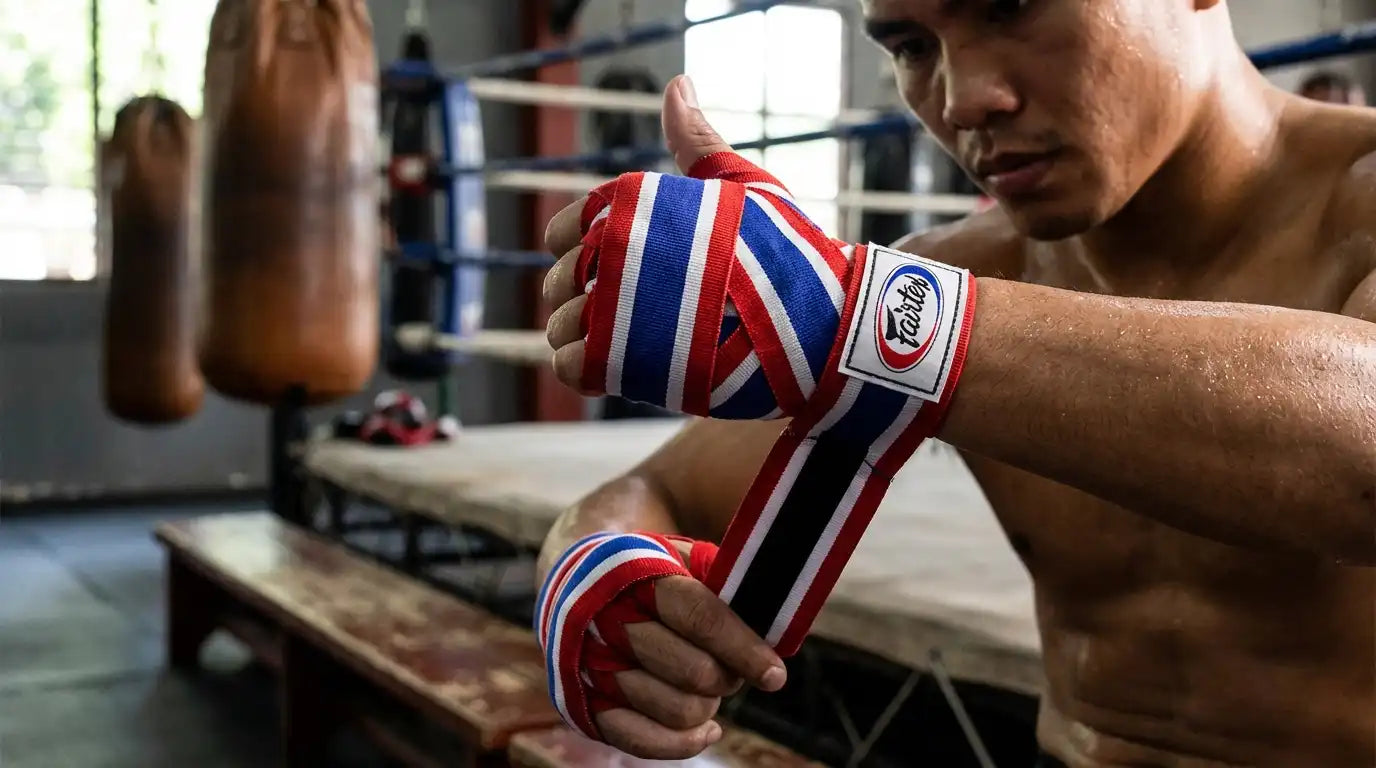
You know the moment, you are lacing up for bag rounds and you see someone rush their wraps, thumb loop twisted, wrist loose, fabric bunched in the palm. Two rounds later, their knuckles are hot and their wrist feels “off.” Hand wrapping is not a ritual for Instagram. It is the simplest way to protect the small bones in your hand, stabilize your wrist, and make your gloves fit the way they were meant to fit.
Here’s the thing, the best wrap is the one you can repeat every session. In this guide, you will learn a clean, coach-approved method to wrap hands for boxing step-by-step, plus how to adjust it for bag work, sparring, and different hand wrap lengths. You will also learn the common mistakes that cause numb fingers, sore knuckles, and sloppy punches.
Why hand wraps matter in boxing
When you punch, the force does not stop at your knuckles. It travels through your metacarpals, across the wrist joint, and up your forearm. If your fist collapses even slightly on impact, your wrist and small hand bones pay for it.
Good wraps do three jobs: they compress and support the knuckles, they keep the wrist aligned, and they reduce friction inside the glove so your hand does not slide around. That last part is what most fighters overlook. A glove can have great padding, but if your hand shifts inside it, you lose stability and you punch with less confidence.
Wraps do not make bad technique safe
Wraps are protection, not permission. If you are landing with your pinky knuckle, hyperextending your wrist, or overreaching your cross, wraps will not save you long term. Consider this, a tight wrap with a crooked wrist just locks in a bad position.
Why wraps help your glove fit better
Now, when it comes to glove fit, wraps are part of sizing. The correct wrap thickness helps you fill the glove evenly, which keeps the fist tight and reduces “dead space” around the knuckles. That is one reason serious gyms treat wrapping as part of the warmup, just like skipping rope or shadowboxing.
What you need before you start
You only need wraps and two minutes of attention. Still, the details matter.
Choose the right wrap length
Most boxers use 180-inch wraps because they give you enough material for wrist support and knuckle padding. Shorter wraps, like 120-inch, can work if your hands are small or you want a minimal setup, but you will have fewer layers over the knuckles and less wrist structure.
Pick a wrap style that matches your training
From years of gym experience, traditional cotton wraps give a consistent feel and help you “set” a firm wrist. Elastic wraps stretch and can feel easier to get snug, but you have to be careful not to crank them so tight you cut off circulation.
If you want examples, Fairtex has a few solid options in the Hand Wraps collection, including cotton Fairtex Handwraps – HW2, elastic Fairtex HW4 Elastic Hand Wraps, and the time-saving Fairtex HW3 Quick Wraps for days you need to get on the pads fast.
Before you wrap: quick hand check
Open and close your fist a few times. If you have sharp pain in one knuckle or your wrist feels unstable, do not just “wrap over it.” Tell your coach, reduce power, and consider skipping hard bag work that day.
How to wrap hands for boxing (step-by-step method)
This is a clean, repeatable method that works for bag work, mitts, and sparring. You can add or remove a few passes depending on what your hands need.

Step 1: Find the loop and start on the thumb
Put the loop around your thumb and make sure the wrap rolls off the back of your hand, not your palm. If it starts from the palm side, you will bunch fabric in your grip and your glove will feel cramped.
Step 2: Anchor the wrist (2 to 3 wraps)
Wrap around your wrist 2 to 3 times, snug but not painful. Keep your wrist in a neutral position, like you are holding a straight punch at the end range. If your wrist is bent while wrapping, your support will be off when you punch.
Step 3: Cover the knuckles (3 wraps)
Bring the wrap up over the back of the hand and across the knuckles, then around the back again. Do 3 passes over the knuckles. Keep the fabric flat with no wrinkles. Wrinkles become pressure points, especially on long bag sessions.
Step 4: Lock the knuckles down by coming back to the wrist
After your knuckle passes, go back around the wrist once. The reality is, knuckle padding without a wrist anchor feels soft but unstable. This return to the wrist ties the whole wrap together.
Step 5: Add hand structure with “X” passes
Now make an “X” on the back of the hand: from wrist to knuckles, then back down to wrist. Do this 1 to 2 times. This helps keep your fist compact and prevents the wrap from sliding forward toward your fingers.
Step 6: Wrap between the fingers (optional, but recommended)
Go between the fingers to stop the knuckle pad from shifting. A simple sequence is:
- Between pinky and ring, then back around the knuckles
- Between ring and middle, then back around the knuckles
- Between middle and index, then back around the knuckles
Keep these passes light. If you crank between the fingers, you will feel numbness fast. Consider this, finger passes are about stability, not compression.
Step 7: Secure the thumb (1 pass) and finish on the wrist
Bring the wrap around the thumb once, then go back to the wrist. Finish with the Velcro on the wrist, not on the hand. Make a fist, open your hand, then make a fist again. You should feel supported, not trapped.
Step 8: Final check before gloves
Squeeze your fist hard for 5 seconds. If your fingers turn pale or tingle, loosen the wrap and redo it. If your wrist still feels loose, add one more wrist wrap and remove one knuckle wrap, especially for bag days.
Adjustments for bag work vs sparring
One wrap style does not have to cover every session. Your goal changes depending on what you are hitting and how hard you are hitting.

For heavy bag work: favor wrist stability
Bag rounds create higher impact and more wrist torque, especially if you throw hard hooks and shovel shots. Add an extra wrist wrap, and keep your knuckle padding clean and flat. Many fighters also reduce finger passes if they feel cramped in the glove.
For pad work: balance knuckle comfort and grip
Mitts and Thai pads require lots of opening and closing the hand, especially if you clinch or catch kicks in Muay Thai-style sessions. Make sure you are not stacking too much fabric in the palm. What most fighters overlook is how palm bulk makes your forearms burn faster because you are constantly fighting your own grip.
For sparring: comfort and circulation matter
Sparring is longer time in gloves and lots of movement. Wrap slightly less tight than bag work. Your hands may sweat more, and if your wraps are too tight, your fingers can start to go numb mid-round.
How to tie hand wraps and check the fit
“How to tie boxing hand wraps” sounds simple, but the finish is where many wraps fail. If the Velcro ends up on the back of the hand, it can create a bump under the glove and irritate your skin.
Where the Velcro should sit
Finish on the wrist with the Velcro centered, flat, and secure. The wrap should not restrict your ability to flex and extend the fingers. You should be able to make a tight fist without pain.
Quick fit test inside the glove
Put your gloves on and do 10 light straight punches in the air. Your fist should feel “packed,” like everything is moving as one unit. If your hand feels like it shifts forward on impact, redo the wrap with one more “X” pass and an extra wrist anchor.
Matching wraps to glove size
If you use thick wraps and your gloves feel too tight, do not force it. That pressure can reduce circulation and make your technique sloppy. If you are still dialing in gear, browse Boxing Gloves and read How to Choose Fairtex Boxing Gloves for practical sizing and training use tips.
Common mistakes coaches see every day
Wrapping too tight, then “toughing it out”
A wrap that cuts off circulation will make your hand go numb, and you will start punching without feeling alignment. That is when wrists buckle and knuckles get bruised. If it tingles, redo it. It is not a badge of honor.

Leaving the knuckles unprotected
Some fighters go heavy on wrist wraps and barely cover the knuckles. If your knuckles get rubbed raw or you feel a sharp sting on impact, add a clean third or fourth pass over the knuckles and flatten the fabric.
Bunching fabric in the palm
If your wrap crosses the palm repeatedly, your grip suffers. You will fatigue faster and your glove will feel awkward. Keep most of the material on the back of the hand, wrist, and knuckles.
Not locking the thumb
Thumb sprains happen when the glove twists on impact or when you hook with a loose fist. A simple thumb pass helps keep the wrap from sliding and gives you a more connected feel when you clinch or frame.
Never washing wraps
Dirty wraps get stiff, smelly, and abrasive. They also lose their “lay flat” feel, which makes pressure points more likely. Wash them regularly and let them air dry fully.
Using wraps to compensate for poor punching mechanics
If your wrist collapses, fix your alignment. Focus on straight wrists, tight fists, and landing with the first two knuckles on straight punches. Wraps support good mechanics, they do not replace them.
If you want a wrap recommendation by training style, see Best Boxing Hand Wraps 2025. For glove pairing and comfort, Best Beginner Boxing Gloves 2025 is a solid starting point.
Now, when it comes to quality, consistent wraps help you build consistent hands. Fairtex wrap options are built for daily gym use, and the difference you feel is how evenly the fabric lays, how reliable the stretch is session after session, and how well the wrap keeps its shape after washing. If you are putting in real rounds, it is worth using wraps that do not twist, fray, or lose tension halfway through your week. Explore the Accessories section if you are building a dependable training kit alongside your gloves and mouthguard.
How to measure your hand and choose wrap length
Competitors spend a lot of time talking about glove sizing, but the same idea applies to wraps. If you do not have enough material, you end up choosing between knuckles and wrist. If you have too much material, you stack layers until your gloves feel tight and your hands fatigue early.
To get a simple baseline, measure the circumference of your dominant hand around the knuckles with your hand open, not clenched. You do not need a perfect number, you need consistency so you can repeat the same setup.
Quick guideline: when 120-inch vs 180-inch makes sense
Use this as a starting point, then adjust based on glove fit and the type of training you do:
- 120-inch wraps: smaller hands, youth training, or minimalist wrapping when your gloves already fit snug.
- 180-inch wraps: most adults, most boxing gyms, and anyone doing regular bag work and sparring.
Try-on rule that saves your wrists
Wrap your hands first, then put your gloves on and make a real fist. Your fingers should not feel crushed, and your knuckles should feel “packed” with no extra space sliding forward. If the glove fit is too tight with a normal wrap, reduce bulk in the palm and add structure with “X” passes instead of adding more knuckle layers.
Wrap setup tweaks for common hand issues
The step-by-step method above is a strong default, but fighters have different hands. If you have one knuckle that always gets sore or a wrist that feels unstable, you do not need a brand-new wrapping system. You need a small change you can repeat.
If your knuckles get bruised on the bag
Add one more clean pass over the knuckles, then immediately return to the wrist to lock it in. Keep the layers flat. Bruised knuckles are often from shifting wrap layers, not “not enough toughness.”
If your wrist feels loose when you hook
Favor wrist anchors and “X” structure. Add one extra wrist wrap at the start and do two “X” passes instead of one. For hooks, wrist alignment is everything. If your wrist bends during impact, no amount of knuckle padding fixes that.
If your fingers go numb mid-round
Loosen finger passes first. Most numbness comes from cranking wraps between the fingers or pulling elastic wraps too tight. Keep the finger passes light, and let the wrist do most of the support work.
If your thumb feels jammed or irritated
Make sure the thumb loop is not twisted at the start, then use a clean thumb pass late in the wrap, after knuckles are set. If you wrap the thumb too early and too tight, it can restrict movement and make your grip feel awkward inside the glove.
Wrap care, rolling, and replacement guidelines
Wrap quality matters, but care is what keeps them usable. Stiff, dirty wraps bunch up easier and create hot spots. That is how a normal training week turns into raw knuckles and wrist irritation.
How to roll wraps so they lay flat next session
After training, let them air out first. Once dry, roll them tight and flat from the end opposite the Velcro so the Velcro finishes on the outside of the roll. That keeps it from snagging other gear and it helps you start wrapping clean next time.
Washing basics that keep the fabric from turning rough
Wash wraps regularly in cool water and air dry fully. Avoid high heat drying. Heat breaks down elasticity faster and makes wraps feel rougher on the skin. If your wraps come out twisted, unroll and straighten them while they are still damp.
When to replace wraps
Replace wraps when they stop laying flat, the fabric thins over the knuckles, or the wrap keeps loosening even when your technique is solid. If the Velcro is failing, that is also a safety issue. A wrap that comes undone in the glove turns into a distraction and a hand injury waiting to happen.
Frequently Asked Questions
How tight should boxing hand wraps be?
Your wraps should feel snug and supportive, but you should still be able to fully open your hand and make a tight fist without pain. A good test is to squeeze your fist for 5 seconds. If your fingers tingle, go numb, or change color, the wrap is too tight. For bag work you can go slightly tighter than sparring, but never to the point of cutting circulation.
Is it better to use 120-inch or 180-inch hand wraps?
Most fighters prefer 180-inch wraps because they give you enough length to protect the knuckles and build solid wrist support. 120-inch wraps can work for smaller hands, kids, or minimalist wrapping styles, but you usually have to choose between knuckle padding and wrist stability. If you are training hard on the heavy bag, 180-inch wraps are the safer, more versatile option.
How do I wrap my hands for boxing if my wrists hurt?
First, reduce power and check your punching mechanics, especially wrist alignment on impact. Then prioritize wrist anchors: add an extra wrap or two around the wrist and use 1 to 2 “X” passes to connect wrist to knuckles. Do not over-tighten to chase stability, because that can create numbness. If pain is sharp or persistent, get it checked and avoid hard bag rounds.
Should I wrap between the fingers?
Finger passes are optional, but they are useful because they stop the knuckle pad from sliding and help the wrap feel “locked in.” Keep the finger passes light. Over-tightening between the fingers is a common cause of numbness during long sessions. If your wraps feel cramped inside the glove, reduce finger passes and add one more “X” pass across the back of the hand instead.
How do I stop my hand wraps from loosening during training?
Most wraps loosen because the base is not anchored. Start with 2 to 3 wrist wraps, then tie the knuckle padding back into the wrist with a return wrap. Flat, wrinkle-free layers matter too, because bunched fabric slides. Finally, finish the Velcro on the wrist and press it down firmly. If your wraps still move, your wraps may be stretched out and need replacing.
Can I use quick wraps instead of traditional hand wraps?
Quick wraps can be a practical option for light training, fitness boxing, or fast pad sessions when you need to gear up quickly. They typically include built-in padding and a wrist strap, but they do not always provide the same customizable structure as long wraps. If you are doing heavy bag work or sparring regularly, traditional wraps usually offer better fine-tuned support and a more secure glove fit.
Do I need hand wraps if my gloves have good padding?
Yes, because glove padding mainly protects against impact on the outside, while wraps help stabilize the wrist and compress the hand bones inside the glove. Even high-quality gloves cannot stop your wrist from bending if your fist lands at an angle. Wraps also improve glove fit by reducing hand movement inside the glove. For consistent training, think of wraps and gloves as a pair.
How do I wash boxing hand wraps?
Roll them up after training so they do not tangle, then wash regularly to remove sweat and bacteria. Use a gentle cycle or hand wash in cool water, and air dry fully. Avoid high heat drying, which can damage elasticity and make wraps stiff. Clean wraps lay flatter, feel more comfortable, and reduce friction hot spots over long training weeks.
How do I measure my hand for a better glove fit when using wraps?
Measure around your knuckles with your hand open, then wrap your hands and try your gloves on. The real test is function: you should be able to make a tight fist without your fingers being crushed, and you should not feel your hand sliding forward inside the glove when you punch. If the glove only fits when you wrap extremely thin, the glove is probably too tight for regular training.
Why do my knuckles still hurt even when I wrap correctly?
First, check that your knuckle layers are flat and not shifting. Wrinkles and loose layers create pressure points. Next, check impact mechanics: straight punches should land through the first two knuckles with a straight wrist. If you are consistently bruising the same spot, reduce power for a week, clean up alignment on the bag, and talk to a coach about your punch path.
Should I wrap tighter for the heavy bag?
You can wrap slightly tighter for heavy bag work, but the priority is stability, not cutting circulation. Add structure with an extra wrist anchor and a clean return to the wrist after knuckle passes. If you chase tightness by pulling harder on elastic wraps, you often end up with numb fingers instead of better support.
How long should a good hand wrap job take?
Once you know your pattern, a clean wrap should take about one to two minutes per hand. Speed comes from consistency, not rushing. If you are rushing and your thumb loop twists or your knuckle pad shifts, you pay for it later in the round.
Key Takeaways
- Wraps protect knuckles, stabilize the wrist, and improve glove fit by reducing hand movement.
- Start with a solid wrist anchor, then build knuckle coverage, then connect it all with “X” passes.
- Finger passes help stop sliding, but keep them light to avoid numbness.
- Bag work usually needs more wrist support, sparring usually needs more comfort and circulation.
- If your wrap tingles or bunches in the palm, redo it before you put the gloves on.
Conclusion
Once you learn how to wrap hands for boxing step-by-step, you stop guessing and you start training with more confidence. Your punches feel tighter, your wrists stay aligned, and you can put in rounds on the bag without your knuckles getting chewed up. That adds up over months, especially if you train multiple days per week.
Keep your wrapping simple and repeatable, then adjust it based on the session. More wrist for heavy bag days, slightly looser for long sparring rounds, and always flat, wrinkle-free layers. If you are building out your kit, take a look at the Hand Wraps collection and pair it with properly sized gloves from Boxing Gloves. Consistent protection is part of consistent progress.