
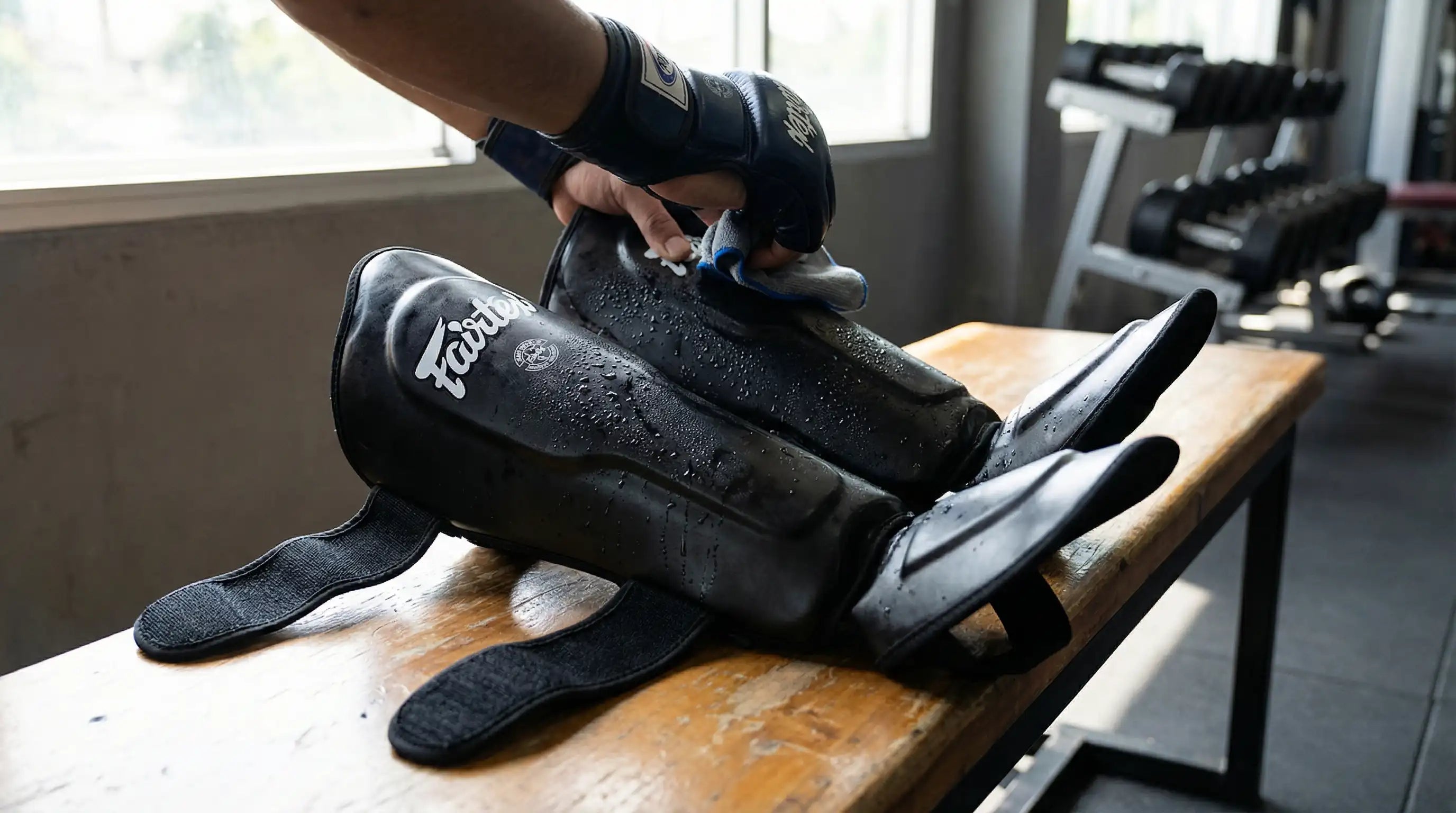
How to Clean Muay Thai Shin Guards
You finish hard sparring, peel your shin guards off, and that wave of heat and sweat hits you. The straps feel heavy, the lining is damp, and if you toss them straight into your bag, you already know what tomorrow smells like. Here’s the thing: shin guards don’t just get “stinky.” Sweat, skin oils, and gym bacteria build up in the foam and lining, and that can break down materials, irritate your skin, and make your gear feel sloppy over time.
In this guide, I’ll walk you through exactly how to clean Muay Thai shin guards the way fighters do when they want their gear to last through months of pad rounds and clinch-heavy sparring. We’ll cover daily wipe-downs, deeper cleans, safe drying, and what to avoid so you don’t wreck the padding or the outer shell. If you train often, this is one of the simplest habits that keeps you healthy and sparring-ready with your teammates.
Start with the right protective gear in the first place. Quality shin guards are easier to maintain because the materials and stitching hold up to repeated cleaning.

Why shin guards get so gross (and why it matters)
During a normal Muay Thai session, your shins and feet sweat under pressure, your partner’s kicks and checks grind that sweat into the lining, and the straps soak it up like a towel. Foam padding is great for impact, but it is also great at holding moisture if you don’t dry it correctly.
What most fighters overlook is the skin side. If your shin guards stay damp, you are basically re-wearing yesterday’s bacteria. That is when you see folliculitis, ringworm risk in shared environments, and random “mystery” rashes that show up right where the guard sits.
Cleaning Muay Thai shin guards is not about being precious with your gear. It is about staying consistent in training without skin issues, and respecting your sparring partners by not bringing a biological weapon into the gym.
The 5 minute post-training routine (your best defense)
If you want the easiest answer for how to clean shin guards Muay Thai style, it is this: do a quick wipe every single session. Deep cleaning once a month does not save gear that sits wet in a bag four times a week.
Right after training: wipe, open, and air
As soon as you take them off, undo every strap and open the shin guard up as much as it allows. Your goal is airflow. Sweat trapped inside the shell is what turns into permanent odor.
Use a clean microfiber cloth or paper towel with a light mist of gentle soap and water, or a gear-safe disinfectant spray. Wipe the inside lining first, then the foot pad area, then the straps, then the outer shell.
What to do if you have to drive home with wet gear
Consider this: a closed gym bag is a warm incubator. If you cannot dry your shin guards immediately, at least keep your bag partially unzipped and separate wet items. If you use a backpack, clip shin guards on the outside for the ride home.
This same habit matters for the rest of your kit, like your hand wraps and gloves. Wet fabric sitting tight and warm is where smell becomes permanent.

How to deep clean Muay Thai shin guards (step by step)
Now, when it comes to a real wash, the question I hear most is: can you wash Muay Thai shin guards like clothes? The reality is you can clean them thoroughly, but you should not treat them like a T-shirt. Shin guards have layered foam, glued seams, elastic, and synthetic leather or genuine leather. Too much soaking or heat can ruin the structure.
What you need
- Warm water (not hot)
- Mild dish soap or gentle laundry detergent
- Soft cloth or soft sponge
- Old toothbrush (for strap stitching and creases)
- Clean dry towel
- Optional: 70% isopropyl alcohol diluted 1:1 with water for a light disinfecting wipe
Step-by-step deep clean (safe for most shin guards)
- Step 1: Dry first if they are soaked. Press a towel into the lining to pull moisture out before you add any water.
- Step 2: Make a soapy solution. A few drops of soap in a bowl of warm water is enough. You want “clean,” not “bubbly.”
- Step 3: Wipe the lining thoroughly. Work section by section. Focus on the foot pad and the top edge where sweat drips down.
- Step 4: Scrub straps and stitching lightly. Use a toothbrush on Velcro edges, strap seams, and any textured areas where grime sits.
- Step 5: Wipe the outer shell. You are removing sweat salts and oils that dry the surface and cause cracking over time.
- Step 6: Rinse wipe. Use a second cloth damp with clean water to remove soap residue.
- Step 7: Dry towel press. Press a dry towel into the lining and straps to pull out water.
- Step 8: Air dry fully. Open all straps and set them where air moves. More on drying below.
What not to do (common mistakes that wreck shin guards)
From years of gym experience, these are the habits that destroy padding and shorten the life of your gear:
- Do not machine wash unless the manufacturer specifically says it is OK.
- Do not soak for long periods. Foam holds water and takes forever to dry.
- Do not use hot water. Heat can weaken adhesives and warp foam.
- Do not use bleach. It breaks down materials and can irritate your skin.
- Do not use a clothes dryer. Tumbling plus heat is a fast way to deform shin guards.
If you are researching gear durability and construction, our guide to the best Muay Thai shin guards helps you understand what details matter for long-term use.
Drying and deodorizing so odor does not come back
Cleaning is only half the job. If your shin guards do not dry all the way through, smell returns fast, even after a good scrub. The goal is to dry the lining and straps, not just the outside.
The safest way to dry shin guards
Airflow beats heat. Set your shin guards in a well-ventilated spot, straps open, with the inner lining facing open air. A fan in the room helps a lot. If you live in a humid area, a dehumidifier works better than putting gear in the sun.
Direct sunlight is not always your friend. A little indirect sun is fine, but baking synthetic leather or genuine leather in strong sun can dry it out and stiffen it.
Deodorizing that actually works (without masking odor)
If your shin guards still smell after you clean them, that usually means bacteria is still living in damp foam or strap material. After they are dry, use a light disinfecting wipe on the lining, then let them air out again.
Some fighters use baking soda in a sock overnight, then shake it out the next day. That can help absorb odor, but it is not a substitute for drying. If your shin guards are still wet inside, baking soda just turns into paste.
Quality training gear is built to take real use, but it still needs care. At Fairtex, every piece of equipment is handcrafted in Thailand using Grade A materials and tested by professional fighters. It is quality you can feel from the first round.
Material-specific care: leather vs synthetic
Shin guards usually come in genuine leather or synthetic leather. The cleaning approach is similar, but the finishing details matter if you want the shell to stay supple and crack-free.
If your shin guards are genuine leather
Use less water and wipe more. Leather does not like being saturated. After cleaning, let them dry naturally, then consider a small amount of leather conditioner on the outside only, once in a while. Keep conditioner away from the lining and Velcro.
Leather will break in over time and develop character, but sweat salts can dry it out. A simple wipe-down after every session makes a bigger difference than any fancy product.
If your shin guards are synthetic or microfiber
Synthetic shells are usually easier to maintain and more moisture resistant. Still, do not soak them or blast them with heat. The inner foam and lining are the limiting factors, not the outer shell.
This is why Fairtex developed the three-layer foam system. You get superior shock absorption that protects your hands round after round, built on over 50 years of Thai craftsmanship. That same mindset carries into protective gear: padding needs to stay structured, so cleaning has to be gentle.
If your whole kit is due for an upgrade, browse Muay Thai equipment and build a set that you can maintain without babying it.
Storage habits that make shin guards last
The cleanest shin guards in the world can still rot if you store them wrong. Storage is where fighters either extend gear life by a year, or kill it in a month.
Bag habits: separate wet from dry
After training, do not pack wet shin guards tight against your shorts, wraps, and shirt. If you can, use a separate ventilated compartment or a mesh bag inside your gym bag. Your gym bag should help you keep wet gear from marinating everything else.
Weekly reset: inspect straps, Velcro, and edges
Every week, take 30 seconds to check the stitching near the straps, the edge binding, and the foot strap area. Dirt and sweat act like sandpaper. If you clean and dry consistently, Velcro stays grippy and straps stay firm.
Rotate if you train hard
If you train 5 to 6 days a week, consider rotating shin guards or at least giving them a full day to dry. Foam that never fully dries tends to compress faster, and it starts to feel “dead” on checks.
When you are doing rounds in a serious room, you want gear you trust. Fairtex equipment is used by world champions at the Fairtex Training Center in Pattaya and trusted by ONE Championship athletes competing on the global stage. That trust also comes from treating your gear like a tool, not a disposable item.

When cleaning is not enough: repair or replace
Sometimes the smell is not the real problem. The bigger issue is safety. If padding is cracked, shifting, or permanently compressed, it is not protecting you or your partner the way it should.
Replace your shin guards if you notice any of these signs:
- Foam feels thin in high-impact zones and you can feel shin bone on checks
- Outer shell is splitting or peeling enough to expose foam
- Straps no longer secure the guard and it rotates during sparring
- Odor returns immediately even after deep cleaning and full drying
If you are comparing models and fits, our guide to the best Muay Thai gloves is also useful because glove and shin guard care habits go hand in hand. When you treat the whole kit properly, everything lasts longer.
Frequently Asked Questions
Can you wash Muay Thai shin guards in the washing machine?
Usually, no. Most shin guards use layered foam, adhesives, and strap materials that do not handle soaking and agitation well. Machine washing can warp the padding, weaken glued seams, and ruin Velcro. The safer method is hand-cleaning: wipe the lining and shell with mild soap and warm water, then air dry fully with straps open. If your brand specifically allows machine washing, follow their instructions exactly and avoid heat.
How often should I be cleaning Muay Thai shin guards?
Wipe them down after every session. That daily habit is the real answer to cleaning Muay Thai shin guards effectively. Deep clean them every 2 to 4 weeks depending on how much you train and how sweaty your gym is. If you spar often, clinch a lot, or train in humid weather, deep clean closer to every two weeks. Consistent drying matters as much as cleaning.
How do I get the smell out if I already have bad odor?
First, deep clean the lining, straps, and foot area with mild soap, then rinse-wipe to remove residue. Second, dry completely with strong airflow. If odor remains, do a light disinfecting wipe using a gear-safe spray or diluted 70% isopropyl alcohol, then air out again. Masking sprays do not solve the problem if moisture is still trapped in foam. For more gear context, see our shin guard guide.
How to wash shin guards Muay Thai style without damaging the foam?
Think “wipe and press,” not “soak and scrub.” Use a damp cloth with a small amount of soap solution, clean the lining in sections, then use a clean damp cloth to remove soap. Press a towel into the inside to pull water out before air drying. Avoid hot water, long soaking, and direct heat. Foam is designed to absorb impact, and it will happily absorb water too if you let it.
Is it OK to use disinfectant or alcohol on shin guards?
It can be, but use it carefully. Many disinfectants are harsh and can dry out synthetic coatings or irritate your skin if residue remains. If you use alcohol, dilute it 1:1 with water and wipe lightly, mainly on the lining and strap areas, not as a heavy soak. Always let the shin guards dry completely before training. If your skin is sensitive, stick with mild soap and thorough drying.
Should I use heat, a hair dryer, or a radiator to dry shin guards faster?
Avoid it. Heat can deform foam, weaken adhesives, and dry out leather or synthetic finishes. You might feel like the outside is dry, but the inside padding can stay damp, which keeps odor alive. Use airflow instead: open the straps, face the lining toward open air, and use a fan if you need faster drying. It is slower than heat, but it protects the structure.
Do shin guard sleeves or long socks change how I should clean shin guards?
They help, because they reduce direct sweat and skin oil going into the lining. Still, you should wipe your shin guards after every session because sweat still travels and straps still get soaked. Also wash the sleeves or socks every time you use them, just like hand wraps maintenance for your hands. Clean layers plus dry airflow is the combination that keeps odor under control.
What is the best way to store shin guards between sessions?
Store them fully dry, straps open, in a ventilated place. Do not leave them inside a closed bag or car trunk. If you train daily, give them as much airflow time as possible between sessions. If your home is humid, a fan or dehumidifier helps. Good storage is part of how to clean shin pads Muay Thai properly, because drying is what stops bacteria from coming back.
Key Takeaways
- Wipe your shin guards down after every session. It is the simplest way to prevent permanent odor.
- Deep clean by hand with mild soap and warm water, then rinse-wipe and air dry fully.
- Airflow beats heat. Avoid dryers, radiators, and long direct sun exposure.
- Odor usually means trapped moisture. Drying correctly is as important as cleaning.
- Replace shin guards if padding is compressed, straps fail, or the shell splits enough to expose foam.
Conclusion
The cleanest fighters are not the ones with the most products. They are the ones with the best habits. If you want to know how to clean Muay Thai shin guards in a way that keeps them protective, comfortable, and respectful to your training partners, focus on three things: wipe them every session, deep clean them gently, and dry them all the way through. When your gear is fresh, you train with more confidence. You are not distracted by slipping straps, stiff padding, or that smell that makes you keep your distance in clinch rounds.
Explore Fairtex’s complete collection of Muay Thai shin guards, handcrafted in Thailand for fighters who demand professional quality.
Last updated: February 2026