
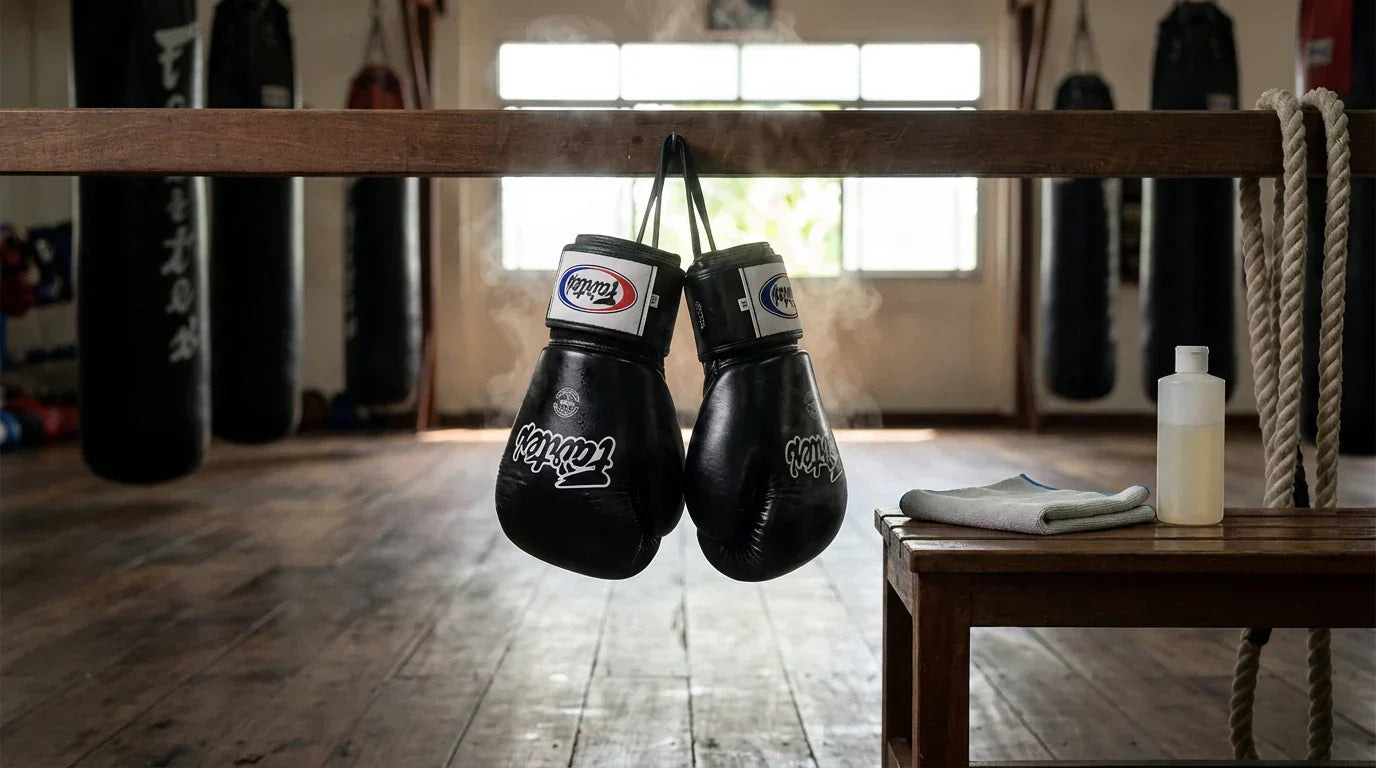
How to Clean Boxing Gloves (Inside & Out)
The round ends, you peel your gloves off, and that wave of heat hits your face. Your wraps are soaked, your forearms are pumped, and your gloves feel heavy, like they absorbed the whole session. Here’s the thing: most glove damage does not come from punches. It comes from what happens after training, when sweat stays trapped in the hand compartment and bacteria gets comfortable.
If you’ve ever opened your gym bag two days later and smelled something that made you question your life choices, you’re not alone. Cleaning boxing gloves is part of being a serious fighter. It protects your hands, keeps your training partners happy in sparring, and helps your gloves keep their shape and padding for the long haul.
At Fairtex, every piece of equipment is handcrafted in Thailand using Grade A materials and tested by professional fighters. It is quality you can feel from the first round.
Why gloves smell and break down
Your gloves are a warm, dark, sweat-rich environment. That is perfect for bacteria and fungus, especially if you train hard and pack your gear away right after pad work or sparring.
The odor is not “sweat smell.” It is the byproduct of bacteria feeding on sweat and skin oils. Over time, the same trapped moisture also softens adhesives, stresses stitching, and can make the inner lining feel slimy or rough.
What most fighters overlook: sweat is a material stress test
Think about how many rounds your gloves go through in a week. Now add humidity, a closed gym bag, and no airflow. The reality is that even premium gloves can degrade early if the inside never fully dries.
Good cleaning is not about making gloves smell “nice.” It is about controlling moisture, reducing microbes, and keeping the hand compartment and padding stable so your knuckles stay protected.
The after-training routine that prevents most problems
If you only do one thing, do this: treat glove care like your cooldown. Two minutes now saves you from funky gloves and premature wear later.

Step-by-step quick routine (2 to 3 minutes)
- Open them up: Pull the wrist open wide and let heat escape immediately.
- Air them out: Do not seal them in your bag. Clip them to the outside or carry them separately home.
- Wipe the inside and outside: Use a clean microfiber cloth or paper towel to remove surface sweat.
- Pull your hand wraps out first: Never leave wraps stuffed inside gloves.
Consider this: a pair of soaked wraps left in your gloves overnight will “marinate” the lining. That is where most odor problems start.
Hand wraps matter here. Clean wraps reduce the grime that gets transferred into the glove, which means less buildup to fight later. If you train often, rotate wraps so you always have a clean set ready.
How to clean the inside of boxing gloves
When people ask how to clean boxing gloves, they usually mean the part that touches your skin. That is also the part you should handle with the most care, because soaking the interior can keep it wet for days.

What you need
- Clean cloths or paper towels
- Mild soap (a drop or two is enough)
- Warm water in a small bowl
- Optional: 70% isopropyl alcohol in a spray bottle (light use)
- Optional: glove deodorizers or clean, dry paper to stuff
Method: wipe-clean, do not soak
1) Dry wipe first. Push a dry cloth inside and wipe the palm, finger pocket, and thumb area. This removes surface sweat and salts before you add any moisture.
2) Light soap wipe. Dip a cloth into warm water, wring it out hard, then add a tiny amount of mild soap. Wipe the inside surfaces you can reach. You are cleaning residue, not washing laundry.
3) Rinse wipe. Use a second cloth with clean water, wrung out tight, to remove soap. Leftover soap can irritate your skin and attract more grime.
4) Dry wipe again. Finish with a dry towel inside the glove. Get as much moisture out as possible before drying.
How to clean the inside of boxing gloves when odor is already strong
If your gloves already smell sour, you need to reduce bacteria without saturating the foam. A light mist of 70% isopropyl alcohol on a cloth (not directly sprayed deep into the glove) can help. Wipe the interior, then dry thoroughly.
Do not try to “perfume” the glove with heavy sprays. Scents mix with odor and make it worse. Clean and dry is the goal.
Knuckle and thumb areas: the hot spots
From years of gym experience, the thumb and fingertip pocket hold moisture the longest. Spend extra time wiping those zones, especially if you clinch a lot or sweat heavily.
How to clean the outside (leather or microfiber)
The outside takes impact, but it also collects sweat, oils, and gym dust. Keeping the shell clean helps preserve the finish and stitching, and it keeps your gloves looking professional on pads and in sparring.
Genuine leather gloves: wipe, dry, condition lightly
Use a damp cloth with a small amount of mild soap to wipe the exterior. Focus on the cuff and areas your other glove touches in guard, because that is where grime builds up.
Dry with a clean towel. Then let the gloves air dry fully before you put them away.
If you use genuine leather gloves, a very light leather conditioner used occasionally can help prevent the surface from drying out and cracking. Keep it minimal. Too much conditioner can soften the surface and attract dirt.
Microfiber gloves: simple cleaning, easier maintenance
Microfiber shells are typically easier to wipe down and can be more moisture resistant. Clean them the same way: damp cloth, mild soap, then dry towel and airflow.
Now, when it comes to performance, the shell is only half the story. This is why Fairtex developed the three-layer foam system. You get superior shock absorption that protects your hands round after round, built on over 50 years of Thai craftsmanship.
Velcro straps: do not ignore them
Velcro gets clogged with lint, wrap fibers, and dust. If it stops gripping, your wrist support suffers.
- Pick lint out with your fingers after training.
- Use a soft brush occasionally to clear debris.
- Close the strap when storing to prevent it from grabbing fabric in your bag.
Drying and deodorizing without ruining padding
Drying is where fighters either win or lose the battle. You can clean perfectly and still end up with odor if the glove stays damp overnight.

The right way to dry gloves
- Airflow first: Place gloves in an open area with good circulation.
- Open the wrist: Do not leave them flattened or pressed together.
- Stuff lightly if needed: Use clean, dry paper to help absorb moisture. Replace it after a few hours.
- Keep them out of direct heat: No radiators, no hair dryers, no direct sun for long periods.
Glove deodorizers and drying inserts: when they help
Drying inserts can be useful if you train daily, especially in humid climates. They are not magic, but they speed up drying and keep the interior from staying swampy.
The reality is that deodorizers work best as prevention. If your gloves are already soaked and sealed in a bag for hours, inserts cannot undo that. Fix the routine first.
How long should gloves take to dry?
In a well-ventilated room, many gloves dry overnight. If the hand compartment still feels damp the next day, you need more airflow, less moisture during cleaning, or a second pair to rotate.
What not to do (washing machine myths)
Let’s clear this up because it gets asked constantly: can you wash boxing gloves? You can, but you usually should not. “Can” and “should” are different in fight gear.
Can you put boxing gloves in the washing machine?
Do not put boxing gloves in the washing machine. The agitation can deform padding, stress seams, and break down adhesives. It also drives water deeper into the foam, which can take days to dry. That is how you end up with a clean-looking glove that smells worse a week later because the inside never fully dried.
What about soaking gloves in a bucket?
A full soak is a fast way to trap moisture where you cannot reach it. Even if the outside dries, the internal layers can stay damp. You are also risking stiffening, cracking on leather, and misshaping the glove’s hand compartment.
Do not use harsh chemicals
Bleach and strong cleaners can damage linings and irritate your skin. If your hands break out or your knuckles get raw, training suffers. Stick to mild soap, controlled alcohol use, and good drying.
Storage and long-term care for glove lifespan
Good storage is quiet discipline. Nobody applauds it, but it keeps your gear reliable when rounds get hard.

Gym bag habits that keep gloves clean
Never store damp gloves in a sealed bag. If you commute, clip them to the outside of your bag or keep the top unzipped until you get home.
Separate sweaty items. Wraps, ankle supports, and even a damp Muay Thai shirt can transfer odor to your glove lining. Use a mesh pocket or a separate pouch.
Rotate gloves if you train often
If you train five or six days a week, one pair often never fully dries. Rotating pairs helps both hygiene and performance, because the padding has time to rebound.
Fairtex equipment is used by world champions at the Fairtex Training Center in Pattaya and trusted by ONE Championship athletes competing on the global stage. Those fighters treat gear like tools, and tools get maintained.
When to replace gloves (honest signs)
Cleaning boxing gloves solves hygiene, not structural breakdown. Replace gloves when:
- The padding feels flat or lumpy over the knuckles.
- Your wrist support feels unstable even when strapped tight.
- The lining is torn and rubbing your skin.
- Odor persists even after proper cleaning and full drying cycles.
A quality glove should protect your hands and your partner. If that protection is compromised, it is time.
Stubborn odor options: what works, what to skip
If your gloves have that old-gym-bag funk, it usually means the inside stayed damp for too long, too many times. At that point, you are not just fighting “smell.” You are fighting bacteria living in the lining and foam.
You can still recover most gloves if the structure is sound. Just be realistic: there is no one-step miracle. You need a clean, controlled disinfecting wipe-down, then serious drying.
Baking soda: useful, but only when gloves are already mostly dry
Baking soda can absorb odor, but it is not a disinfectant. Use it when the glove is dry to the touch inside.
- Sprinkle a small amount into each glove.
- Leave it for a few hours or overnight.
- Shake it out thoroughly before training.
Do not dump a lot in and hope for the best. If your glove is still damp, baking soda clumps and you end up rubbing grit into the lining.
Vinegar: a fighter fix when you need to reset odor
If you need something stronger than soap, a light vinegar wipe can help neutralize odor. Keep it controlled so you do not soak the foam.
- Dampen a cloth with a mix of water and a small amount of vinegar.
- Wipe the interior surfaces you can reach, especially the palm and thumb area.
- Follow up with a clean damp cloth (water only), then dry wipe, then airflow.
The vinegar smell should fade after full drying. If it does not, you used too much.
Freezing gloves: why it is not my first choice
Some fighters swear by putting gloves in a sealed bag in the freezer overnight. Cold can slow bacteria and knock down odor for a short time, but it does not replace cleaning. The bigger issue is what happens after: if you pull them out and they get damp again, you are right back where you started.
If you try it, treat it as a last resort for odor control. Clean first, dry completely, freeze, then dry again after they come back to room temperature.
Dryer sheets and heavy fragrance sprays: skip them
Dryer sheets and strong sprays usually just add scent on top of the problem. In sparring, that perfume smell can be worse than sweat. More importantly, fragrances can irritate your skin once you heat up and sweat again.
If you want your gloves to smell neutral, you need cleanliness and airflow, not cover-ups.
Hygiene habits before training (it matters more than you think)
Most glove cleaning guides start after training. Fighters know the truth: what you do before you put your hands in the glove changes how dirty that glove gets.
Wash your hands, then dry them fully
If you grab weights, hold pads, touch the floor, then put on wraps, you are sealing whatever is on your skin into a warm compartment for an hour. Wash your hands before you wrap up, then dry them completely. It is a small habit that makes a big difference over weeks of training.
Use clean wraps, every time
Wraps are your first sweat filter. If they are dirty, they transfer that funk straight into the glove lining. If you train often, keep enough wraps in rotation so you are not forced to reuse a wet pair because laundry day got pushed back.
Do not train with wet wraps
This is one of the fastest ways to ruin the inside of gloves. Wet wraps make the glove stay wet longer, and that is where bacteria wins. If your wraps are still damp from yesterday, choose a dry set or go without wraps only if your coach allows it and your hands can handle it. Most fighters should just bring a spare pair.
If you sweat heavily, consider a second pair of training gloves
Some gyms are humid, some fighters sweat like they ran a sprint between every round. If your gloves are always damp the next day, it is not “normal.” It is a sign you need better airflow, less moisture during cleaning, or a second pair so one can fully dry while the other gets used.
Frequently Asked Questions
How to clean boxing gloves after every training session?
Wipe the outside with a damp cloth, then dry it. For the inside, do a dry wipe first to remove sweat, then use a lightly damp cloth with a drop of mild soap, followed by a clean damp wipe to remove soap. Finish with a dry towel inside and leave the gloves open in a ventilated area. The key is minimal moisture plus maximum airflow.
How to clean the inside of boxing gloves without soaking them?
Use the wipe-clean method: dry wipe, then a wrung-out cloth with mild soap, then a second wrung-out cloth with clean water, then dry wipe again. Avoid pouring water into the glove or running it under a faucet. If you need extra bacteria control, apply a small amount of 70% isopropyl alcohol to a cloth and wipe lightly, then dry thoroughly.
Can you wash boxing gloves with soap and water?
You can wash boxing gloves using soap and water in a controlled way, but do not treat them like clothing. A small amount of mild soap on a damp cloth is enough for the exterior and the reachable interior. The goal is to remove residue without saturating foam. If you use too much water, drying becomes difficult and lingering dampness can create stronger odor than before.
Can you put boxing gloves in the washing machine?
No, you should not put boxing gloves in the washing machine. Machine agitation can warp padding, stress stitching, and weaken adhesives. It also pushes water deep into the glove, making it slow to dry and more likely to develop odor or mildew. If you want long glove life and consistent hand protection, wipe-clean and air-dry is the safer routine.
How do you get rid of boxing glove smell fast?
Fast improvement comes from drying, not masking. Wipe the interior, then dry aggressively with airflow and light stuffing using clean paper to absorb moisture, replacing it after a few hours. If odor is stubborn, wipe the inside with a cloth lightly dampened with 70% isopropyl alcohol, then dry fully. Avoid heavy fragrances. They mix with odor and can irritate your hands.
How often should you deep clean boxing gloves?
If you train a few times per week, a thorough wipe-down inside and out once a week is a good rhythm, with a quick wipe and dry after every session. If you spar often or sweat heavily, clean the inside more frequently. The best “deep clean” is consistent prevention: clean wraps, no sealed gym bag storage, and full drying after every use.
What is the best way to dry boxing gloves overnight?
Open the wrist wide and place the gloves in a cool, ventilated room. Stuff lightly with clean, dry paper to pull moisture out, then remove and replace it if it gets damp. Do not use direct heat like hair dryers or heaters, which can damage the shell and padding. If overnight drying is not enough, rotate a second pair of gloves.
Does glove material change how you clean them?
Yes, slightly. Genuine leather benefits from gentle wiping and occasional light conditioning, while microfiber is usually easier to wipe and less sensitive to drying out. Both materials still require the same core routine: clean wraps, wipe the interior, and dry completely. No matter the shell, trapped moisture inside the hand compartment is what causes most odor and breakdown.
Can I use baking soda to clean boxing gloves?
You can use baking soda to help absorb odor, but it works best when the gloves are already mostly dry inside. Sprinkle a small amount into the glove, let it sit for a few hours or overnight, then shake it out completely. Baking soda helps with smell, but it does not replace wiping and drying, which is how you actually control bacteria and moisture.
Can I clean boxing gloves with vinegar?
You can use a light vinegar wipe to help neutralize stubborn odor, but keep it controlled so you do not soak the interior. Dampen a cloth with a water and vinegar mix, wipe the inside surfaces you can reach, then follow with a clean damp cloth (water only), then dry wipe and airflow. If your glove smells like vinegar for days, you used too much and did not dry enough.
Does freezing boxing gloves kill bacteria?
Freezing can reduce odor temporarily, but it does not replace cleaning. Cold can slow down bacteria, but it does not remove sweat, oils, and buildup. If you freeze gloves, do it only after they are clean and fully dry, and make sure they dry again once they return to room temperature.
Should I use dryer sheets or scented sprays in my gloves?
It is better to avoid them. Dryer sheets and heavy sprays usually just mask odor and can irritate your skin once you sweat again. If you want gloves that smell neutral, focus on wiping the inside, keeping moisture low, and drying with real airflow after every session.
Key Takeaways
- The best way to clean boxing gloves is controlled wiping plus full drying, not soaking.
- Do not put gloves in the washing machine. It can deform padding and trap moisture deep inside.
- Focus on the inside: thumb and fingertip pockets hold sweat and cause most odor.
- Airflow after training is non-negotiable. Clip gloves outside your bag and open the wrist to vent heat.
- Rotate gloves if you train often so padding rebounds and the interior fully dries.
- If odor is stubborn, use controlled options like a light alcohol wipe, or baking soda only when the glove is already dry inside.
- The cleanest gloves come from pre-training habits too: clean hands, clean wraps, and no wet wraps in the glove.
Conclusion
Knowing how to clean boxing gloves is part of showing up like a pro, even when nobody is watching. You do the hard rounds, you take care of your hands, and you respect the people you train with. The routine is simple: wipe sweat off, clean the inside without soaking it, and dry the gloves completely with real airflow. Do that consistently and you will notice the difference in smell, comfort, and how your gloves feel when you make a tight fist.
Gloves are protection first. When they stay clean and dry, the padding stays dependable, the lining stays comfortable, and you walk into sparring with more confidence.
Explore Fairtex's complete collection of combat sports equipment, handcrafted in Thailand for fighters who demand professional quality.
Last updated: January 2026