
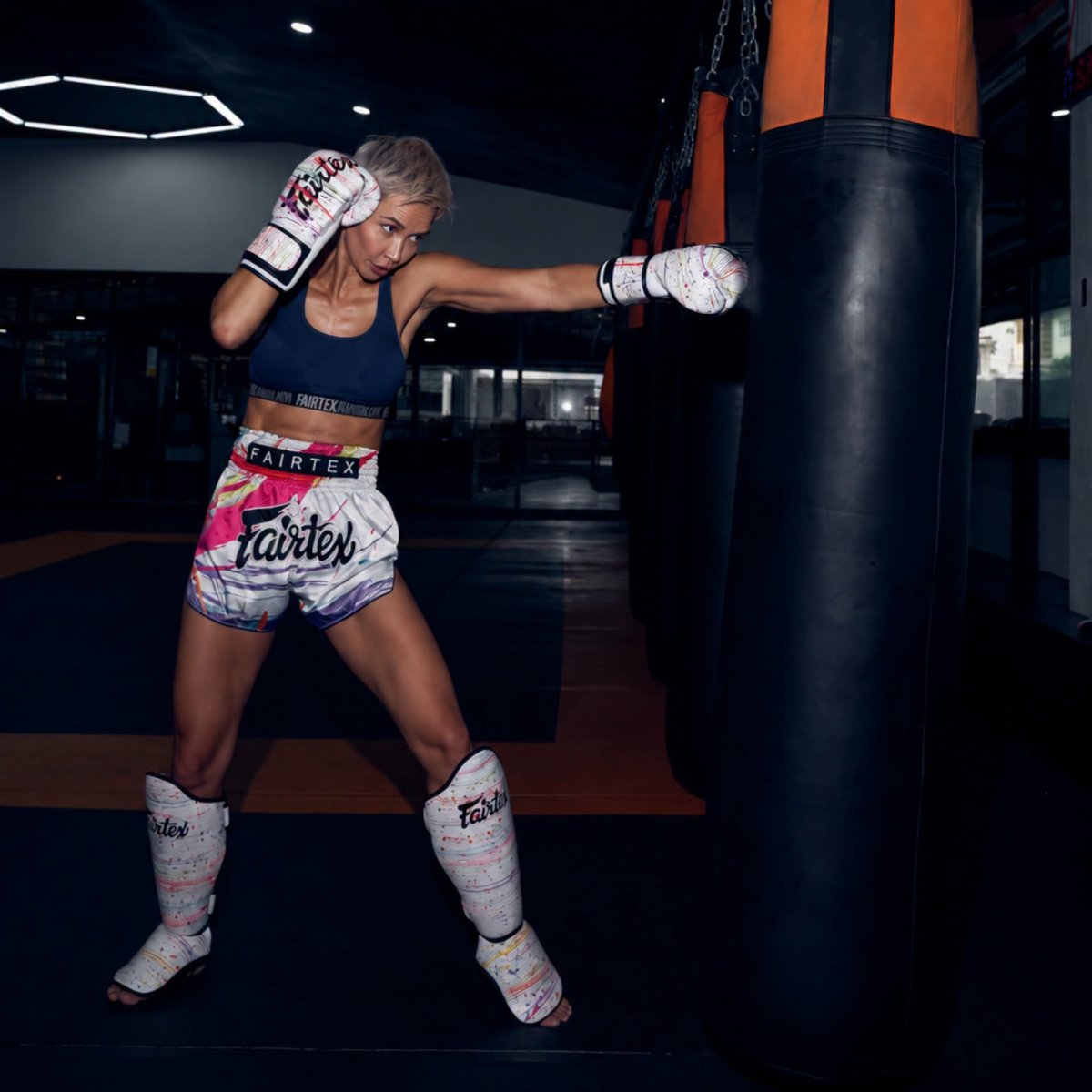
Freedom in a strike starts with a secure fit. The right women's muay thai shorts leave room for kicks, while a close-fitting base layer can add coverage and help limit fabric shifting or rubbing. You can wear either on its own, or pair them when that combination suits your training and gym rules.
Traditional Muay Thai shorts and compression gear serve different purposes. The best choice depends on the movement you need, how much coverage you prefer, and whether the waistband and leg openings stay in place. This guide explains what to look for in fit, seams, and fabric, with simple movement tests to help you choose gear you can focus in.
We’ll compare traditional and compression styles, outline common fit problems, and show how to build a practical training setup. Fairtex makes Muay Thai equipment and apparel, including Muay Thai shorts and protective gear. The aim is simple: stay focused on the strike, not your kit.
Table of Contents
Performance Beyond the Ring: Why Quality Training Shorts Matter
Training gear should let you move without needing constant adjustment. Quality women's muay thai shorts should feel comfortable through repeated kicks, checks, and footwork. If the waistband slips or the fabric rubs when you move, those details can distract from your round. Check the fit in motion, not just while standing still.
Traditional Muay Thai shorts have wide leg openings that leave the hips and thighs room to move. A close-fitting base layer can add coverage underneath and may help reduce shifting or friction. Compression is a fit choice, not a substitute for checking that the outer shorts also stay secure and allow a full range of movement.
Traditional Cut vs. Modern Compression
The loose cut of traditional shorts suits outward hip rotation and high knee lifts. Compression shorts sit close to the body and can provide extra coverage under a looser outer layer, including during high kicks, clinch work, or conditioning drills. Test the combination with a few knee lifts, squats, and controlled kicks. The base layer should feel secure without restricting your stride or breathing, and the outer shorts should not catch or pull against it.
The Multi-Sport Advantage
Training might move from pad rounds to strength work or HIIT. A close-fitting base layer can work across those activities because it avoids loose fabric getting in the way of squats, lunges, or floor drills. For the striking portion of your session, pair apparel with purpose-built Muay Thai protective gear suited to the work you’re doing.
Before training, test your fit with a deep squat, knee lifts, and controlled kicks. Check that the waistband stays in place, seams do not rub, and the fabric does not restrict your movement. If you need to tug or readjust the garment during this brief test, it may become a distraction during a full session.
Technical Anatomy of High-Performance Women's Compression Shorts
In hard training, focus on fit, seam placement, and a waistband that stays put without digging in. Compression should feel secure, not restrictive. Research on compression garments doesn’t establish a guaranteed reduction in muscle fatigue, so assess the garment on practical grounds: can you move freely through repeated kicks, knees, and footwork without pinching, rolling, or adjusting it?
Material Durability in Combat Sports
Repeated friction from equipment and bag work can wear fabric down over time. For example, Muay Thai shin guards may rub against the lower leg during movement. Check areas that experience contact for pilling, thinning, or loose stitching. Follow the garment’s wash instructions, handle it carefully, and let it dry fully between sessions. Stretch fabrics can lose elasticity with wear, so inspect the waistband and seams regularly.
Breathability and Thermal Regulation
Moisture-wicking textiles move sweat away from the skin toward the fabric surface, where it can spread and evaporate. That may help reduce the heavy, clingy feel of saturated gear, although airflow and room conditions also affect comfort. A gusset, the added fabric panel at the crotch, can give the seams more room during deep squats, wide stances, and high kicks. Check that the panel lies smoothly and does not pull when you move.
Construction matters at every contact point. Flat seams sit closer to the fabric and can reduce raised edges that rub during repeated movement. A broad, stable waistband should stay anchored through clinch entries and knee drills without rolling or pinching. Test these details with controlled knee lifts and kicks before training. For an outer layer, browse Fairtex Muay Thai shorts and consider how the cut works with your base layer.
Finding Your Fit: A Buyer’s Checklist for Combat Apparel
The right fit should be easy to forget once training starts. Use the size chart for the specific garment rather than assuming your usual leggings size will translate. Compression is designed to sit closer to the body, and sizing can vary by cut and fabric. Assess the base layer and outer shorts separately: both should allow full hip rotation without shifting, pinching, or pulling.
Sizing for the Female Athlete
Measure your waist and hips where the size guide directs, then compare both measurements with the chart. If your thighs are muscular or your hip-to-waist measurements point to different sizes, prioritize a smooth fit through the hips and legs without an overly tight waistband. Compression should feel like a steady second skin, not squeeze or leave deep marks, numbness, or restricted movement. Try knee lifts and squats to check how the fabric responds.
Length, Coverage, and Training Conditions
Shorter cuts may feel less restrictive through the hips, while longer compression styles can provide more coverage. Use the squat test: move into a deep stance, raise each knee, and check that the fabric stays opaque, covers as intended, and does not ride up. In a hot gym, you may prefer a lightweight, breathable feel; in a climate-controlled space, added coverage may matter more. Your movement and comfort are the final test.
Don’t assume fashion leggings will work for every combat-sports session. A waistband that shifts during clinch work or a cut that pulls during kicks can become a distraction. A high-rise design may feel like a secure anchor, but rise is personal. Test whether it stays put without rolling or restricting your torso. The fit should hold through movement, not just while standing still.
Once you know your preferred coverage and fit, browse women’s performance compression shorts to compare options for training.
The Fairtex Collection: Engineered for the Modern Striker
Training gear should serve the work, not distract from it. Fairtex offers Muay Thai equipment and apparel, including Muay Thai shorts, protective gear, and training accessories. When choosing women's muay thai shorts, consider how the outer cut and any base layer work together across pad rounds, conditioning, and mixed training sessions.
A close-fitting layer can add coverage beneath traditional shorts, while the outer short provides room for striking. Compare the fit, rise, and coverage of each piece, then test the combination with kicks and knee lifts. Explore Fairtex Muay Thai shorts and choose a cut that suits your training.
Standout Features of Fairtex Compression
When comparing compression gear, assess how the fabric fits through the hips and thighs, whether the waistband stays comfortable, and whether the garment works for both striking and floor-based drills. Keep the goal practical: reliable coverage and freedom to move, not a particular look at the expense of function. Pairing the right base layer with Muay Thai shorts can make it easier to stay focused through different parts of a session.
Complete Your Training Set
For a coordinated training kit, pair your chosen shorts with Fairtex boxing gloves. If you’re assembling core equipment, the Muay Thai starter pack is another place to begin. Choose apparel separately to suit your preferred fit and coverage. For sessions that move from pads to strength or conditioning work, test your layers across each activity.
Ready to refine your training setup? Explore women’s compression shorts and choose a layer that suits your preferred coverage and fit.
Step Into Your Next Round with Confidence
Your training kit should keep pace as your goals evolve, from sharpening combinations on the pads to adding strength and conditioning work. Choose women's muay thai shorts that feel secure across the movements you train. Check the waistband, leg openings, and coverage in motion, then let fit and function guide your decision.
Whether you wear traditional shorts on their own or add a close-fitting layer, choose gear that stays comfortable through the work you do. Fairtex offers Muay Thai shorts and protective equipment to help you build a practical training setup.
Explore women’s compression shorts, then browse Fairtex Muay Thai shorts to complete your training kit.
Frequently Asked Questions
Can I wear compression shorts instead of traditional Muay Thai shorts?
Compression shorts can work on their own for some training sessions, provided your gym’s dress rules allow them. They offer a close-fitting option for drills or conditioning, while traditional Muay Thai shorts provide a looser cut and familiar fightwear style. If you’re preparing for a bout or joining a new class, follow its apparel requirements. Choose women's muay thai shorts that suit both the session and its rules.
Do Fairtex women's compression shorts have a pocket for a pelvic protector?
Don’t assume a compression short has a dedicated pelvic-protector pocket. A close fit alone doesn’t secure protective equipment. Treat pelvic protection as a separate part of your kit: use a female-specific protector with its intended support system, and test the fit with your training movements before sparring. Follow your coach’s equipment guidance and any requirements set by your competition.
How do I prevent my Muay Thai shorts from riding up during kicks?
Check that the waistband and leg openings stay secure through repeated movement, not only while you’re standing still. If the shorts have a drawcord, adjust it before the round without overtightening. A close-fitting base layer can add coverage underneath. Inspect the waistband over time, too: stretched elastic may no longer hold its position reliably during training.
What is the best way to wash and maintain compression gear?
Follow the care label first, since fabric blends and construction can require different handling. As a general routine, turn the garment inside out, wash it with similar items, and avoid rough contact with hook-and-loop fasteners. Don’t use high heat unless the label allows it. Let the shorts dry fully before storing them, and check seams and elastic regularly for signs of wear.
Are these shorts suitable for MMA and BJJ training as well?
They may suit some MMA or BJJ sessions, depending on the garment’s fit and your gym’s rules. For grappling, consider whether the shorts stay in place and provide the coverage you want during ground movement and partner contact. Try basic sprawls and guard-position movements before a live round, and follow your academy’s clothing requirements for both gi and no-gi classes.